

Baby Yoga for Better Sleep: A Gentle Guide to Nurturing Restful Nights
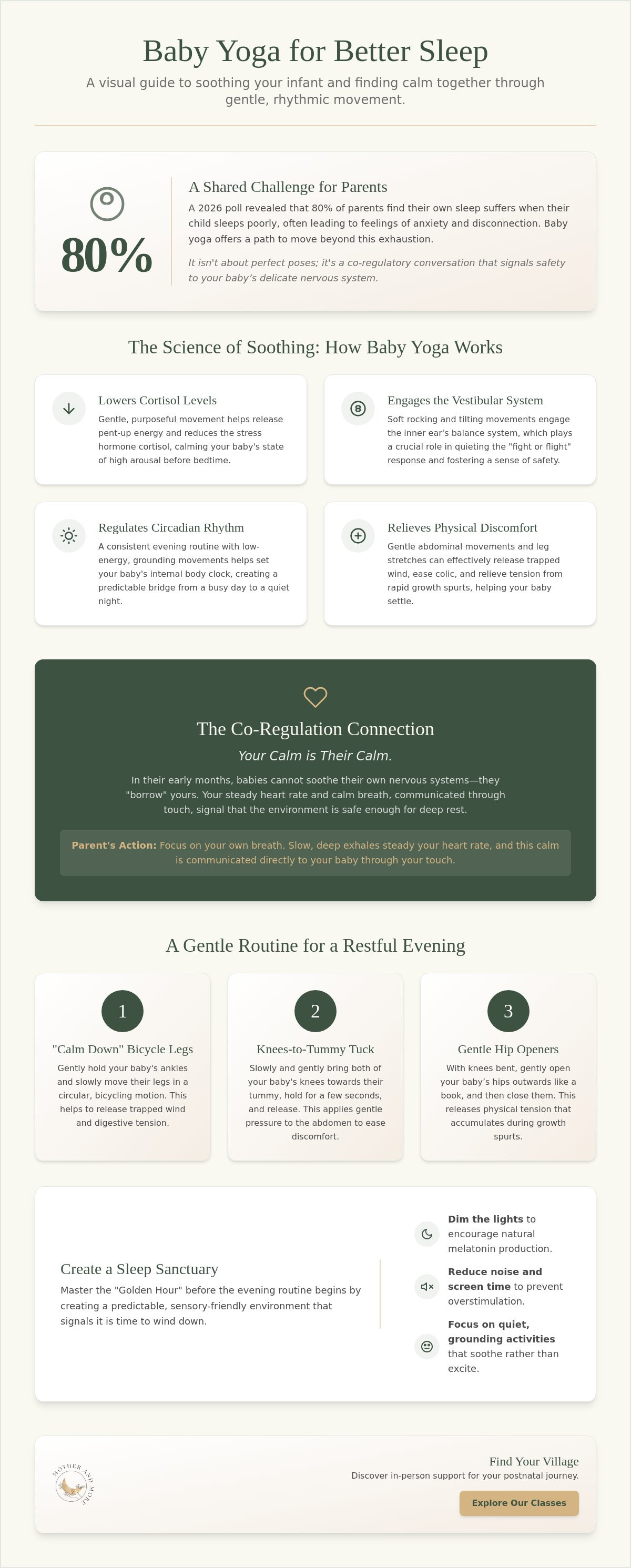
What if the secret to a more restful night wasn't found in a new gadget, but in the gentle, rhythmic language of movement? It’s a question many exhausted parents ask whilst pacing the nursery at 3:00 am, feeling overwhelmed by conflicting advice. You aren't alone in this weary space. A 2026 poll revealed that 80% of parents find their own sleep suffers when their child sleeps poorly, often leaving them feeling anxious and disconnected. This is why we are exploring baby yoga for better sleep, a practice that isn't about perfect performance; it’s a co-regulatory conversation that signals safety to your baby’s delicate nervous system.
We know that when you're this tired, the thought of learning something new can feel daunting. You might worry about doing the movements "correctly" or simply feel too drained to start. This guide is here to hold space for those feelings whilst offering practical tools to help your baby settle more easily. We’ll explore how these simple rhythms support digestion and ease postnatal stress, helping you rediscover a sense of calm. You’ll find a clear path towards more restful nights and a deeper, more nurturing bond with your infant.
Table of Contents
The Science of Soothing: Why Baby Yoga for Better Sleep Works
Baby yoga for sleep is more than just a series of physical poses; it’s a mindful fusion of gentle movement, loving touch, and rhythmic breathing. When you move your baby's body in a purposeful, slow way, you help them release the pent-up energy that naturally builds up during a busy day of discovery. This physical activity is vital for reducing cortisol levels, the hormone associated with stress and alertness, which can otherwise keep an infant in a state of high arousal long after bedtime has passed.
When we gently rock or tilt a baby during a session, we're engaging their vestibular system. This sensory system, located in the inner ear, plays a crucial role in quieting the "fight or flight" response and inviting a sense of safety. It is a beautiful way to foster The Co-Regulation Connection, where your steady, calm presence helps organise your baby’s internal world. Soft, rhythmic stretching signals the body that the day is ending, encouraging the natural production of melatonin to prepare for rest.
Regulating the Circadian Rhythm Through Movement
Establishing a consistent evening routine acts as a gentle whisper to your baby’s brain that it’s time to wind down. Whilst daytime yoga might be active and stimulating, baby yoga for better sleep focuses on low-energy, grounding movements that soothe rather than excite. By dimming the lights and moving through these slow, intentional stretches, you help set their internal body clock. This creates a predictable bridge from the brightness of the day to the quiet of the night, making the transition to sleep feel natural and safe.
Relieving Physical Discomforts That Block Sleep
Often, a baby’s inability to settle stems from physical tension that they simply cannot communicate. Gentle abdominal movements are incredibly effective at addressing the trapped wind or the sharp discomfort of colic that frequently peaks in the evening. Stretching the hips and legs also helps release the physical tension that accumulates during rapid growth spurts. When a baby feels physically comfortable and "at home" in their body, they find it much easier to transition smoothly between sleep cycles without waking in distress.
The Co-Regulation Connection: Your Calm is Their Calm
Have you ever noticed how your baby seems to mirror your internal weather? This isn't a coincidence; it is a physiological reality known as co-regulation. In those early months, babies don't have the capacity to soothe their own nervous systems. Instead, they "borrow" yours. When we practise baby yoga for better sleep, the movements are merely the medium for a much deeper emotional exchange. If your shoulders are hunched and your jaw is tight, your baby receives a signal that the environment isn't quite safe enough for deep rest. This is why a stressed parent often finds it harder to settle their little one, even when using baby yoga for better sleep techniques.
Much like the benefits of infant massage, yoga relies on the power of tactile communication to lower stress hormones for both of you. It is a shared experience. Taking time to acknowledge your own feelings is a vital step in this process. For many, seeking wellbeing coaching for new mums uk provides a necessary space to process the identity shifts that come with motherhood. When you feel supported, you can better support your baby.
Mindful Breathing for the Modern Mother
During the evening "witching hour", the atmosphere in the home can feel fraught. It's easy to get caught in a cycle of frustration when sleep feels elusive. Try to focus on your own breathwork whilst you gently guide your baby through their poses. Slow, deep exhales tell your own brain that you're safe. Your heart rate begins to steady, and that calm is communicated directly through your touch. It's a quiet, powerful way to find a moment of peace amongst the chaos, transforming a stressful routine into a grounding ritual.
Reclaiming Your Identity Through Shared Movement
Postnatal life can often feel like your own needs have been completely erased. Shared movement offers a gentle bridge back to your own body. It’s an opportunity to move with intention rather than just moving out of necessity. Shifting your focus from "doing" a task for your baby to simply "being" present with them can be incredibly healing. This practice acknowledges the massive shift in your identity, helping you feel more grounded in the present moment. If you're looking for a community to share this journey with, our Baby Yoga Classes provide a nurturing space for both of you to grow together.
Gentle Baby Yoga Poses for a Restful Evening Routine
Creating a sanctuary for sleep begins with preparation. Before you start your session, ensure the room is comfortably warm so your baby feels safe in just a nappy or a light vest. It’s also wise to wait at least 45 minutes after their last feed. This allows their digestion to settle and ensures they are comfortable during the gentle movements. By setting this intentional stage, you invite baby yoga for better sleep to become a predictable, soothing ritual rather than just another task on the bedtime list.
Follow these steps to guide your little one into a state of relaxation:
Step 1: The "Calm Down" Bicycle Legs. Gently hold your baby's ankles and move their legs in a slow, rhythmic circular motion towards the tummy. This movement is incredible for releasing trapped wind and relaxing the lower back. It helps ease the physical restlessness that often peaks at the end of the day.
Step 2: Gentle Chest Openers. With your baby lying on their back, softly draw their arms out to the sides and then fold them back over their chest in a gentle hug. This encourages the ribcage to expand, inviting deeper and more restful breathing patterns.
Step 3: The "Happy Baby" (Ananda Balasana) Adaptation. Lift your baby’s feet and gently guide their knees towards their armpits. This pose mimics the natural tuck of a contented infant. It’s deeply grounding and works wonders for soothing a sensitive nervous system.
Step 4: The Soothing Stroke. As you finish the movements, use long, slow strokes from the crown of the head down to the toes. This acts as a beautiful bridge, allowing you to transition seamlessly into a baby massage for sleep routine.
Modified Poses for Different Stages
Your baby’s physical needs change rapidly. For newborns (0 to 3 months), movements should be very small and always fully supported. As they reach 6 months and beyond, they may enjoy slightly more active stretches. Always remain observant of their cues. If they turn their head away or become fussy, it’s a signal to pause. Baby yoga should always be baby-led, never forced. This respect for their autonomy builds a foundation of trust that is essential for baby yoga for better sleep to be effective.
Incorporating Rhythmic Song and Sound
Sound is a powerful anchor for the infant brain. Try using low-frequency humming or a favourite gentle song to accompany your movements. The "shhh" sound is particularly effective as its rhythmic nature mimics the sounds heard within the womb. These auditory cues do more than just soothe; they reinforce the association between movement and rest. Over time, your baby will recognise these sounds as a signal that it is time to let go of the day and drift into sleep.
Creating the Sleep Sanctuary: Environment and Timing
The hour before sleep, often referred to as the "Golden Hour", is a precious window where the transition from the day's excitement to the night’s rest begins. This is where baby yoga for better sleep finds its natural home. It isn't just about the movements; it is about the atmosphere you curate. By intentionally slowing down the pace of your home, you signal to your baby’s brain that the world is becoming a smaller, quieter, and safer place. This period of transition is vital for helping an infant wind down after a day of intense sensory processing.
Managing sensory input is your first step in building this sanctuary. Dimming the lights to a soft, warm amber hue helps stimulate the natural production of melatonin. Reducing background noise, or perhaps introducing a steady, low-frequency white noise, prevents sudden sounds from startling your baby out of their relaxed state. Temperature and clothing also play a silent but significant role. You want the room to be comfortably warm (around 18 to 20 degrees Celsius) so your baby can move freely in a light vest or nappy without feeling a chill. If you choose to transition from yoga into a gentle massage, using a tiny amount of safe, natural oil like cold-pressed sunflower oil can add a soothing olfactory cue to the routine.
Timing Your Practice for Maximum Benefit
In the world of infant wellness, less is often more. A short, intentional 10 to 15 minute session of baby yoga for better sleep is frequently more effective than a long, tiring sequence. The goal is to soothe the nervous system, not to exhaust the body. Integrating these movements into your existing bath-book-bed routine creates a predictable rhythm that babies find deeply comforting. Watch for the shift from "active" play to "sleep-ready" movement; if your baby begins to rub their eyes or lose focus, it’s time to move towards the final, most grounding stretches of your session.
The Sensory Cues of Sleep
Repetition is the language of security for a baby. Using a specific "yoga blanket" or a particular corner of the room creates a powerful physical association with calm. Every time you roll out that blanket, your baby’s brain begins to predict the relaxation that follows. These repetitive sensory cues act as a rhythmic anchor, helping them feel organised and prepared for rest. This environment supports your own relaxation too; as you breathe deeply in this quiet space, your baby feels that shift in your energy. To explore how to create these rituals in a supportive community, you might find our Baby Yoga Classes a wonderful place to start your journey.
Finding Your Village: Why In-Person Classes Make a Difference
In the quiet, often lonely hours of early parenthood, it’s easy to turn to a screen for quick answers. Yet, trying to learn baby yoga for better sleep from a digital device can sometimes feel clinical and detached. It lacks the warmth of a shared smile or the reassurance of a gentle, hands-on correction. Stepping into our baby yoga east london sessions provides a physical sanctuary. It is a place where you and your baby can breathe, move, and connect without the pressure of being "perfect" or the distractions of home life.
Expert guidance is the heartbeat of a successful practice. Whilst a video might show you a pose, an instructor sees your baby's unique response to it. They can help you adjust your touch or the angle of a stretch to ensure it is both safe and deeply effective. This personalised attention is particularly vital when you are dealing with the physical fragility of a newborn. It builds your confidence, transforming a series of movements into a powerful tool for your family’s rest.
Expert Hands and Empathetic Hearts
At Mother And More, our classes are designed as a holistic blend of yoga, massage, and postnatal coaching. We don't just focus on the baby's body; we hold space for yours too. Having an instructor with an empathetic heart means you have someone who truly understands the profound identity shift you are navigating. Professional observation helps you identify your baby’s unique soothing preferences, making your baby yoga for better sleep routine at home much more successful. It is about moving from a state of "doing" for your baby to "being" with them in a supported, expert-led environment.
Taking the First Step Toward Better Rest
We know there are days when just getting out of the door feels like an impossible mountain. If you feel "too tired to leave the house," please know that this is exactly when the village is most needed. The long-term benefits of committing to a multi-week course are immense. It helps you build a sustainable habit and, perhaps more importantly, it connects you with a local support network. This community is the best antidote to the isolation that often accompanies early motherhood. Every session is a predictable anchor in your week, offering a sense of stability. Better sleep is a journey of small, nurturing steps. You don’t have to walk it alone; we are here to walk beside you.
Begin Your Journey to More Peaceful Nights
Rest is possible. Throughout this guide, we’ve explored how movement acts as a soothing language for your baby’s nervous system and why your own calm is the most vital ingredient for a successful bedtime. By integrating these gentle rhythms and creating a mindful sleep sanctuary, you are building a foundation of trust and security that will serve your family for years to come. Practising baby yoga for better sleep isn't just about the physical poses; it’s about nurturing the profound connection between you and your little one.
At Mother And More, we believe that you deserve to feel supported as you navigate these transitions. Founded by Rebecca Beazley, an accredited life coach and baby class expert, we have supported over 2,000 local families in East London with our holistic approach. We combine physical baby yoga with dedicated maternal wellbeing support to ensure you feel grounded and confident. Book a Baby Yoga Course in East London with Mother And More today to find your village. You are doing a wonderful job, and you don’t have to do it alone.
Frequently Asked Questions about Baby Yoga and Sleep
Is baby yoga safe for newborns who cannot hold their heads up yet?
Baby yoga is safe for newborns as long as the movements are gentle and their physical fragility is fully supported. We recommend waiting until your six week postnatal check up before starting a formal routine. For very young infants, the practice focuses on supine positions where the head and neck always remain rested against a firm, stable surface. This ensures their delicate spine is protected whilst they enjoy the soothing sensory benefits of rhythmic movement.
How soon after a feed can I start baby yoga for sleep?
You should ideally wait at least 45 minutes after a feed before starting your session. This gap helps prevent reflux or physical discomfort whilst your baby’s tummy is full. It allows for initial digestion to take place, making the gentle abdominal stretches much more comfortable and effective for baby yoga for better sleep routines. Using this time for a quiet nappy change or a short story can be a lovely way to bridge the gap.
What is the best time of day to do baby yoga for the best results at night?
The early evening, specifically during the "Golden Hour" before the final bedtime feed, is the most effective time for practice. By choosing this window, you help your baby transition from the day's high stimulation into a more relaxed, receptive state. Consistency is your best friend here. When you practice at the same time each day, your baby’s brain begins to associate these rhythmic movements with the upcoming night’s rest.
Can baby yoga help with trapped wind and colic that keep my baby awake?
Yes, specific yoga poses are highly effective at relieving the physical discomfort of trapped wind and colic. Movements such as "Bicycle Legs" and gentle knee to tummy tucks help massage the digestive system from the outside. This physical release can be the key to helping a restless baby settle into a deeper sleep without being woken by the sharp pains of gas. It provides a natural, drug free way to ease their evening distress.
Do I need a special yoga mat or equipment to start practising at home?
You don't need any specialised equipment or a professional yoga mat to begin your practice at home. A firm, flat surface such as a carpeted floor or a clean, folded blanket on the rug works perfectly. It’s best to avoid practising on a very soft bed or a deep sofa. Your baby needs a stable base to feel secure and supported during their stretches, and a firmer surface ensures their spine remains correctly aligned.
What should I do if my baby starts crying during the yoga session?
If your baby starts to cry, the most important thing is to stop the movement and offer them comfort immediately. Yoga is a co-regulatory conversation, and crying is their way of saying they have had enough or feel overwhelmed. You aren't "failing" the session by stopping. You can always try again another time; forcing a routine when they are distressed will only create a negative association with their evening wind down.
Is baby yoga better than baby massage for improving infant sleep?
Neither practice is "better" than the other; they simply offer different paths to the same goal of relaxation. Whilst massage focuses on skin to skin touch, baby yoga for better sleep uses movement to engage the vestibular system and release physical tension. Many parents find that combining the two creates a holistic evening ritual. You might start with yoga to release energy and finish with a short massage to deeply ground your baby before sleep.
Can I do baby yoga if I have never practised yoga myself before?
You absolutely can practice with your little one even if you have never stepped onto a yoga mat yourself. Baby yoga is about guiding your infant’s body through gentle, purposeful stretches, not performing complex poses with your own body. Your role is to be a calm, present guide for their movements. You will likely find that the slow pace and focused breathing help lower your own stress levels, making the bedtime transition easier for both of you.


Comments