

Imposter syndrome after maternity leave
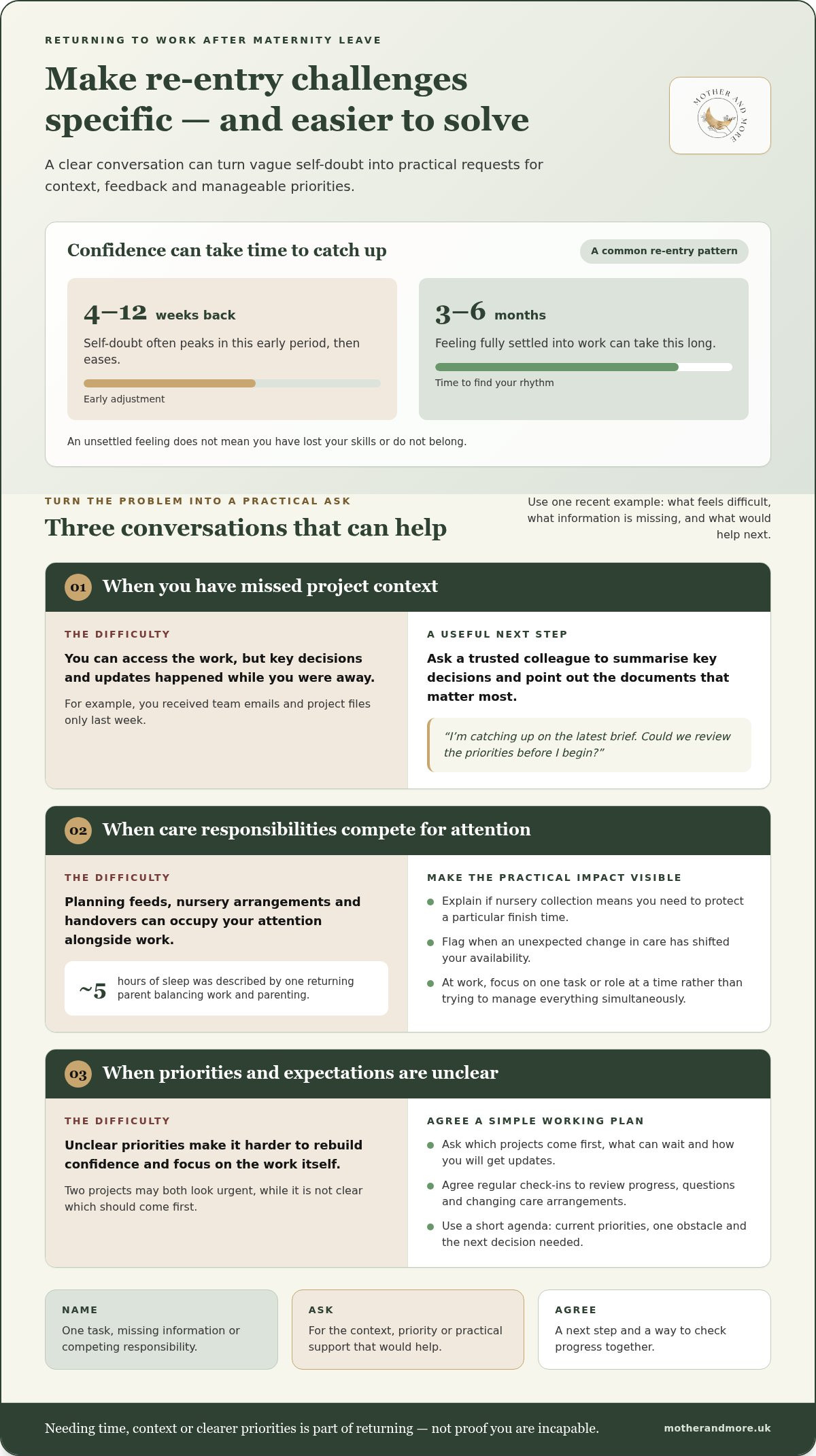
Your confidence can lag behind your ability when you return to work. Imposter syndrome after maternity leave often peaks in the first four to twelve weeks back, then eases; feeling fully settled into work can take three to six months. That unsettled feeling doesn’t mean you’ve lost your skills or that you don’t belong.
You may recognise the work yet feel slower, less certain or out of step with colleagues. At the same time, you’re adjusting to a new rhythm at home and carrying the emotional weight of being away from your baby. It’s a lot to hold. You don’t have to dismiss those feelings or expect yourself to return as though nothing has changed.
This article explores why the transition can stir self-doubt, what may shape how long it lasts, and how small wins can help you rebuild trust in yourself. You’ll also find ways to have honest conversations with your manager or colleagues, so you can ask for the context and support that make returning feel more manageable.
Table of Contents
Discussing re-entry struggles with a colleague or manager
A clear conversation can turn vague self-doubt into specific requests for context, feedback or manageable priorities. Use recent examples to explain what feels difficult and what would help you work effectively.
Talking through re-entry struggles
Talking through the challenges of returning means naming what feels difficult and asking for practical support. A colleague may not realise you’ve missed project changes or need time to rebuild your routine, so being specific can help.
For example, explain that you received access to team emails and project files only last week. Ask a trusted colleague to summarise key decisions and identify the documents that matter most. This gives you a clearer starting point than silently assuming you should already know every update.
Keep the conversation specific: describe one task, the information you’re missing and the next step that would unblock you. You could say, “I’m catching up on the latest brief. Could we review the priorities before I begin?”
Caring responsibilities and mental load
The mental load is the ongoing work of remembering and coordinating care alongside your job. It matters because a disrupted night or a childcare change can affect the attention you bring to a meeting.
One returning parent described averaging around five hours of sleep while balancing work and parenting. Even when your working day appears unchanged, planning feeds, nursery arrangements and handovers can occupy your attention in the background.
Make competing demands visible with a practical example. Tell your manager that a nursery collection means you need to protect a particular finish time, or that an unexpected change in care has shifted your availability. At work, focus on one task or role at a time rather than trying to manage everything simultaneously.
Manager support during re-entry
Manager support means clear expectations, useful context and regular opportunities to discuss workload. It’s difficult to rebuild confidence when priorities remain unclear.
Ask your manager to agree which projects come first, what can wait and how you’ll get updates. If emails or files arrived only last week, request a short briefing on recent decisions before taking ownership of a task.
Agree a regular check-in to review progress, questions and changing care arrangements. A simple agenda could cover current priorities, one obstacle and the next decision needed. If a task feels overwhelming, pause and explain which deadline or responsibility is creating the pressure.
Managers can also make space for focused work by limiting competing requests and clarifying who owns each task. For instance, ask which of two urgent-looking projects should take precedence. Clear direction helps you focus on the work itself rather than guessing what matters most.
Matrescence and changing attitudes to work
Motherhood can reshape your identity, priorities and relationship with work. Familiar responsibilities may feel different as you adjust, without meaning your skills have disappeared.
Returning to work after maternity leave can bring a sharp contrast between professional expectations and the realities of caring for a baby. You might value your role while questioning its place in your life, or feel less certain about decisions that once came easily. These responses can sit alongside love for your child and commitment to your job. They aren’t proof that you’re less capable.
Try separating changes in your priorities from conclusions about your ability. Wanting to finish on time for nursery collection, for example, doesn’t mean you’ve lost ambition. It may mean you now measure a good working day differently. Motherhood can also bring clearer boundaries: you might decide that a meeting needs an agenda, or that one well-chosen priority matters more than staying late to answer every message.
A return after another absence can stir similar doubts. Travel, a career break, caring for relatives, unemployment or illness can create a gap between your experience and the workplace’s current routines. You may need updated context, renewed relationships or time to understand a changed role. Treat those needs as part of returning, rather than evidence that you no longer belong.
Support at work can make the transition feel less isolating. Some companies offer employee resource groups or return-to-work programmes, which may provide peer connection, structured onboarding or conversations about expectations. For those seeking external professional guidance, advisors such as Jani Havunen offer targeted coaching to help individuals rebuild strategic clarity and career momentum. You can also ask what internal support exists and suggest a practical plan, such as reviewing recent changes with your manager or agreeing priorities for your first projects. One commenter recommended mapping an onboarding plan across the first 30, 60 and 90 days. That structure can turn a broad return into manageable stages.
Money worries can also shape when someone returns. In a 2022 Maternity Action survey, 52% of respondents returning to work said they had returned earlier than planned because of money worries. If that reflects your experience, needing the income doesn’t make your adjustment less real. Consider which parts of the return feel most demanding, then discuss one concrete change with your manager, such as clearer deadlines or a gradual handover.
Pay attention to your wellbeing, too. If your self-doubt isn’t improving at all after two months, explore whether depression or anxiety may be prolonging it. Treat that possibility as a wellbeing concern, not a verdict on your work. A useful starting point is to describe what you’re experiencing and how it affects your day, then seek appropriate support. If you’re reflecting on changed priorities, explore motherhood and personal growth as part of making sense of this transition.
How long re-entry self-doubt may last
Acute imposter syndrome after maternity leave typically peaks during the first four to twelve weeks of workforce re-entry, then diminishes substantially. Feeling fully reintegrated, when work feels natural again, typically takes three to six months after maternity leave. These are different points in the adjustment: early self-doubt may soften before your work routine feels familiar. They offer a broad timeline, not a deadline for feeling settled.
Your experience can shift from week to week. A meeting that feels daunting on Monday might feel easier after you’ve caught up on a project or spoken with a colleague. Notice the pattern rather than judging one difficult day. Record what felt challenging, what helped and whether the same situation felt different the next time. This gives you concrete evidence of change, even when confidence returns gradually.
Returning to work also depends on what has changed at work and at home. New systems, unfamiliar priorities, interrupted sleep or a different team structure can make familiar tasks feel effortful. One returning parent described the creative part of her thinking switching back on after a few hours working on a brief. It shows how concentration may reconnect through practice, rather than appearing fully formed on your first day back.
Compare your current experience with your own earlier weeks, not with a colleague who hasn’t had the same interruption. Someone who has been back for a short time may still be rebuilding confidence; another parent reflecting later may notice a different rhythm. These examples aren’t a required schedule. They show why a single snapshot can’t tell you whether you’re making progress.
If self-doubt isn’t improving at all after two months, explore whether depression or anxiety may be prolonging it. Pay attention to what is happening beyond work, such as persistent low mood, worry or difficulty managing everyday tasks. These concerns deserve attention in their own right, rather than being dismissed as ordinary adjustment. You can describe specific changes in mood, concentration and daily functioning when seeking support.
To understand what is changing, choose one recurring worry and examine it with care. Ask whether there is evidence for the thought, whether it will matter in six months, and what you would say to a friend in the same position. Cognitive behavioural therapy techniques can help reframe thoughts and feelings about returning to work and influence how you respond. If you used KIT days, staying connected with colleagues and joining meetings may also make the return feel less abrupt.
Women returning to work may feel less worthy, less confident in their abilities or like frauds. Prioritising self-care can help you look after yourself as you care for others.
Building confidence through short wins
Small, visible achievements give you evidence of what you can do today. A completed proposal, a useful contribution in a meeting or a clear handover can matter more than waiting to feel completely confident. Notice the action itself. Confidence can grow as you recognise your progress, even when the working day still feels unfamiliar.
Choose a few realistic things to achieve each day, as one returning worker suggested. Make them specific enough to recognise when they’re done: send a project update, review one brief or ask a colleague for missing information. If childcare changes your available time, adjust the list rather than treating an unfinished extra task as proof you’ve failed.
Finish and send one draft proposal.
Contribute one relevant point during a meeting.
Clarify one decision that affects your next task.
At the end of the day, write down what you completed and what helped. “I finished the proposal after confirming the brief” is more useful than “I was productive”. The first note records your action and the conditions that supported it. Later, you can return to those examples when a difficult moment makes your contribution hard to see.
Celebrate achievements in a way that fits your day. You might pause after sending the finished work, share a positive response with a trusted colleague, or mark the task as complete before moving on. A win doesn’t need to impress anyone else. Its value is that it gives you a clear example of your capability.
Keep the measure of success within your control. A colleague’s reply, a client decision or a project outcome may depend on other people, so focus on the part you completed: preparing information, raising a useful question or delivering your section. This makes it easier to acknowledge your effort without relying on praise or a perfect result to validate your work.
When a task feels too large, define a smaller first action. For a presentation, that might mean opening the latest slides and checking the brief before drafting anything. Once that step is complete, choose the next one. This turns an intimidating assignment into observable progress and helps you notice where you need clarification, rather than assuming you’re incapable.
Review your notes at the end of the week. Look for examples of work you completed, feedback you used or a moment when you spoke up despite feeling uncertain. If the same obstacle appears repeatedly, such as unclear priorities, bring that pattern into a conversation with your manager. Your record makes the discussion specific and shows where support could help you make progress.
Fears of not belonging or being capable
In the UK, anxiety and low confidence can accompany a return to work after maternity leave. They may show up as doubts about your skills, worries about fitting in, or fear that colleagues will notice you feel unsure. These feelings deserve attention, but they don’t prove that you lack ability or belong less than before.
A task taking longer than expected can quickly become evidence for a harsh conclusion. One returning parent said work that previously took 20 minutes now took an hour or more. That change can feel alarming, but it describes the task’s timing, not your overall competence. Consider what else affected it: unfamiliar updates, interruptions, unclear instructions or simply getting back into a routine.
Separate what happened from the story your mind attaches to it. “I needed longer to finish the report” is an observation. “I’m no longer good at my job” is a conclusion. Ask what the task required, whether anything had changed and what evidence supports your judgement. A colleague’s specific feedback can help you compare your fear with the work they saw.
When you worry that you no longer fit in, identify the moment that triggers the feeling. It might be missing an informal conversation, hesitating before speaking in a meeting or not recognising a new process. Then choose one small action to reconnect with the team, such as asking a colleague how a decision was made or sharing a relevant idea. A real exchange gives you more to work with than guessing what others think.
Try these prompts when self-doubt appears:
What happened, stated without judgement?
What evidence supports my fear, and what evidence challenges it?
What would I say to a friend facing the same moment?
What is one useful next action I can take?
If you stayed quiet during a project discussion, for instance, write down the point you wanted to raise. You could share it with a colleague afterwards or bring it to the next meeting. This gives you a specific way to participate, rather than treating one quiet moment as proof that you have nothing valuable to contribute.
If doubts keep narrowing what you attempt, choose one manageable stretch, such as volunteering for a defined part of a project. Notice what you learn from doing it, not only whether it goes perfectly. To explore support with confidence and your next steps, find support for rebuilding confidence.
The podcast discussion presents motherhood as enhancing women’s capabilities at work rather than reducing them. That perspective can offer a different starting point when you assess yourself: consider whether caregiving has strengthened skills such as prioritising, adapting, listening or making decisions under pressure. You don’t have to claim that every part of work feels easier, or that every new skill transfers automatically. Instead, look for a concrete moment when you used patience, planning or perspective, and consider how it might help with a current responsibility. Treat that example as evidence of capacity you can draw on, not a test you must pass.
Mother And More: Baby Massage Courses
Mother And More offers Baby Massage Courses in East London, creating gentle opportunities to connect with your baby during a demanding transition. Shared time can offer a calm, meaningful pause alongside the practical work of rebuilding confidence at work.
If you want space to explore changing identity, priorities or self-belief, One to One Life Coaching or Group Coaching can support personal reflection. These options may suit you when you’re looking for guided conversations about motherhood and wellbeing, rather than workplace-specific advice from your manager.
Choose the support that feels most relevant now, whether that’s bonding with your baby or reflecting on your next steps. Visit motherandmore.uk to explore Mother And More’s offerings.
Choose support that meets you where you are
Your next step doesn’t need to solve everything at once. As you move through imposter syndrome after maternity leave, consider what would feel most supportive now: time to bond with your baby, space to reflect, or gentle encouragement to reconnect with your own needs.
Mother And More offers Baby Massage Courses, Baby Yoga Classes and One to One Life Coaching. Each provides a different kind of support, whether you’re seeking shared time with your baby or space to explore your confidence and changing identity. Choose what feels relevant now, without expecting yourself to have every answer first.
If you’d like to explore that support, contact Mother And More. You can take this transition one thoughtful step at a time. Your confidence can grow alongside the person you’re becoming.
Frequently Asked Questions
Why do people feel like imposters when returning to work after maternity leave?
Imposter syndrome after maternity leave can arise when your sense of professional identity feels out of step with your new responsibilities. You may compare your current pace with your pre-leave routine, or worry that colleagues have moved ahead while you were away. A changed team, new systems or less uninterrupted time can add to that feeling. Separate what has changed around you from what you know you can do.
How can I rebuild confidence before returning to work after maternity leave?
Before returning, ask your manager for a short update on team priorities, current projects and any changes to your role. Then choose a familiar task to refresh your skills, such as reviewing a recent brief or organising your work notes. Write down practical questions for your first check-in, and agree on care arrangements that protect your working hours. These preparations give you a clearer starting point without expecting you to know everything in advance.



Comments