

Indoor activities for babies London: music, sensory and development classes
Indoor activities for babies in London include music, sensory play and development classes, with the best fit shaped by your baby’s age and readiness. For this guide, babies under 6 months are treated as newborns, so gentle, close-up experiences are a natural starting point.
It makes sense to want more than a rainy-day distraction. A welcoming class can offer a change of scene and a chance to share a calm, playful experience with your baby, without expecting them to join in in any particular way.
This guide explores indoor activities for babies in London and practical ways to decide whether a class feels right for your baby’s stage. From music and sensory play to movement, focus on what feels comfortable for both of you.
Table of Contents
2. Age groups and class suitability
Start with your baby’s age, then consider what they can comfortably notice or do. A class label is a useful guide, not a measure of progress. When comparing indoor activities for babies in London, consider each session’s pace, sounds, movement and space, and how these match your baby’s interests. A parent-led storytelling circle may suit a baby who enjoys familiar voices, while a gentle movement class offers another way to play together.
The youngest babies may find a quieter session more manageable. At this stage, a quieter session with close contact, soft sounds and simple visual contrasts may feel more manageable than a busy adventure with lots of activity. Baby music, sensory play and massage-style sessions can all involve parents throughout. Notice whether your baby turns towards a sound, follows a moving object or settles when held. Those small cues can help you decide whether to stay with one activity or try a different one.
As babies grow, their interest in reaching, rolling, sitting and exploring can shape which classes hold their attention. A baby beginning to reach may enjoy watching bubbles or touching safe, textured materials with you. A baby who sits with support might prefer songs with actions or exploring a low play area. These are examples, not milestones to meet before joining in. Choose a session where parents can respond to their baby, rather than one that expects every child to participate in the same way.
Museum visits can also suit some families, especially when you keep the plan simple. The Natural History Museum presents the planet’s story across 4.6 billion years, offering a natural history setting for gentle looking and storytelling. The British Museum has almost 100 galleries, so choose one area rather than trying to see everything. The Imperial War Museum London is recommended for children aged 8 and over, making it a less suitable destination for a baby-focused visit. Check ticket and booking details before setting out, and consider whether a buggy-friendly route suits your plans.
Use three steps to compare a class or venue: match its age guidance to your baby, consider the sensory atmosphere, then plan around feeds and naps. Look for practical details such as a dedicated baby area, space to pause or a calm place to settle together. A garden-themed class or a favourite song can make an unfamiliar room feel more inviting. Your interests matter, too. If you’d like to try something new, choose one manageable session and let your baby’s attention set the pace.
3. What indoor activities for babies are available in London?
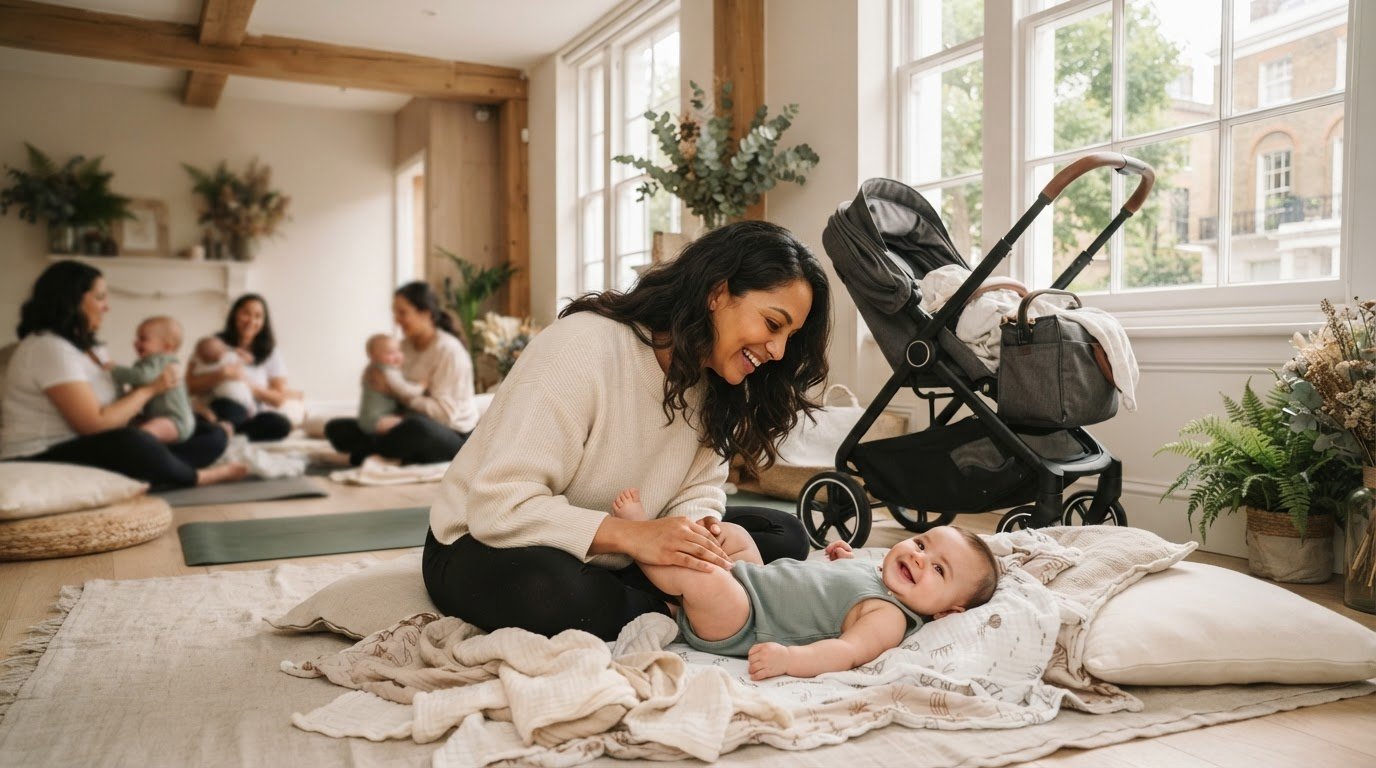
London offers parent-and-baby sessions built around music, movement, touch and shared play. At a music class, you might sing familiar songs, shake simple instruments or pause for a gentle lullaby. A sensory session could invite babies to notice contrasting colours, textures and sounds with a parent. You can repeat these activities at home, too. Choose a format that leaves room for feeds, cuddles and quiet moments, rather than expecting your baby to follow every activity.
Movement classes offer a different kind of play. In a baby yoga session, parents guide simple stretches and supported movements, responding to their baby’s comfort and attention. Other classes may include nursery rhymes, action songs or gentle dancing while you hold your baby. These activities make familiar voices, faces and rhythms the focus. If your baby watches rather than joins in, you can still enjoy the session together without making participation a test.
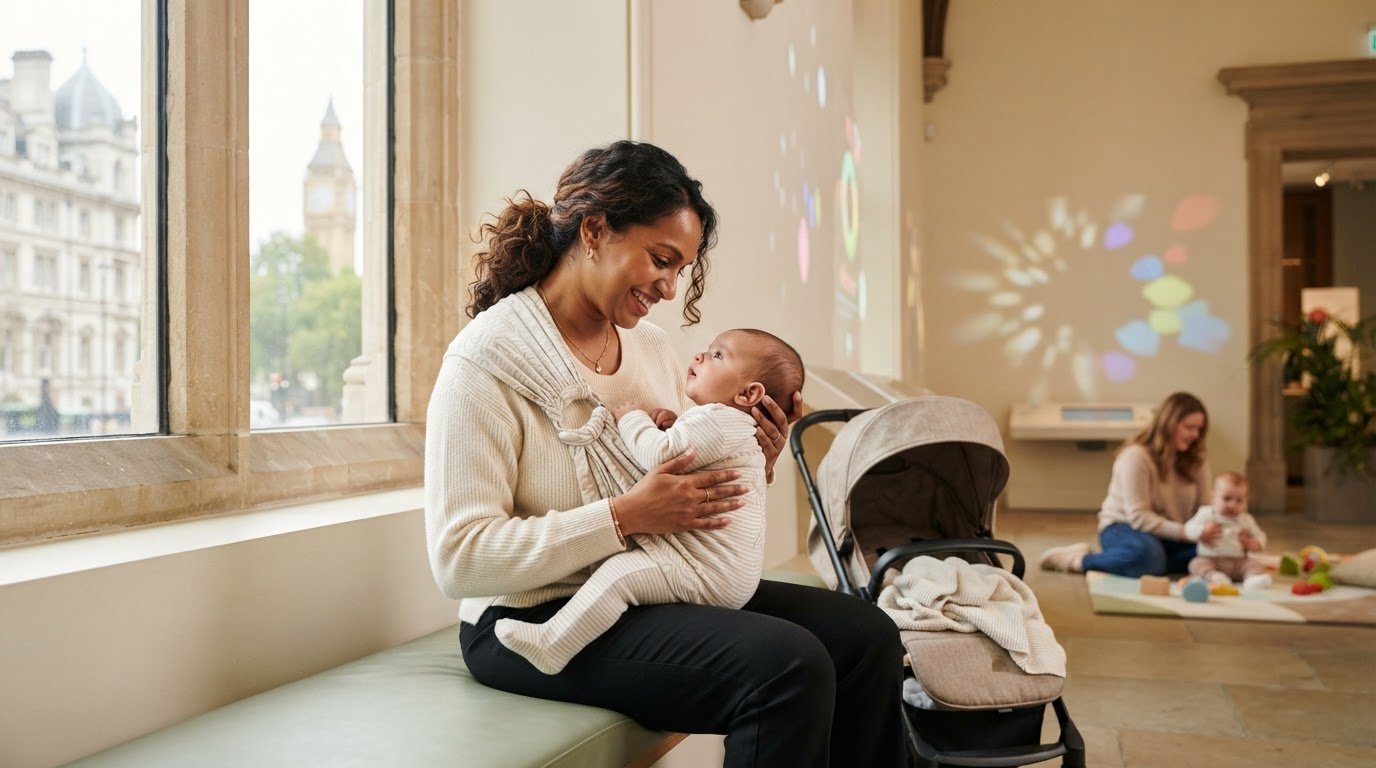
Libraries and museums offer a change of scene without needing a formal class. A library visit can centre on board books, songs and storytelling, whilst a museum gallery gives you things to look at together. The British Museum has almost 100 galleries and around eight million artefacts, so choose a manageable area instead of planning to see it all. Its displays cover over two million years of history, art and culture. A short visit can be an adventure in noticing shapes, colours and sounds.
The Natural History Museum presents the planet’s story across 4.6 billion years, which gives parents plenty to describe in simple words. The Victoria & Albert Museum’s collections span 5,000 years of art, offering another setting for looking and storytelling. These museums are not baby classes, but adults can make a visit baby-friendly by choosing one room, taking a pause and following their child’s attention. Check the venue’s current booking and ticket arrangements before travelling, then keep your plan flexible.
For a more active outing, indoor play venues may have a dedicated baby area alongside spaces for older children. Look for a calm corner, somewhere to sit together and room to pause if your baby needs a break. A café visit can also become an activity: share a board book, sing quietly or watch the light change through a window. To choose between options, consider what you want from the outing: a shared class, a new environment or simple time together away from home.
4. What are the best indoor activities in London for babies under 1 year?
For babies under one, a good outing is often one that fits their attention and your day. A music session can centre on a familiar song, a shaker and a pause for cuddles. A sensory class might offer soft fabrics, contrasting colours or gentle sounds to explore together. Watch your baby’s response and keep the activity simple. There’s no need to complete every part of a session.
Movement sessions offer another way to spend time together. In baby yoga, a parent can follow guided movements and songs, adapting the pace to their baby’s interest. A floor-based play session may suit a baby who enjoys looking, reaching or rolling, while songs with actions can encourage older babies to move along. These are options to explore, not milestones. Your baby can watch from your arms or take a break whenever needed.
A library visit can be a gentle indoor plan, with board books, familiar rhymes and a cosy place to sit together. Try reading the same short story twice, then pause to let your baby look at the pictures. The Natural History Museum offers a change of scene for parents who want to share shapes, colours and simple descriptions. Focus on one small area rather than attempting a full museum tour.
For an outing with a clear focus, consider a storytelling session or a baby-friendly museum activity. The Postal Museum’s Mail Rail ran for 100 years, giving adults an intriguing London story to discover. The experience itself may suit some families better than others, so think about your baby’s comfort with a new setting and how easily you can pause. A familiar library story can be a quieter alternative when a busy attraction feels like too much.
Use a simple plan to choose:
Pick one main activity: a song session, sensory play or a short book-sharing visit.
Follow your baby’s cues: pause when they look away, need a feed or want a cuddle.
Keep the outing flexible: choose a venue where you can sit down or leave the activity easily.
Bring one familiar item: a favourite book or comforter can make a new room feel more recognisable.
Indoor activities in London don’t need to be elaborate. A favourite rhyme at home, a library story or a carefully chosen class can each create a warm moment together. Choose what feels manageable, then let your baby’s interest shape the experience.
5. How much do baby classes and indoor play venues in London cost?
There isn’t one London-wide price for baby classes or indoor play venues. The total depends on the format, what your booking includes and whether you pay per visit or for a course. A music session may cost differently from a venue visit that includes access to play areas. Compare like with like: a class that includes materials isn’t directly comparable with entry-only admission. For a tailored class, the price depends on the session format, what’s included and the booking arrangement.
Before booking a class, check what the advertised fee covers. Does it pay for one session or a course? Does a parent join the activity? Consider the session’s length and style, too. A baby yoga class may involve guided movement and songs, while a sensory session may use different materials. These differences can affect what you value, even when the listed fees are similar. Include the class description and booking terms in your comparison.
Indoor play venues may have different pricing structures from classes. Some charge for entry, while others may offer timed visits, a separate baby area or a café alongside play. Check whether the ticket covers the facilities your baby can use and whether it includes an accompanying adult. If you’re comparing a venue with a class, focus on the activity you’ll actually use, not every feature listed. A dedicated baby space may matter more than access to equipment for older children.
Travel and extras can shape the real cost of an outing. For a museum visit, consider whether admission is required for the areas you want to see, and whether you’ll need a separate booking. The British Museum has almost 100 galleries, but a baby-friendly visit may focus on one gallery rather than a full day. A short visit can change how much value you place on a ticket. Add travel, refreshments and any paid activity to your own outing budget, without assuming these are included in a class fee.
Use this practical comparison before choosing:
Read the booking details: identify what admission or class participation covers.
Compare the format: consider a drop-in session, a course or venue entry separately.
Check relevant extras: look for materials, adult admission, refreshments and travel.
Choose for your plans: a short music class may suit your day better than a longer venue visit.
For a clear decision, compare the total cost with the experience you want. A baby class offers a guided activity, while an indoor play venue gives you a different setting to explore together. The best-value option is the one that fits your baby’s interests, your schedule, and your plans and budget.
5. What free or low-cost indoor activities for babies are available in London
A change of scene doesn’t have to mean booking a paid class. Try a familiar song, move a soft scarf for your baby to watch or share a board book at home. Turn everyday moments into play by naming colours, pausing for your baby’s response and repeating a favourite rhyme. These simple activities need little preparation and can fit around feeds and naps.
Local libraries can be welcoming places to share books and songs. Look for baby-focused story sessions in your borough’s library listings, then check whether you need to book and whether there’s a charge. If you arrive without a planned activity, choose a board book and explore its pictures together. Even a short visit can add variety to the day.
For a low-cost outing, consider building a museum visit around one gallery rather than a full day. The British Museum and the Victoria & Albert Museum offer collections to look at together, while your baby can focus on colour, shape and movement. Check admission and booking details before travelling, and plan a short route with a pause. You don’t need to see the whole museum to make the visit worthwhile.
Travel can also affect the outing budget. Children aged 10 and under travel for free on the Tube, DLR, Overground and TfL rail services. For a baby outing, that can make a nearby library or museum easier to reach without adding a child’s fare. Choose a destination with a straightforward journey, and keep the plan flexible if your baby needs a break.
Try these simple ways to keep an indoor day manageable:
Make a home activity basket: add a board book, a soft fabric and a familiar rattle for supervised play.
Use a library visit well: choose one story session or a quiet book-sharing moment, rather than packing in several activities.
Plan one museum stop: focus on a single gallery and leave time to feed or settle your baby.
Keep travel simple: choose a place that’s easy to reach on the Tube, DLR, Overground or TfL rail.
Free or low-cost plans work best when they suit your day, not when they fill every hour. Choose one activity, such as a library story or a song at home, and let your baby’s attention set the pace. For ideas that bring gentle movement into shared play, explore baby-friendly movement.
Mother And More: Baby Massage Courses
Mother And More offers Baby Massage Courses for parents who want a calm, guided way to connect with their baby through touch. They can be a natural next step if you’ve enjoyed gentle, hands-on activities and would like to explore them in a dedicated class. Baby Yoga Classes offer another shared way to bring movement and connection into your time together. There’s no need to turn every outing into a structured activity; choose a class when guided support feels helpful, and follow your baby’s comfort and cues. If you’re looking for a nurturing space to explore baby massage or yoga together, visit motherandmore.uk.
Choose a next step that feels right for you
Choosing indoor activities for babies in London is less about filling your diary and more about finding a rhythm that feels kind to both of you. Your next step could be one small, familiar experience: a song you enjoy sharing, a gentle class or a quiet visit you can leave when you need to. Let that be enough. Your baby’s day doesn’t need to look like anyone else’s.
Some days, the most useful plan is simply having an option ready for a changeable afternoon. Keep one idea in mind and leave room for your baby’s mood, your energy and the practicalities of the day.
If you’d like guided support for connection through touch or movement, Mother And More offers Baby Massage Courses and Baby Yoga Classes in East London. One to One Life Coaching is also available if you’d like space to focus on your wellbeing and changing identity. Choose the support that feels useful now, at your own pace.
Contact Mother And More for support, and take your next step with care and confidence.
Frequently Asked Questions
Where can babies attend sensory, music, swimming, or soft-play classes in London?
Look for sensory and music sessions in community venues, libraries and dedicated baby-class spaces; leisure centres often list parent-and-baby swimming. Indoor play venues may have areas for babies alongside spaces for older children. For a guided, parent-led activity in East London, Mother And More offers Baby Massage Courses and Baby Yoga Classes. Choose a setting that suits your plans, such as a pool session for water play or a quieter class for shared touch and movement.
Do London baby activity venues require booking, and what are their age limits?
Booking requirements and age limits depend on the venue and activity. Scheduled classes often reserve places in advance, while some play venues use timed entry or admit visitors without a prior booking. Before planning your journey, check the session details for its stated age range, whether an adult must participate and how tickets work. A baby-only session, for example, may have different age guidance from a soft-play area shared with older children.

Comments