

Baby Massage for Sleep: A Guide for Tired Parents in 2026
It is 3:00 AM, and the soft glow of the nightlight reveals a scene many of us know too well: the rhythmic swaying, the heavy eyes, and the quiet desperation for just one hour of unbroken rest. You have followed every "expert" tip and downloaded every sleep-tracking app, yet you still feel a world away from the peaceful bedtime you imagined. It is completely natural to feel overwhelmed and even a little bit lost amongst the noise of modern parenting advice. You aren't just looking for a "hack"; you are looking for a way to feel like a confident, connected mother again whilst your little one finally finds their settle.
Recent research from 2025 and 2026 confirms what many cultures have known for centuries: the gentle power of touch is transformative. A meta-analysis involving over 2,000 children proved that infant massage has a statistically significant effect on improving sleep quality. In this guide, we will explore the specific baby massage benefits for sleep, showing you how to regulate your baby’s nervous system and deepen your emotional bond through rhythmic touch. We will move through a gentle, predictable evening routine that brings calm to your home and helps you reclaim the joy of these early years. 🌙
Table of Contents
The Connection Between Baby Massage and Sleep: Why It Works
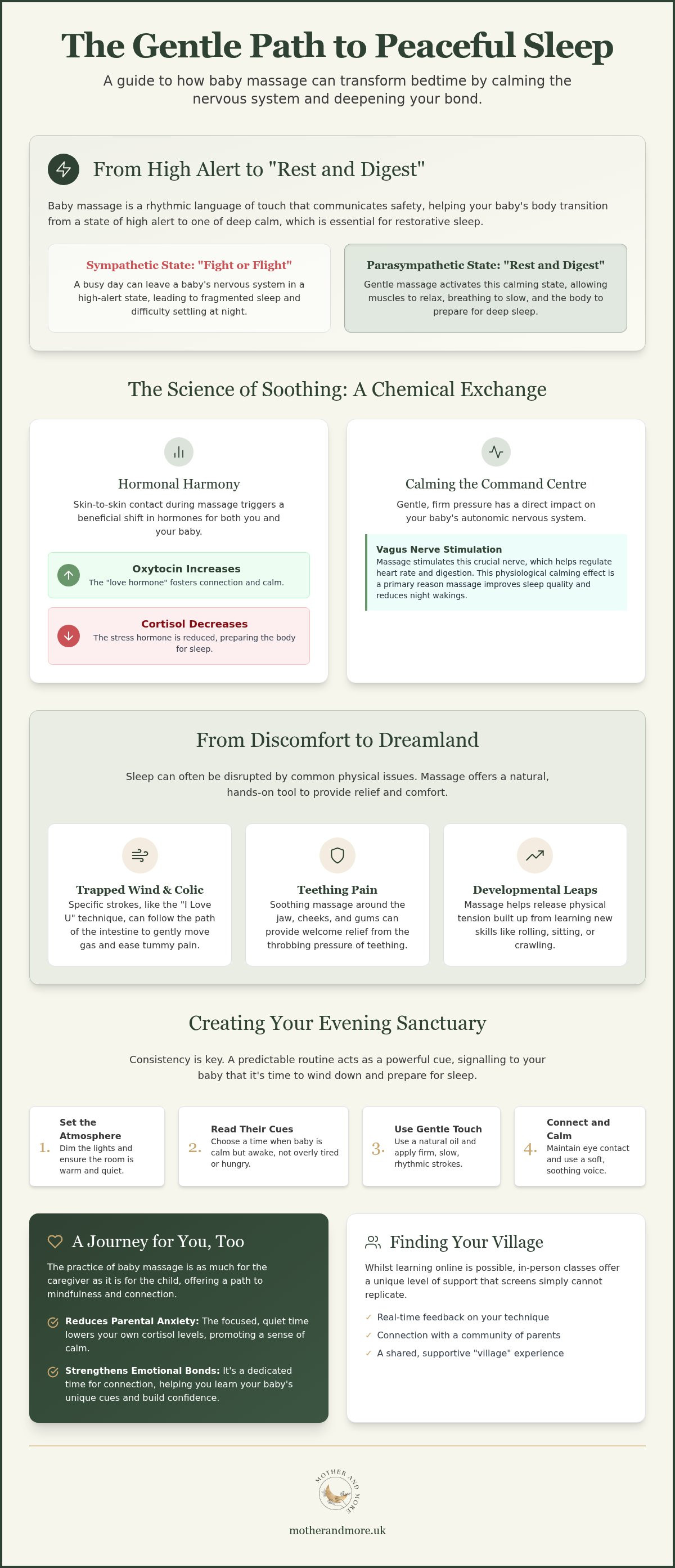
At its heart, baby massage is a structured, rhythmic language of touch. It's a way of telling your baby that they are safe, held, and free to let go of the day. This intentional contact does more than just soothe a fussy moment; it provides a profound physiological shift. When you use these techniques, you're helping your baby's body move away from the high-alert sympathetic nervous system and into the "rest and digest" parasympathetic state. This transition is one of the primary baby massage benefits for sleep, as it allows muscles to soften and built-up tension from a busy day of learning to melt away. When your hands move in a predictable, steady rhythm, your baby's muscles begin to unclench and their breathing slows. Their little fists soften. Their shoulders drop.
Ultimately, baby massage acts as a biological trigger that signals to your child's body that it's safe to transition from the stimulation of the day into a state of deep, restorative sleep readiness.
The Science of the "Love Hormone" and Melatonin
When you massage your baby, you're initiating a beautiful chemical exchange. Skin-to-skin contact and gentle pressure stimulate the release of oxytocin in both of your bodies. This doesn't just feel lovely; it actively lowers cortisol, the stress hormone that can keep a baby in a state of fragmented, light sleep. By reducing these stress levels, massage helps regulate the circadian rhythm, encouraging the natural production of melatonin. This ancient practice, rooted in the history and benefits of infant massage, creates the perfect hormonal environment for a longer, more settled night. It helps your baby understand the difference between the active hours of the day and the quiet sanctuary of the evening.
Reducing Physical Discomforts That Disrupt Sleep
Sleep is often interrupted by the small but sharp discomforts of being new to the world. Digestion can be a significant hurdle, with trapped wind or colic causing evening distress. Specific strokes, such as the "I Love U" technique, follow the path of the large intestine to gently move gas and ease tummy pain. These movements can be a lifeline during those difficult weeks of early development. Beyond digestion, the calming nature of massage can also provide relief from the throbbing pressure of teething. By addressing these physical barriers, you maximise the baby massage benefits for sleep whilst giving yourself a practical tool to use when they are at their most restless. It offers a natural, hands-on way to settle your little one without immediate recourse to clinical interventions.
Deep Sleep Benefits: How Massage Regulates the Nervous System
Your baby's world is a whirlwind of new sights, sounds, and sensations. By the end of the day, their little nervous system can feel quite frazzled. This is where the magic of tactile stimulation comes in. When you apply gentle, firm pressure during a massage, you are actually stimulating the Vagus nerve. This is the longest nerve of the autonomic nervous system; it plays a vital role in regulating heart rate and digestion. By encouraging higher heart rate variability, you're helping your baby's body learn how to switch from a state of high arousal to one of deep, restorative calm. It is one of the most profound baby massage benefits for sleep, as it provides the physiological foundation for a peaceful night.
This process is often referred to as "sensory integration." Think of it as helping your baby file away the day's experiences. Without this quiet time to process, a baby can remain in a state of overstimulation, leading to those difficult bedtime battles. A regulated nervous system doesn't just make settling easier; it leads to fewer night wakings because the baby is in a more stable, less reactive state. As your child grows, this practice evolves with them. Whether they are navigating the four-month sleep regression or the physical frustration of crawling, massage remains a constant, supporting them through every developmental leap.
Circadian Rhythm and Day-Night Confusion
For many newborns, the difference between midday and midnight is a bit of a mystery. Using a consistent massage sequence acts as a gentle bridge, helping them distinguish between the active hours and the quiet ones. By dimming the lights, using a soft voice, and maintaining a steady rhythm, you create a powerful psychological anchor. Over time, your baby will begin to recognise these cues, associating the scent of the oil and the feeling of your hands with the safety of sleep. If you're looking for more personalised guidance on creating these routines, you might find our baby massage courses a wonderful place to start your journey.
Improving Sleep Quality vs. Sleep Quantity
It's helpful to remember that while massage is incredibly effective, it isn't a "magic wand" that guarantees a twelve-hour stretch from day one. Instead, it focuses on the quality of the rest your baby receives. By inducing deep physical relaxation, you can significantly reduce the "startle" reflex often seen during active REM sleep, allowing your baby to move more smoothly between sleep cycles whilst they rest. This transition from a "quiet alert" state during the massage into a heavy-lidded drowsiness is a beautiful thing to witness. It ensures that when they do sleep, it is deep, restorative, and truly nourishing for their growing brain.
Creating an Evening Sanctuary: The Bedtime Massage Routine
Before your hands even touch your baby's skin, the environment begins the work of relaxation. It's about more than just a quiet room; it's about creating a sensory sanctuary that signals the day is done. Your baby is incredibly sensitive to your internal state, so take a moment to settle yourself first. Drop your shoulders. Take a deep, grounding breath. When you approach the massage with a sense of calm, you're already communicating safety. For a sleep-inducing massage, ensure the room is a draft-free haven heated to approximately 22°C, with soft, ambient lighting that mimics the natural fade of the day.
Selecting the right medium for your touch is just as vital as the environment. Whilst many parents reach for coconut oil, the 2026 paediatric guidelines suggest being mindful of skin sensitivity in newborns; often, a light, cold-pressed vegetable oil or a specific natural massage oil is a safer choice for delicate barriers. Using a safe oil allows your hands to glide without friction, turning the experience into a seamless, rhythmic flow. This ritualised approach helps you unlock the full baby massage benefits for sleep, as the scent and feel become a predictable anchor for your little one's bedtime.
A Simple Sleep-Inducing Sequence
You don't need to be a professional to offer a beautiful, effective massage. Following a consistent sequence helps your baby anticipate what comes next, which reduces anxiety and encourages settling. Try this gentle flow:
Step 1: The Still Touch. Place your warm hands gently on your baby’s chest or tummy. This is a moment of connection; it's about asking for permission and letting them feel your presence.
Step 2: Legs and Feet. Use long, downwards strokes from hip to ankle. This grounds the baby and helps release the physical tension that often accumulates in the lower body during the day.
Step 3: Rhythmic Tummy Strokes. Using a clockwise motion, gently massage the abdomen. This encourages deep, diaphragmatic breathing and eases any digestive discomfort that might disrupt rest.
Step 4: The Back. Finish with slow, sweeping strokes from the neck down to the bottom. These are the most sedative strokes in your repertoire and are perfect for transitioning into a heavy-lidded sleep state.
Reading Your Baby’s Cues
The most important part of this routine isn't the technique; it's the dialogue. You are learning to listen with your hands and your eyes. Look for "Yes" cues like relaxed limbs, steady eye contact, or soft cooing. These tell you that your baby is enjoying the connection and is ready to continue. Conversely, if you see "No" cues such as splayed fingers, turning the head away, or arching the back, it's a sign they've had enough. Stopping when your baby is over-stimulated is actually more beneficial for their sleep than pushing through to finish the routine. This responsive touch builds a deep sense of trust and security, ensuring that the baby massage benefits for sleep are rooted in a positive, mutual bond.
The Caregiver’s Journey: Bonding and Parental Wellbeing
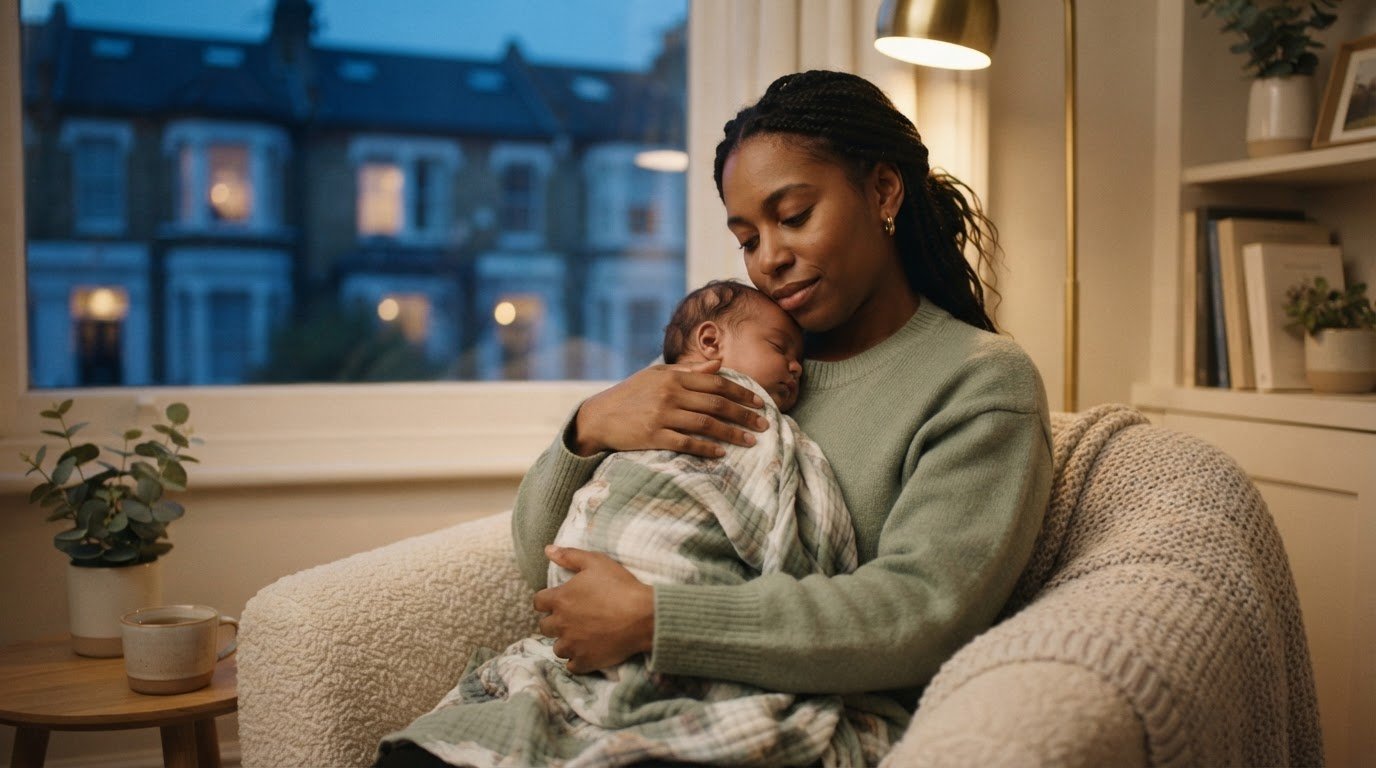
Parenthood is a seismic shift. It's a period of intense transformation where your old identity often feels like it's been tucked away in a drawer. Amongst the "nappy bag" chaos and the persistent fog of sleep deprivation, it's easy to feel like you've become a series of tasks rather than a person. This is why the ritual of massage is so vital for you, not just your little one. The rhythmic, repetitive nature of the strokes acts as a form of mindfulness in motion. As you focus on the warmth of your hands and the softness of your baby’s skin, your own heart rate begins to steady. You're breathing together. You're present.
When you witness your baby’s body soften under your touch, the sense of relief is visceral. Successfully soothing your child is a powerful antidote to postnatal anxiety. It reminds you that you are exactly what your baby needs, even on the days when you feel like you're just getting by. If you find yourself struggling to navigate this new version of yourself, exploring Life Coaching for Mums UK can provide the sanctuary you need to reclaim your confidence and identity whilst you grow into this role.
Building Confidence in Your Parental Instincts
Learning your baby’s unique language through touch reduces the exhausting "second-guessing" that often accompanies early parenthood. You start to recognise the subtle differences between a tired cry and a hungry one. This empowerment is one of the most overlooked baby massage benefits for sleep; when you feel capable of comforting your child, your own stress levels drop. This, in turn, helps your baby feel more secure. It's a beautiful cycle of mutual regulation. During these quiet moments, you aren't just caring for another; you are reconnecting with your own body and breath. You are finding your feet again.
Involving Partners and Dads in the Sleep Routine
For partners who may not be breastfeeding, the evening routine can sometimes feel like a time where they are on the sidelines. Massage is the perfect "bonding bridge" to change that. It gives dads a specific, hands-on role that is entirely their own. When a father takes over the evening massage, he builds a unique soothing relationship that is independent of feeding. This shared responsibility allows both parents to experience the baby massage benefits for sleep and connection. To support this journey, we offer dedicated Workshops for New Dads designed to nurture that essential connection and build practical confidence.
If you're ready to deepen this bond and find your place in a supportive community, we invite you to explore our upcoming baby massage courses and coaching sessions to begin your own journey toward calm. 🌿
Finding Your Village: Why In-Person Classes Make a Difference
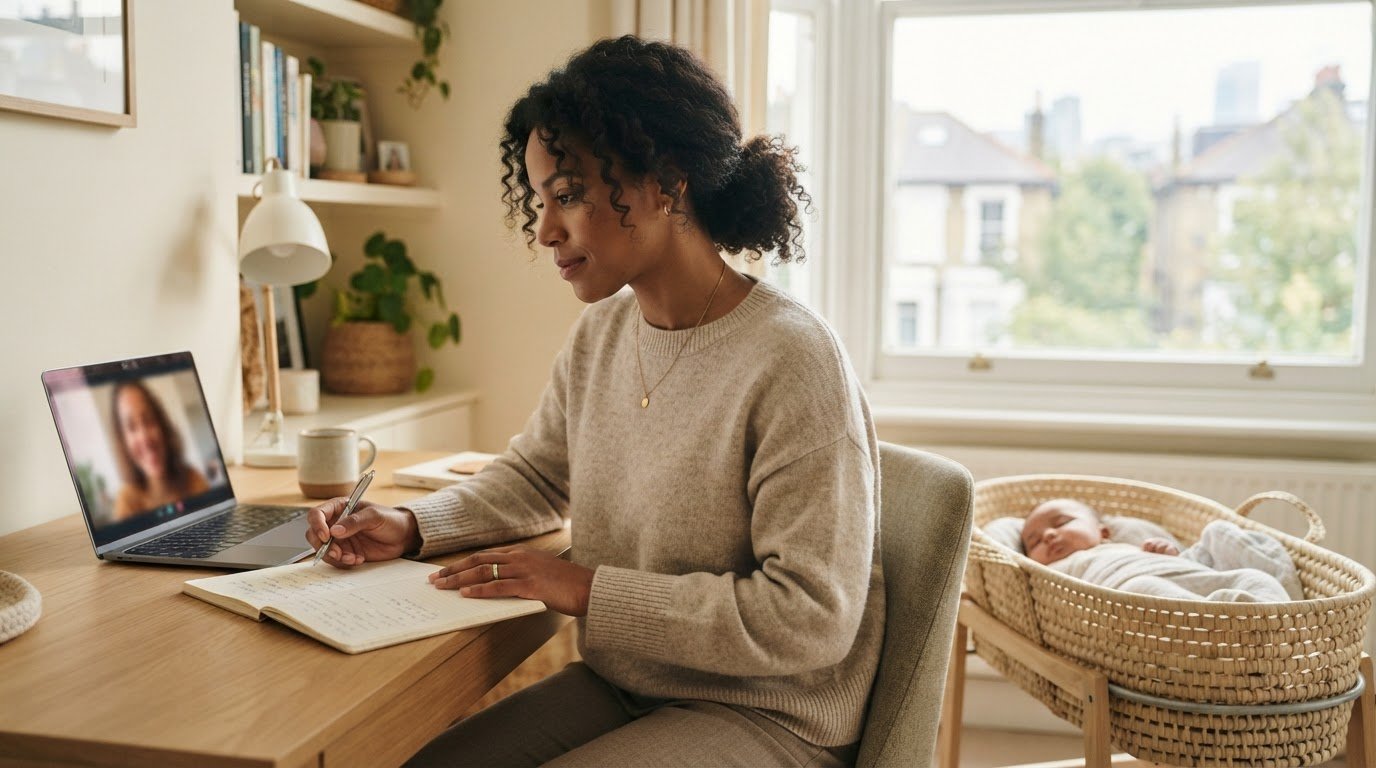
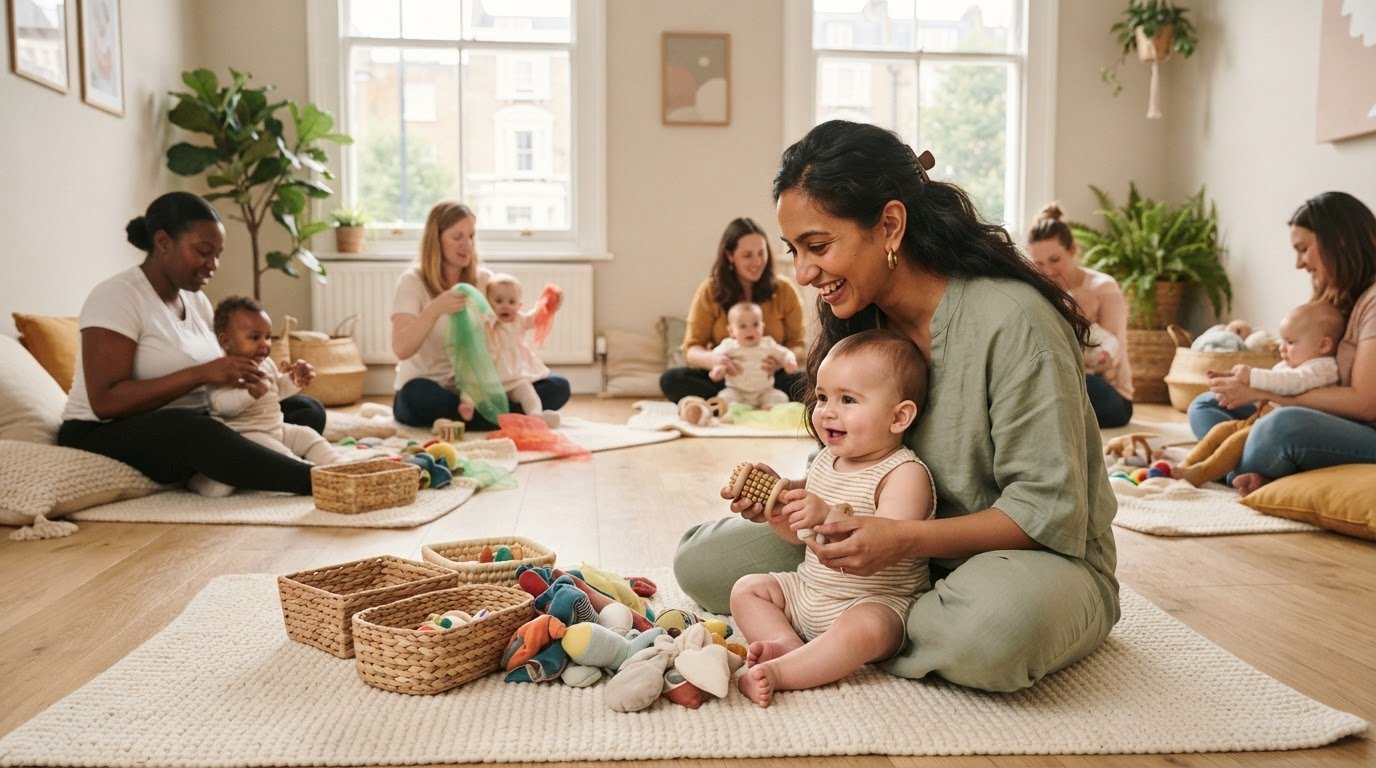
Learning a new skill amongst the haze of early parenthood can feel daunting. Whilst an online tutorial might seem convenient, it lacks the nuanced, real-time feedback that a physical presence provides. In an in-person setting, you aren't just watching a screen; you are being guided by an expert who can see the subtle shift in your baby’s posture or the way your own tension might be affecting the rhythm. Our Baby Massage Classes in East London serve as a sanctuary where you can ask those "is this right?" questions and receive immediate, reassuring answers. You get to see other babies reacting in their own unique ways, which helps normalise your own experience.
Led by Rebecca Beazley, a former social worker and accredited life coach, these sessions ensure you are unlocking the baby massage benefits for sleep with confidence and safety. It is about more than just the strokes. It is about the shared energy of the room. You are surrounded by others who understand the weight of a sleepless night and the joy of a first smile. This local "village" becomes a lifeline, transforming a technical skill into a communal experience of support and growth. Having an instructor who has supported over 2,000 local families means you are in hands that truly understand the complexities of the postnatal journey.
The "Sanctuary" of a Weekly Class
Stepping out of your home and into a dedicated wellness space is a powerful act of self-care. It breaks the cycle of isolation that so often accompanies the postnatal period. A structured five-week course builds a much stronger habit than a one-off video ever could, providing the consistency needed to truly see the baby massage benefits for sleep over time. Perhaps most importantly, the "tea and chat" time after the massage is where the real magic happens. It is a safe space to vent, laugh, and realise you aren't alone in your struggles. These moments of connection are often where the most profound healing begins.
What to Look for in a Baby Massage Instructor
When choosing someone to guide you, look for more than just a certificate. Whilst accreditation from bodies like the IAIM is essential for safety, the instructor’s temperament matters just as much. You need someone who leads with empathy and understands the holistic shift in your identity. An instructor with a coaching background can hold space for your emotional well-being as well as your baby’s physical needs. For those seeking a more integrated approach to health, our Mother and Baby Wellness Classes offer a comprehensive path to postnatal recovery and connection. 🌿
Embracing a Calmer Bedtime Together
The journey through early parenthood is rarely a straight line, but you don't have to navigate the sleepless nights alone. By integrating rhythmic touch into your evening ritual, you are doing so much more than encouraging rest. You are actively regulating your baby’s nervous system and building a foundation of security that will last a lifetime. These baby massage benefits for sleep extend to you as well, offering a quiet moment of mindfulness whilst you navigate the transition into your new identity as a mother.
Whether you are seeking physical techniques to soothe a fussy baby or a supportive "village" to share the highs and lows, help is here. Rebecca Beazley, an accredited life coach and former social worker, has already supported over 2,000 families in East London with a holistic approach to wellness. It's time to reclaim your confidence and find your sanctuary. Book your place in our nurturing East London Baby Massage classes and discover the transformative power of connection. You're doing a wonderful job, and a more peaceful evening is within your reach. 🌿
Frequently Asked Questions
How soon can I start baby massage for sleep?
You can begin gentle touch from the very first day, but structured massage routines are usually best introduced after the first few weeks once the umbilical cord has healed. Most families find that joining a class around the six-week mark feels just right. It provides a wonderful opportunity to build your confidence and bond with your little one whilst navigating the beautiful complexities of the fourth trimester together.
What is the best time of day to massage my baby for better sleep?
The ideal time is usually about 30 to 45 minutes before bedtime, once your baby is in a "quiet alert" state. Avoid massaging immediately after a feed to prevent reflux; waiting about half an hour is generally best. This consistency helps them distinguish between the active day and the quiet night, maximising the baby massage benefits for sleep by creating a predictable sensory bridge.
Do I need a special oil for baby massage?
Choosing the right medium is essential for protecting your baby's delicate skin barrier. Avoid pure coconut or neem oil for newborns under three months, as per 2026 paediatric guidelines. Instead, opt for a light, cold-pressed vegetable oil or a specific edible-grade oil. This ensures your hands glide smoothly without causing irritation, making the experience truly relaxing for your little one whilst keeping their skin nourished and safe.
Can I massage my baby if they have reflux or colic?
Massage can be incredibly supportive for digestive issues. For reflux, keep your baby in a slightly more upright position and avoid deep tummy pressure. For colic, specific rhythmic strokes on the abdomen can help move trapped wind and ease discomfort. These targeted techniques provide the physical relief that often leads to a much more settled evening and a deeper, more comfortable sleep for your baby.
What if my baby cries or seems unhappy during the massage?
If your baby cries, the most nurturing thing you can do is stop and comfort them. Massage is a dialogue, not a task to be completed. They might be overstimulated, hungry, or simply not in the mood for touch at that moment. By responding to their "No" cues, you are building a deep sense of trust and security, which is the most important foundation for long-term sleep success.
How long should a sleep-inducing massage session last?
A session can last anywhere from five to twenty minutes, depending on your baby's age and mood. For newborns, a few minutes of gentle leg strokes might be plenty. As they grow and become more accustomed to the routine, you can extend the time. The goal is never to rush; it's about the quality of the connection and the steady, calming rhythm you create together in your sanctuary.
Is baby massage safe for premature babies?
It is often exceptionally beneficial, but it's important to consult your paediatrician or neonatal team before beginning. Premature babies can be more sensitive to sensory input, so we often start with gentle "still touch" rather than active strokes. When adapted to their needs, the baby massage benefits for sleep and physical development are significant, helping these little ones find a sense of safety and calm outside the neonatal unit.
Can baby massage replace other forms of sleep training?
Massage isn't a replacement for sleep training, but it is a foundational tool for holistic regulation. It helps your baby transition into a "rest and digest" state, making it easier for them to settle themselves naturally. Rather than a rigid "training" method, it offers a responsive, bonding-focused approach that supports their development. It works beautifully alongside any gentle sleep routine you choose to follow for your family.
Comments