

Baby Yoga: A Nurturing Guide to Motor Development
What if the secret to your baby reaching their next milestone wasn't found in a rigid clinical chart, but in the soft, rhythmic flow of a shared morning stretch? It's so natural to feel a flicker of anxiety when scrolling through developmental tick-boxes. You might feel overwhelmed by clinical advice or perhaps a little nervous about how to safely use baby yoga for motor development. You aren't alone in those feelings. We understand that shift in identity, the desire to protect, and the quiet pressure to get everything just right.
This guide explores how gentle movements can transform these anxious moments into a beautiful, sensory dialogue between you both. We promise to show you how these intentional practices support your infant's physical milestones whilst strengthening the emotional bond that grounds your new life together. It's about finding confidence in your touch and joy in their growth. We will walk through practical, safe movements you can start at home today, ensuring you feel like a capable, connected guide for your baby's unique journey. Together, we'll replace overwhelm with a sense of calm and empowerment.
Table of Contents
What is Baby Yoga for Motor Development?
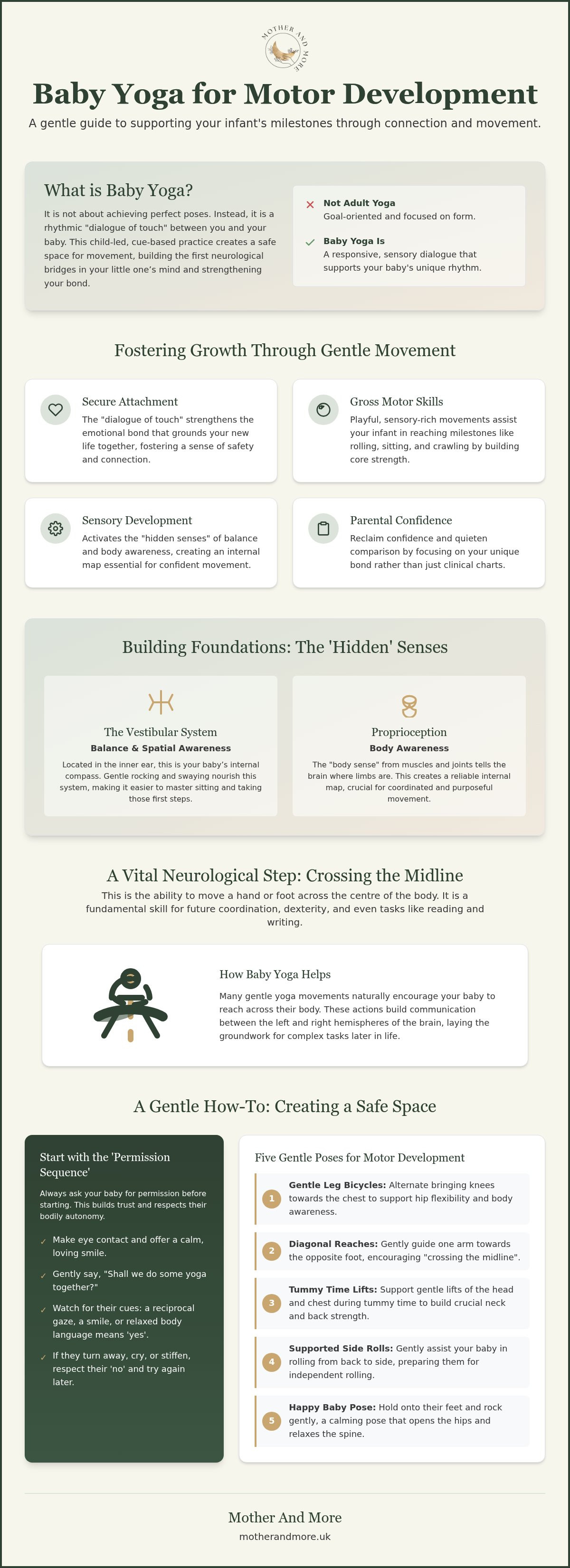
Imagine your baby’s body as a delicate instrument, learning to play its first notes. Baby yoga is an adapted form of movement therapy, specifically designed to support these early melodies of growth. It isn't about forcing a child into a downward dog or seeking a perfect pose. Instead, it's a rhythmic dialogue of touch. Unlike adult yoga, which is often goal-oriented, baby yoga is entirely child-led and cue-based. You aren't just "doing" an exercise; you are listening to your baby’s body and responding with love. This intentional interaction is the heart of baby yoga for motor development, creating a safe space where physical movement begins to build the first neurological bridges in your little one’s mind.
The principles of Yoga for children are here refined for the tiniest practitioners, focusing on safety and developmental readiness. By moving together, you're helping your baby map out their own body. It's a sensory experience that tells their brain: "This is my arm, this is my leg, and this is how they move." This awareness is the spark for every milestone that follows. Listening. Responding. Connecting. It’s a beautiful process of discovery.
The Science of Sensory-Motor Development
During the first twelve months, every wiggle and stretch sends a signal to the brain. This is how the brain "wires" itself for the future. Tactile stimulation is vital for motor planning. This is the brain’s ability to conceive, organise, and carry out a sequence of actions. In our sessions, we balance "active" and "passive" movement. Whilst you might be gently guiding their limbs, the sensory feedback your baby receives makes it a deeply active neurological event. Their brain is busy recording the feeling of the movement, preparing for the day they'll do it all on their own. It is a quiet, powerful transformation.
Why Focus on Motor Skills Early On?
Motor skills are the foundation for future cognitive learning. When your baby learns to reach or roll, they are also learning about cause and effect. Movement builds spatial awareness. It helps them understand where their body ends and the world begins. This physical confidence, fostered through baby yoga for motor development, eventually translates into emotional and intellectual confidence. However, it's vital to remember that development is a non-linear journey. Every baby has their own internal clock. There is no race to the finish line; there is only the steady, supported rhythm of your own child’s progress. We are here to support that rhythm, not to rush it.
Building Foundations: Gross Motor Skills and the Internal Senses
Watching your baby reach for their toes or push up from the floor is a moment of pure magic. These are the beginnings of gross motor skills; the large movements involving the core, legs, and arms that eventually lead to rolling, sitting, and crawling. In our practice, we use baby yoga for motor development to support this natural progression. It's a journey from the involuntary reflexes of the newborn days to the intentional, purposeful movements of an infant discovering their own strength. By gently guiding your baby through specific poses, we help them find their "centre," strengthening the neck and abdominal muscles that act as the scaffolding for every future milestone.
Beyond the muscles we can see, yoga taps into the "hidden" senses that direct how your baby moves. It is about more than just flexibility. It is about building a reliable internal map. If you feel like you need a little extra guidance in navigating these early physical shifts, joining one of our Baby Yoga Classes can provide the supportive environment you and your little one deserve. It's a chance to learn in a space that feels like a warm embrace, surrounded by others on the same path.
The Vestibular System: Balance and Spatial Awareness
The vestibular system, located in the inner ear, is your baby’s internal compass. It tells them where their head is in relation to the ground. When we incorporate gentle rocking, swaying, or soft changes in level during a session, we are actually nourishing this system. This sensory input is essential. Without a well-stimulated vestibular sense, milestones like sitting unassisted or taking those first wobbly steps become much harder to master. We move slowly. We move with intention. We give the brain time to process every shift in balance. It's a quiet, steady way to build confidence from the inside out.
Proprioception: Knowing Where the Body is in Space
Proprioception is often called the "body sense." It is the information sent from the muscles and joints to the brain, telling your baby exactly where their limbs are without having to look at them. During yoga, we use gentle joint compression and soft pressure, perhaps by bringing their knees towards their chest or pressing our palms to the soles of their feet. This tactile feedback provides vital data. It helps "colour in" the body map in the brain, leading to better coordination and a deeper sense of physical security as they grow. Your touch becomes their teacher, guiding them toward their next big adventure.
Fine Motor Skills and Midline Crossing
Whilst gross motor skills provide the strength to move through the world, fine motor skills offer the precision to interact with it. It is the difference between a joyful kick and the delicate, intentional reach for a parent’s hand. Fine motor development focuses on the small muscles in the hands and wrists, governing dexterity, hand-eye coordination, and that first, firm grip. In our practice, baby yoga for motor development creates a playful environment where these intricate skills can flourish. We move beyond simple movement, incorporating sensory play that encourages your baby to explore their world with curiosity and care.
One of the most significant neurological leaps your baby will make is "crossing the midline." Imagine an invisible line running from your baby’s forehead down to their toes, dividing the body into left and right. When your baby reaches across this line with their right hand to touch their left foot, they aren't just stretching. They are forcing the two hemispheres of their brain to communicate. This coordination is a vital building block for future independence, and yoga provides a gentle, supported way to encourage this bilateral harmony.
Bilateral Integration: The Bridge Between Brain Hemispheres
The corpus callosum is a thick bundle of nerve fibres that acts as a bridge between the left and right sides of the brain. For a baby to move efficiently, this bridge needs to be strong. Yoga poses that involve reaching across the body or bringing opposite hands and feet together are like a workout for this connection. It’s a sophisticated form of motor planning. Eventually, this early work in baby yoga for motor development will support complex tasks like feeding themselves, dressing, and eventually, the rhythmic flow of writing. We are laying the groundwork for their future autonomy, one gentle stretch at a time.
Tactile Awareness and Dexterity
Sensory integration is a beautiful part of our yoga sessions. We encourage babies to feel different textures, perhaps the soft cotton of a blanket or the slight grip of a yoga mat, whilst they move. This tactile awareness is closely linked to dexterity. By encouraging your baby to grasp their toes or reach for sensory props, we help them develop the "pincer grip" and overall hand strength. There is also a fascinating connection between hand strength and core stability. As your baby’s core becomes more secure, their hands are freed up to become more precise. It's all connected. It's a holistic evolution of their physical identity.
Nurturing the Mother: Confidence, Identity, and the Village
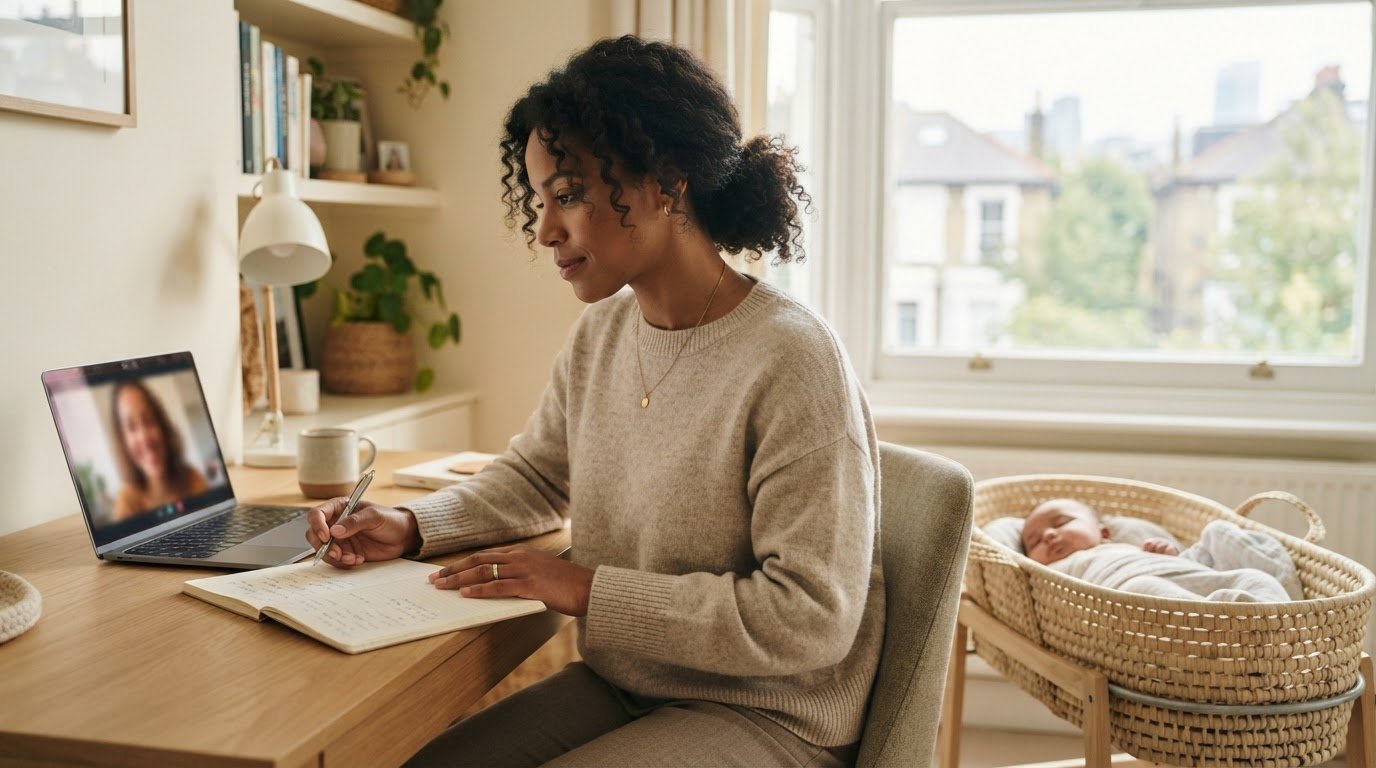
The focus of early parenthood often rests solely on the infant, but at Mother And More, we believe your well-being is the foundation of your baby’s world. It's so easy to fall into the "comparison trap" whilst scrolling through social media or sitting in a café, wondering why another baby is already sitting up whilst yours is content to roll. This anxiety can be heavy. Using baby yoga for motor development isn't just about the physical movements; it’s about reclaiming your confidence. It transforms a clinical exercise into a tool for maternal empowerment, allowing you to tune out the noise and tune into your baby’s unique cues. You are the expert on your child.
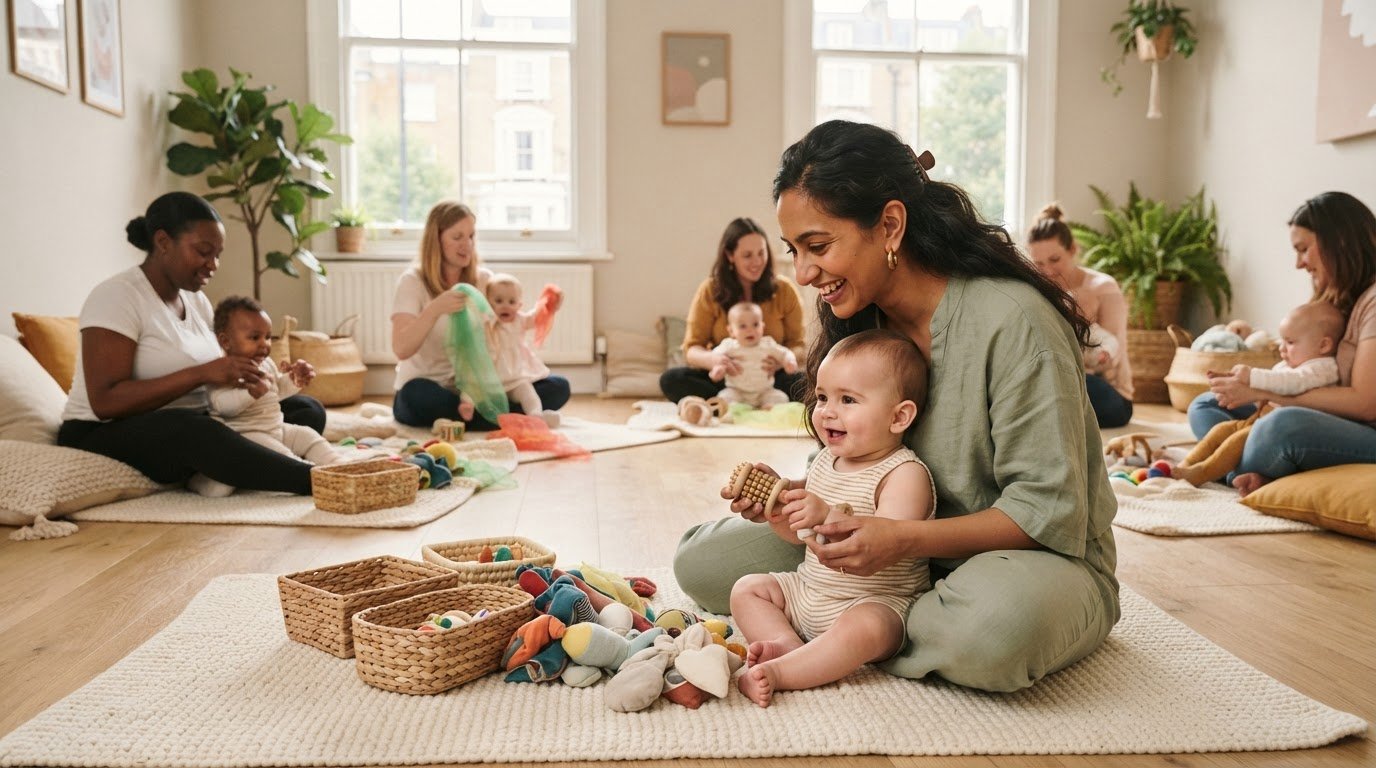
Physical activity together also aids your own postnatal recovery. These gentle movements help rebuild your core strength and release tension in shoulders tired from carrying. More importantly, it offers a space to "find your village." In our East London community, we've seen how shared experiences turn a group of strangers into a lifeline. You aren't just a "mum"; you are a woman navigating a profound shift, and having a supportive circle makes all the difference. Shared laughter and shared struggles are the glue that holds this transition together.
Navigating the Postnatal Identity Transition
Becoming a mother is perhaps the most significant identity shift you'll ever experience. It can feel like the "individual" you once were has been eclipsed by your new role. This transition is complex and deserves its own space. Our approach to life coaching for mums uk is designed to help you navigate this evolution, ensuring you maintain your sense of self whilst embracing motherhood. We encourage deep self-compassion, especially during those challenging developmental leaps when everything feels a little bit "extra." It is okay to be a work in progress.
Milestones and the UK "Red Book"
Your health visitor’s "Red Book" is a helpful guide, but it shouldn't be a source of fear. While baby yoga for motor development provides excellent support for physical growth, it's meant to complement, not replace, formal health checks. Every baby has a favourite pace. Some are observers who take their time; others are explorers who can't wait to move. Trust the process. If you ever feel concerned, always seek professional advice, but remember that your intuition is a powerful compass. If you're looking for a place where your intuition is celebrated, you can explore our range of supportive classes and coaching to find the right fit for your journey.
A Gentle How-To: 5 Baby Yoga Poses for Motor Development
Creating a sanctuary for movement at home begins with a warm, quiet space and a heart full of presence. You don't need fancy equipment; a soft blanket and your undivided attention are enough. Before you start, it's vital to perform the "Permission Sequence." This is a quiet moment where you look into your baby’s eyes and ask if they're ready to play. Watch for their cues. A smile or a relaxed body is a "yes," whilst turning away or fussing tells you they might need rest instead. Respecting their autonomy from day one builds a foundation of trust that makes baby yoga for motor development a truly shared experience.
Safety is always our priority. Never force a movement or stretch. It's best to wait at least 45 minutes after a feed to avoid discomfort, and always keep your movements slow and rhythmic. If you find yourself wanting to deepen your practice or meet other parents, transitioning from home practice to a baby yoga east london class can offer the expert guidance and community support that makes this journey so much richer.
Poses for Core and Neck Strength
The Tiger in the Tree: Lay your baby tummy-down along your forearm, with their head near your elbow and legs straddling your wrist. This position supports tummy time in a way that feels secure, helping them build the neck control needed for looking around their world.
Gentle Leg Cycles: Whilst your baby lies on their back, hold their ankles and gently move their legs in a cycling motion. This aids digestion and brings a wonderful sense of awareness to their lower body.
To encourage midline crossing, gently guide your baby’s right hand to touch their left knee or foot, facilitating a vital connection between the two sides of the brain.
Poses for Balance and Connection
Building on the foundations of core strength, we move into poses that encourage spatial awareness and stability. The Chest Opener involves gently bringing your baby’s arms out to the sides in a wide "T" shape and then crossing them over their chest like a hug; this encourages deep breathing and an understanding of their physical boundaries. For Supported Sitting Balances, sit your baby between your legs, using your thighs to provide just enough stability whilst they practice holding their own weight. This is the first step toward independent sitting.
To make this a favourite part of your day, try to organise a regular rhythm. Perhaps a few minutes after a nappy change or before a nap. It doesn't have to be a long session. Even five minutes of intentional baby yoga for motor development can create a lasting impact on their physical growth and your emotional bond. Trust your intuition, follow their lead, and enjoy the quiet magic of moving together.
Embracing Your Next Milestone Together
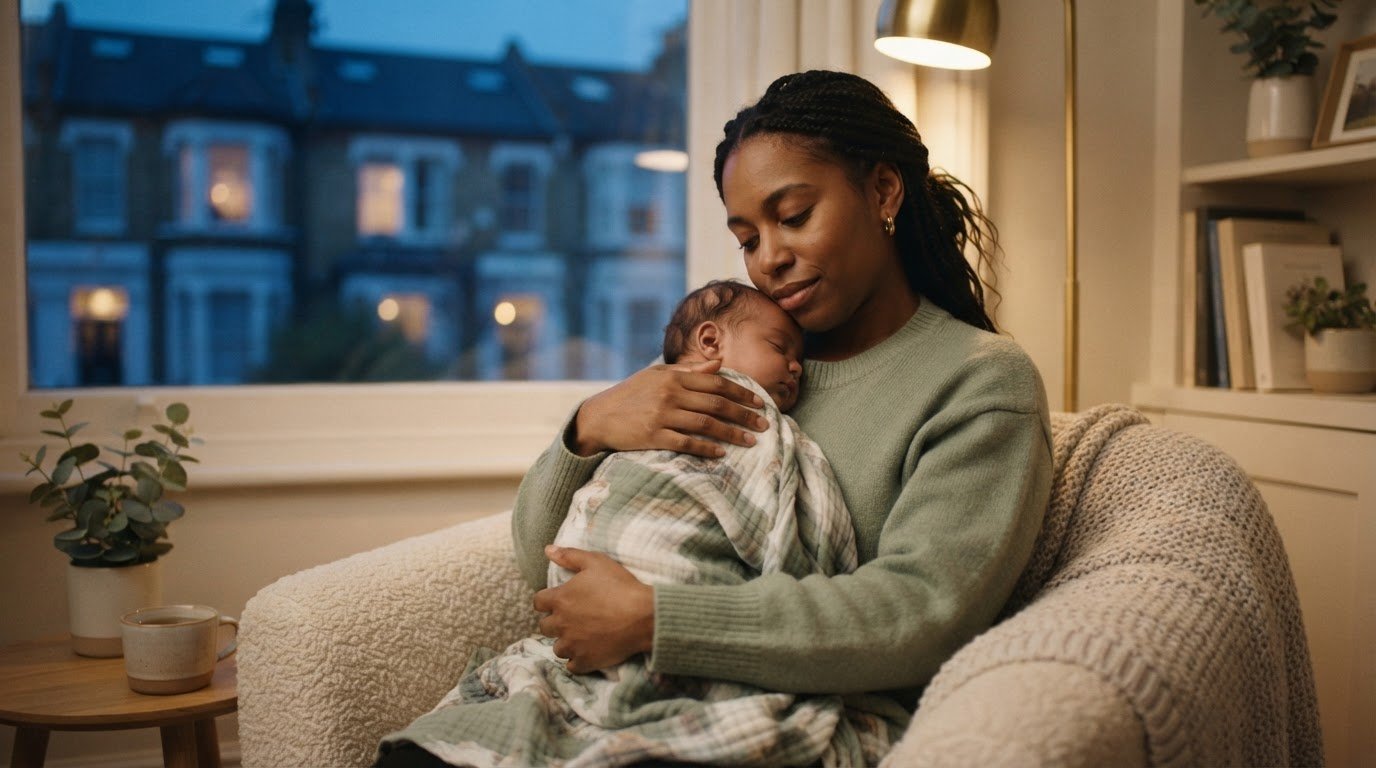
Your journey with your baby is a series of beautiful, unfolding moments. By choosing to move together, you aren't just supporting physical milestones; you are building a sanctuary of trust and understanding. We've explored how baby yoga for motor development nourishes the internal senses and strengthens the neurological bridges that will serve your child for a lifetime. It is a practice that celebrates the "dialogue of touch" whilst giving you the space to breathe and find your own confidence as a mother. You deserve to feel supported, seen, and empowered as you navigate this transition.
If you're ready to move from home practice into a community of like-minded parents, we would love to welcome you. Our founder, Accredited Life Coach and Baby Class Expert Rebecca Beazley, has already supported over 2,500 London families in our small, nurturing groups. Held in a beautiful East London space, our sessions are designed to be a soft place to land. Join our next Baby Yoga course in East London to find your village and deepen that precious bond. You're doing a wonderful job, and we're here to walk alongside you every step of the way.
Frequently Asked Questions
Is baby yoga safe for a newborn baby?
Baby yoga is safe for newborns when adapted correctly, though many parents prefer to wait until after their six-week postnatal check. In the earliest weeks, we focus on very soft, rhythmic movements that mirror the soothing environment of the womb. It is always best to listen to your own recovery and your baby’s readiness before starting any new physical routine together.
What is the best age to start baby yoga for motor development?
The ideal time to start baby yoga for motor development is typically between eight and twelve weeks. By this stage, infants often have more stability in their neck and a growing curiosity about their surroundings. However, the best age is whenever you feel ready to connect through movement. Every baby follows their own unique timeline of discovery and physical readiness.
How does baby yoga differ from baby massage?
Baby massage focuses on skin-to-skin contact and relaxation, whereas baby yoga involves active movement and gentle stretching. Massage is often a quiet, grounding experience. Yoga is more dynamic, using rhythm and poses to build strength and coordination. Both practices are wonderful tools for bonding and can beautifully complement each other in your daily rhythm at home.
Can baby yoga help with my baby’s sleep patterns?
Yes, baby yoga can support better sleep patterns by helping to regulate your baby’s nervous system. The combination of physical activity and sensory stimulation helps infants process their day, often leading to deeper, more restful sleep. It is a gentle way to help them transition from the busyness of play to a state of calm and relaxation before bed.
What should my baby wear for a yoga session?
Your baby should wear soft, stretchy clothing that allows for a full range of movement without restriction. A simple cotton vest or a well-fitted sleepsuit is usually the best choice for these sessions. Avoid anything with heavy zips, hoods, or restrictive waistbands that might dig in during poses. Being barefoot is also helpful as it provides better grip and sensory feedback.
How often should we practise baby yoga at home?
Practising for just five to ten minutes a day is plenty for a home routine. Consistency is more important than duration. You don't need to complete a full sequence every time; even a few gentle leg cycles after a nappy change can be beneficial. Follow your baby’s cues and keep the atmosphere light, playful, and connected to their current mood.
Does baby yoga help with colic or wind?
Specific poses in baby yoga for motor development are excellent for relieving the discomfort of colic, wind, and constipation. Movements like "leg cycles" or bringing knees to the chest gently massage the digestive system. This helps to move trapped gas through the body, providing much-needed relief for both you and your little one during fussy periods in the day.
What if my baby cries or doesn’t want to do the poses?
If your baby cries or seems disinterested, you should stop the practice immediately and offer comfort. Yoga must always be a child-led experience rooted in trust and mutual respect. Forcing a pose can create negative associations with movement. It’s perfectly okay to try again another time when they are feeling more settled, alert, and ready to engage with you.
Comments