

Baby Yoga: A Nurturing Guide to Motor Development
Updated: Aug 17
What if the most effective way to help your baby reach their next physical milestone wasn't through a rigid clinical checklist, but through the gentle, rhythmic dialogue of your own touch? It's completely natural to feel a flicker of anxiety when glancing at developmental charts. You want the best for them. You want to see them thrive. Using baby yoga for motor development isn't about hitting targets; it's about creating a nurturing space where physical growth and emotional security flourish together. 🌸
We understand that handling your baby for specific movements might feel intimidating at first. This guide is here to replace that uncertainty with a sense of calm confidence. You'll discover how gentle, safe stretches and poses can support vital milestones like rolling and sitting, all whilst strengthening the beautiful bond you share. We will explore practical techniques you can easily weave into your daily routine at home, ensuring both you and your baby feel supported, seen, and deeply connected. ✨
Table of Contents
What is Baby Yoga for Motor Development?
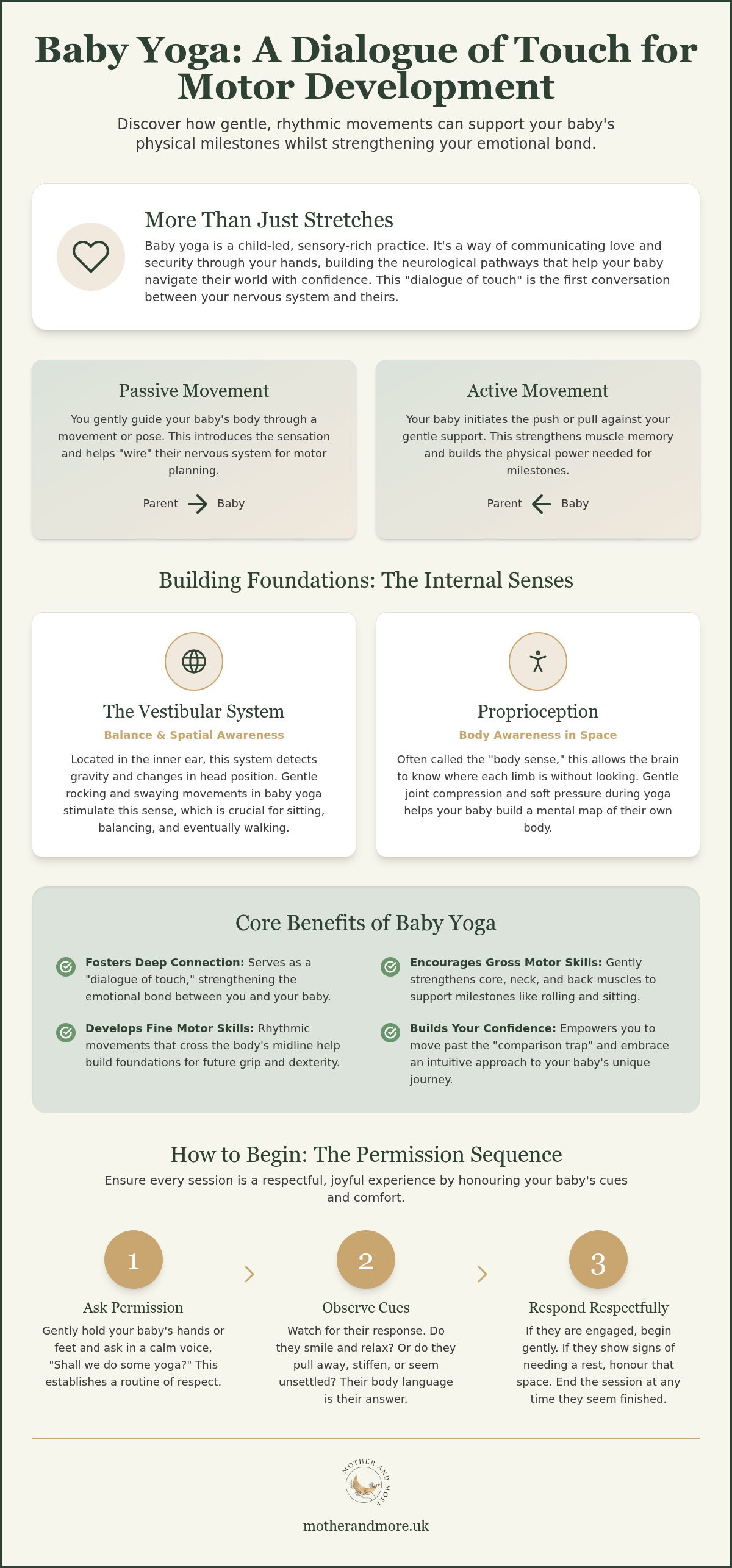
Baby yoga is far more than just a set of cute stretches for your little one. Think of it as a gentle, adapted form of movement therapy. It is a rhythmic, sensory-rich practice designed specifically for the unique physiology of an infant. Unlike adult yoga, which often focuses on personal alignment and breath control, baby yoga is a collaborative partnership. It is a child-led dialogue where every movement is guided by your baby’s cues. If they are engaged and smiling, we continue; if they need a rest, we honour that space. ❤️
At its heart, using baby yoga for motor development creates what we call a "dialogue of touch". This isn't a clinical exercise routine. It is a way of communicating love and security through your hands. Whilst you are helping them move, you are also building the neurological pathways that will eventually allow them to navigate the world with confidence. Principles found in Yoga for children show that when we adapt these ancient movements for younger bodies, we provide a holistic foundation for both physical and emotional health. This early physical interaction serves as the very first "conversation" between your nervous system and theirs.
The Science of Sensory-Motor Development
Movement is the primary language of your baby's brain during their first year. Every time you gently guide their legs into a "bicycle" motion or help them reach for their toes, you are helping to "wire" their nervous system. This tactile stimulation is vital for motor planning. This is the brain's ability to conceive, organise, and carry out a sequence of unfamiliar actions. In our sessions, we distinguish between "passive" movement, where you guide the baby, and "active" movement, where the baby initiates the push or pull. Both are essential. Passive movement introduces the sensation of the pose, while active movement strengthens the actual muscle memory required for future milestones. 🧠
Why Focus on Motor Skills Early On?
You might wonder why we place such emphasis on physical movement so early. The truth is that motor skills are the essential building blocks for future cognitive learning. Before a child can focus on a book or hold a pencil, they must first develop spatial awareness and core strength. By encouraging baby yoga for motor development, you are giving them the tools to understand where their body ends and the world begins. This physical confidence often translates into a greater willingness to explore their environment, helping them reach the milestones for school readiness that institutions like Oak Meadow International School Phuket look for in early learners.
However, please remember that development is rarely a straight line. It is a winding, beautiful journey. Some babies might master rolling overnight; others might take a more scenic route. Our goal isn't to rush them toward a checklist. Instead, we aim to provide a supportive environment where they feel safe enough to explore their own potential at their own pace. You are their safe harbour, and these movements are simply the sails that help them catch the wind. ⛵
Building Foundations: Gross Motor Skills and the Internal Senses
Gross motor skills are the large, sweeping movements that define your baby's first year. Think of the triumphant first roll, the steadying of a sitting posture, or the determined scoot of a crawl. These aren't just physical feats; they are milestones of independence. Using baby yoga for motor development provides the gentle resistance and support needed to strengthen the core and neck muscles that make these movements possible. As your baby moves from reflexive, involuntary kicks to intentional, purposeful reaching, yoga offers a safe space to practice this new-found control. 🌿
Beyond what we see on the surface, yoga activates two "hidden" senses that are the true architects of movement. While we all know about sight and sound, the vestibular and proprioceptive systems are the internal GPS that tell your baby where they are and how to stay upright. Understanding these systems helps you see the "why" behind every stretch and sway.
The Vestibular System: Balance and Spatial Awareness
Located in the inner ear, the vestibular system is your baby’s sense of balance. It detects gravity and changes in head position. When we incorporate gentle rocking, swaying, or very slight, supported shifts in our sessions, we are directly stimulating this system. A well-developed vestibular sense is the secret ingredient for sitting up without toppling and, eventually, taking those first brave steps. It helps your baby feel secure as they transition through different planes of movement, ensuring they don't feel "lost" when their position changes.
Proprioception: Knowing Where the Body is in Space
Proprioception is often called the "body sense". It's the brain's ability to know where every limb is without having to look at it. In baby yoga, we use gentle joint compression and soft pressure along the arms and legs to send clear "body-map" data to the brain. This sensory input helps your baby understand their physical boundaries. This deep awareness is what allows a child to climb, catch a ball, or navigate a crowded room with coordination later in life. It's about helping them feel "at home" in their own skin. 🧠
Building these internal foundations creates a lasting sense of physical safety for your little one. If you feel ready to explore these movements in a supportive environment, joining one of our Baby Yoga Classes can help you turn these scientific concepts into moments of pure connection. This journey is as much about your confidence as it is about their growth. 💖
Fine Motor Skills and Midline Crossing
While gross motor skills are the grand milestones of movement, fine motor skills are the intricate, delicate details of your baby's physical world. These skills involve the small muscles in the hands and fingers, enabling dexterity, hand-eye coordination, and that first, firm grip on your finger. One of the most fascinating aspects of using baby yoga for motor development is how it encourages "crossing the midline". This is the ability to move a hand or foot across the imaginary centre line of the body to the opposite side. It sounds simple, but for an infant, it's a massive developmental leap that requires the brain to coordinate both sides of the body simultaneously. 🖐️
Yoga provides a playful, structured environment to practice these movements. By encouraging your baby to reach across their body for a favourite toy or to touch their opposite knee, you're helping them map out their physical boundaries. This isn't just about movement; it's about building the neural pathways that allow the left and right sides of the body to work in harmony. This coordination is the foundation for almost every complex physical task they will face as they grow.
Bilateral Integration: The Bridge Between Brain Hemispheres
To cross the midline effectively, the two sides of the brain must communicate. This happens via the corpus callosum, a thick band of nerve fibres that acts as a bridge between the brain's hemispheres. In baby yoga, we use rhythmic, cross-body movements to strengthen this connection. When we guide a baby to reach across their chest, we are literally helping to "bridge" their brain. This bilateral integration is a vital precursor to motor planning. Strengthening this connection now lays the groundwork for future skills like buttoning a coat, using cutlery, or eventually, learning to write. It's about building an integrated, efficient brain-body connection from the very start. ✨
Tactile Awareness and Dexterity
Fine motor development is deeply linked to sensory experience. During yoga, we often incorporate different textures and touch patterns to heighten tactile awareness. This sensory play isn't just a distraction; it's a way to encourage the "pincer grip"—the ability to pick up small objects between the thumb and forefinger. We might use soft fabrics or gentle finger-walking across their palms to stimulate the nerves in their hands. You'll often find that as your baby's core stability improves through yoga, their hands become more free and capable. A steady middle allows for more precise finger work, showing how every part of their growth is beautifully interconnected. 🧠
Nurturing the Mother: Confidence, Identity, and the Village
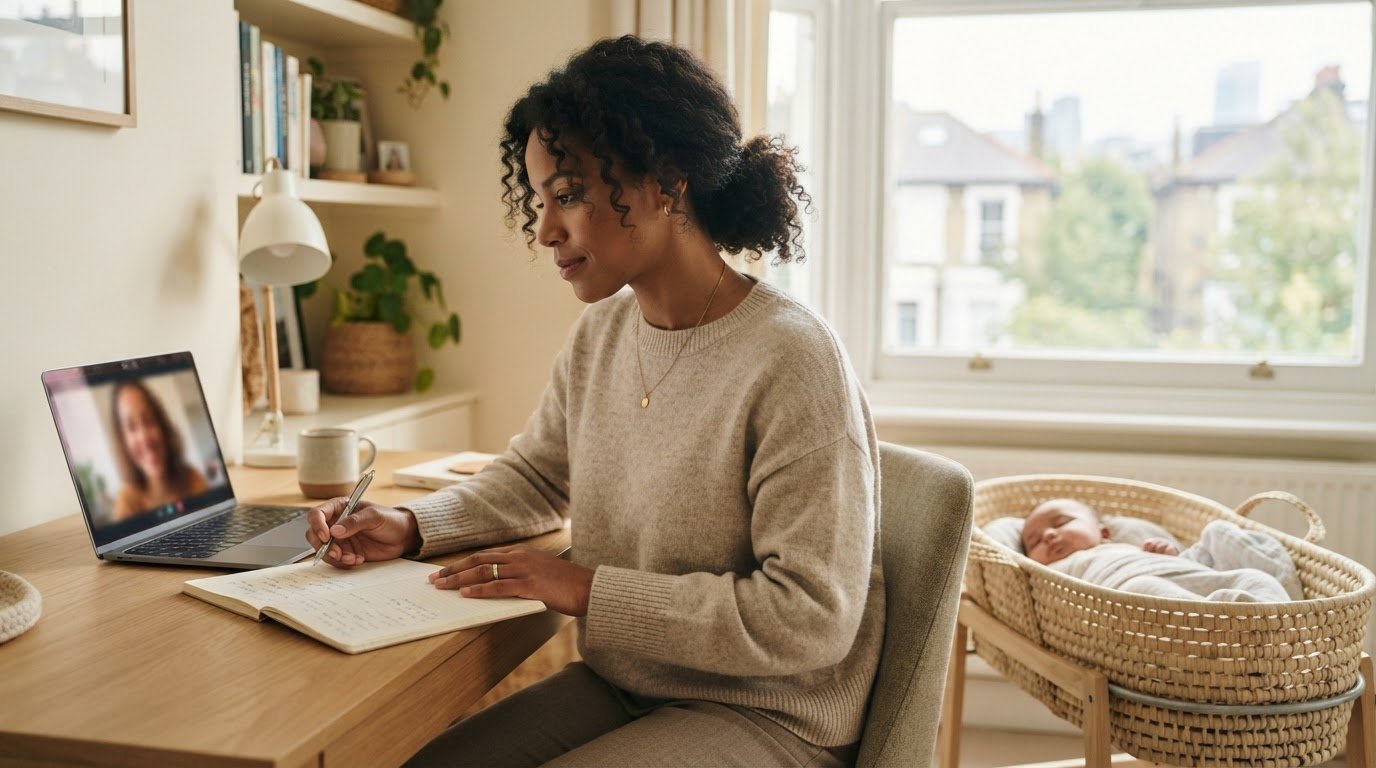
In the quiet moments between nappies and sleepless nights, it's easy to fall into the "comparison trap". You might find yourself scrolling through social media, wondering why another baby is already sitting up whilst yours is still finding their balance. This anxiety is heavy. We feel it too. At Mother And More, we believe that baby yoga for motor development is as much about nurturing the mother as it is about the infant. It serves as a gentle tool for empowerment. By learning to observe your baby’s cues during yoga, you begin to trust your own maternal intuition rather than a digital checklist. 🌿
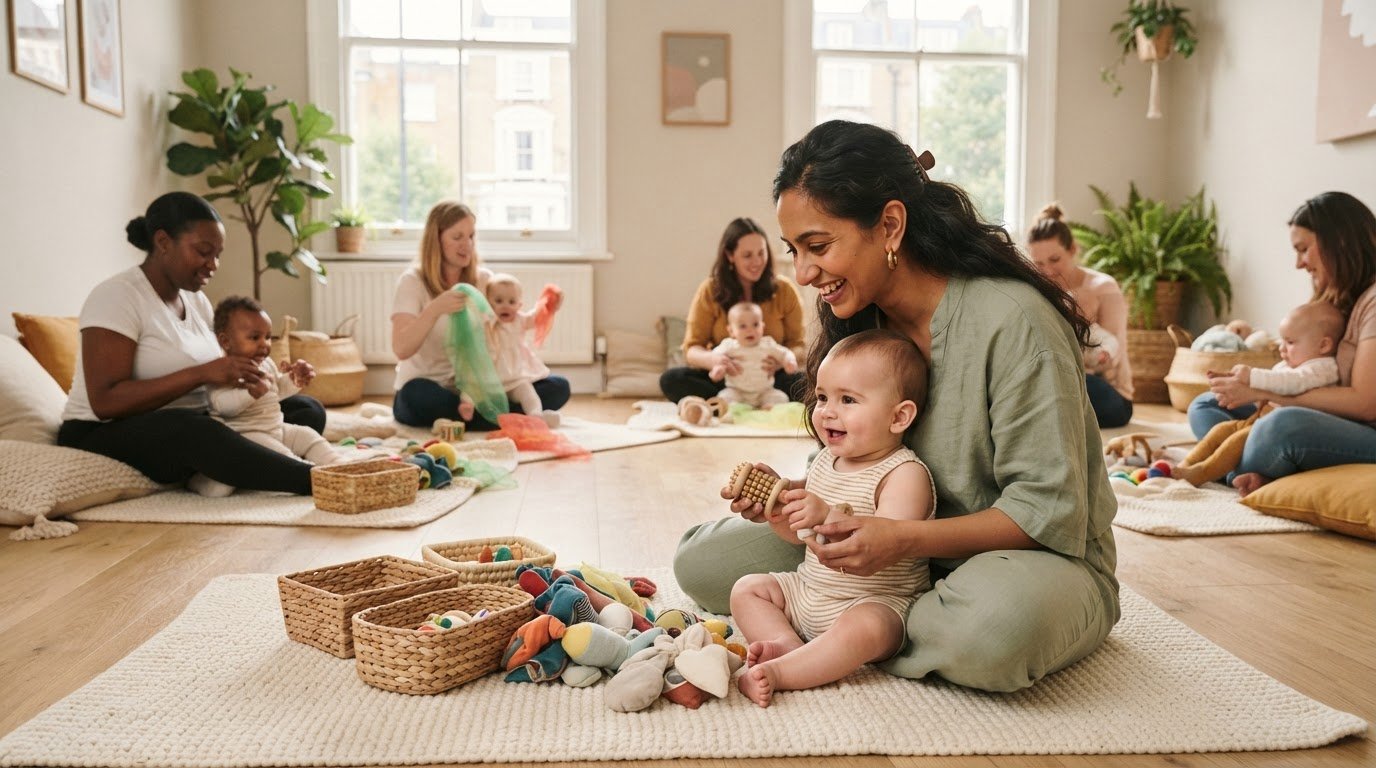
The physical movements we share don't just benefit your little one. They offer a soft path toward your own postnatal recovery. Moving together builds a unique sense of shared agency. Beyond the physical, there is the vital importance of "finding your village". In our East London community, we've supported over 2,500 local parents, creating a space where you are seen as a person, not just a parent. It is about building a support system that lasts long after the class ends.
Navigating the Postnatal Identity Transition
Becoming a mother is perhaps the most significant identity shift you'll ever experience. It can feel like you’ve lost the "individual" you once were amongst the demands of your new role. Exploring life coaching for mums uk can be a transformative way to reclaim that sense of self and confidence. We encourage a deep sense of self-compassion. As your baby navigates their developmental leaps, remember that you are navigating your own growth leap too. You are both learning. You are both evolving. ✨
Milestones and the UK "Red Book"
The UK "Red Book" is a helpful guide, but it shouldn't be a source of fear. While we use baby yoga for motor development to support the milestones your health visitor looks for, we always honour your baby’s favourite pace. Yoga shouldn't replace clinical checks, but it can certainly complement them by providing a holistic view of your child's progress. If you ever feel concerned, always seek professional advice. However, in most cases, the best thing you can do is breathe, move, and trust the process. You're doing a wonderful job. 💖
If you're looking for support that goes beyond the physical, our Group Coaching sessions offer a safe space to discuss the complexities of this transition.
A Gentle How-To: 5 Baby Yoga Poses for Motor Development
Creating a sanctuary for movement begins with a warm room and a soft surface. It's about setting a scene where both you and your baby feel entirely at ease. Before you begin any movements, we always start with the "Permission Sequence". This is a beautiful moment where you rub your hands together to create warmth, make eye contact, and softly ask, "Are you ready for yoga?" Watching for their cues, such as a smile, a kick of excitement, or a steady gaze, ensures the practice remains a joyful collaboration. 🌿
Safety is our highest priority. Always support your baby’s head and neck, especially before they reach that six-month milestone. We recommend waiting at least 20 to 30 minutes after a feed before starting, and keeping sessions to about 15 or 20 minutes to prevent overstimulation. If your baby turns away or begins to fuss, it’s a sign they’ve had enough. Honouring that "no" is just as important as the movement itself. Practising baby yoga for motor development at home is wonderful; however, many parents find that joining our baby yoga east london classes provides that extra layer of professional guidance and community support.
Poses for Core and Neck Strength
The "Tiger in the Tree" is a favourite for building strength. Gently hold your baby face down along your forearm, with their head resting near your elbow and your hand supporting their chest. This position offers a comforting alternative to floor-based tummy time, encouraging them to lift their head and strengthen their neck muscles. For the lower body, "Gentle Leg Cycles" are perfect. By slowly cycling their legs toward their tummy, you aid digestion whilst building awareness of their hips and knees. To encourage the midline crossing we discussed earlier, try the "Diagonal Reach" by gently bringing your baby’s opposite hand and foot together in a playful, rhythmic touch. 🦶
Poses for Balance and Connection
The "Chest Opener" is a lovely way to encourage spatial awareness. With your baby on their back, gently bring their arms out to the sides and then back to centre, mirroring a soft hug. This helps them feel the expansion of their breath and the reach of their limbs. For babies who are starting to find their vertical world, "Supported Sitting Balances" are ideal. By holding them firmly but gently at the hips whilst they sit on your lap, you provide the stability they need to engage their core and find their centre of gravity. Organising a regular rhythm, perhaps after a nap or a nappy change, helps these movements become a predictable, soothing part of your day. 🌸
Nurturing Growth One Breath at a Time
Your journey through the first year is a series of beautiful, unfolding moments. We've explored how the rhythmic dialogue of touch and intentional movement can bridge brain hemispheres and strengthen the internal senses. By using baby yoga for motor development, you aren't just ticking off milestones; you're building a foundation of physical confidence and emotional security that will last a lifetime. It's about trusting your intuition whilst finding the support you deserve. 🌿
If you're looking for a space to connect with your baby and find your village, we'd love to welcome you. Led by Accredited Life Coach and baby class expert Rebecca Beazley, our sessions offer a sanctuary for both mother and child. We've been trusted by over 2,500 London families to provide expert guidance in small, nurturing groups within our beautiful East London space. Join our next Baby Yoga course in East London to begin this transformative chapter together. You don't have to navigate this path alone. You're doing a wonderful job, and we're here to walk alongside you. ✨
Frequently Asked Questions
Is baby yoga safe for a newborn baby?
Baby yoga is generally considered safe from around six to eight weeks of age, once you have both had your postnatal check-ups. For younger infants, we focus on extremely gentle movements that honour their delicate physiology. It's vital to wait until they have a degree of head control and to always provide full support. Always consult your health visitor if you have specific concerns about your newborn’s physical readiness before starting.
What is the best age to start baby yoga for motor development?
The most rewarding time to begin using baby yoga for motor development is usually between two and nine months. This window allows you to support them through key transitions like rolling and sitting. Starting once they are past the early "fourth trimester" phase ensures they are more alert and physically ready for gentle stretches. Every baby is an individual, so we focus on their unique pace rather than a rigid timeline.
How does baby yoga differ from baby massage?
While both practices involve nurturing touch, baby massage focuses on passive relaxation and skin-to-skin bonding. Baby yoga is more active, incorporating stretches and movements that build strength and flexibility. Massage is often about soothing the baby into a quiet state, whereas yoga encourages physical exploration and the development of coordination. Both complement each other beautifully and can be woven into your daily rhythm to support holistic growth.
Can baby yoga help with my baby’s sleep patterns?
Many parents find that a gentle yoga session helps regulate their baby's sleep-wake cycles. The physical activity combined with sensory stimulation helps to tire them out in a healthy, natural way. It also aids in calming the nervous system, making it easier for your little one to settle into a deeper, more restful sleep. Incorporating a few soft poses before a bath can be a wonderful way to signal bedtime.
What should my baby wear for a yoga session?
Your baby should wear something soft, breathable, and easy to move in. A simple cotton bodysuit or vest is usually the best choice, as it doesn't bunch up or restrict their limbs. We recommend keeping their feet bare during the session. This allows them to feel the texture of the mat and use their toes for grip, which is essential for developing spatial awareness and balance as they grow.
When your little one eventually moves from the yoga mat to the playground, transitioning into supportive, high-quality footwear from Crabkids London will ensure their feet are well-protected as they continue their physical journey.
How often should we practise baby yoga at home?
Practising for ten to fifteen minutes a few times a week is a lovely way to build a routine. You don't need to dedicate hours to the practice; short, joyful bursts are often more effective for an infant’s attention span. The key is to choose a time when your baby is alert, happy, and not too full or too hungry. Consistency helps them become familiar with the movements and look forward to the play.
Does baby yoga help with colic or wind?
Yes, certain yoga movements are specifically designed to ease digestive discomfort. Poses that involve bringing the knees toward the chest or gentle cycling of the legs can help move trapped wind through the system. This physical stimulation can provide much-needed relief for babies struggling with colic or constipation. It’s a natural, non-invasive way to comfort your little one whilst also encouraging their physical development and body awareness.
What if my baby cries or doesn’t want to do the poses?
If your baby isn't in the mood for yoga, we simply stop and try again another time. Crying is their way of communicating a need, whether that’s for a rest, a feed, or just a cuddle. We never force a pose or continue if a baby seems distressed. The goal is to build a positive association with movement. Sometimes, just sitting on the mat and watching is enough to provide sensory benefits.
Comments