

Baby Yoga for Better Sleep: A Gentle Guide to Nurturing Restful Nights
Updated: Aug 17
What if the secret to a calmer evening wasn't found in a rigid sleep schedule or a complex set of rules, but in a simple, rhythmic conversation between you and your little one? When you're moving through the fog of extreme sleep deprivation, every piece of conflicting advice can feel like another weight on your shoulders. You might worry about doing things "correctly" or feel a deep ache to simply reconnect with your own needs whilst your baby rests. It's completely natural to feel overwhelmed by the search for baby yoga for better sleep, especially when you just want a moment of peace. ✨
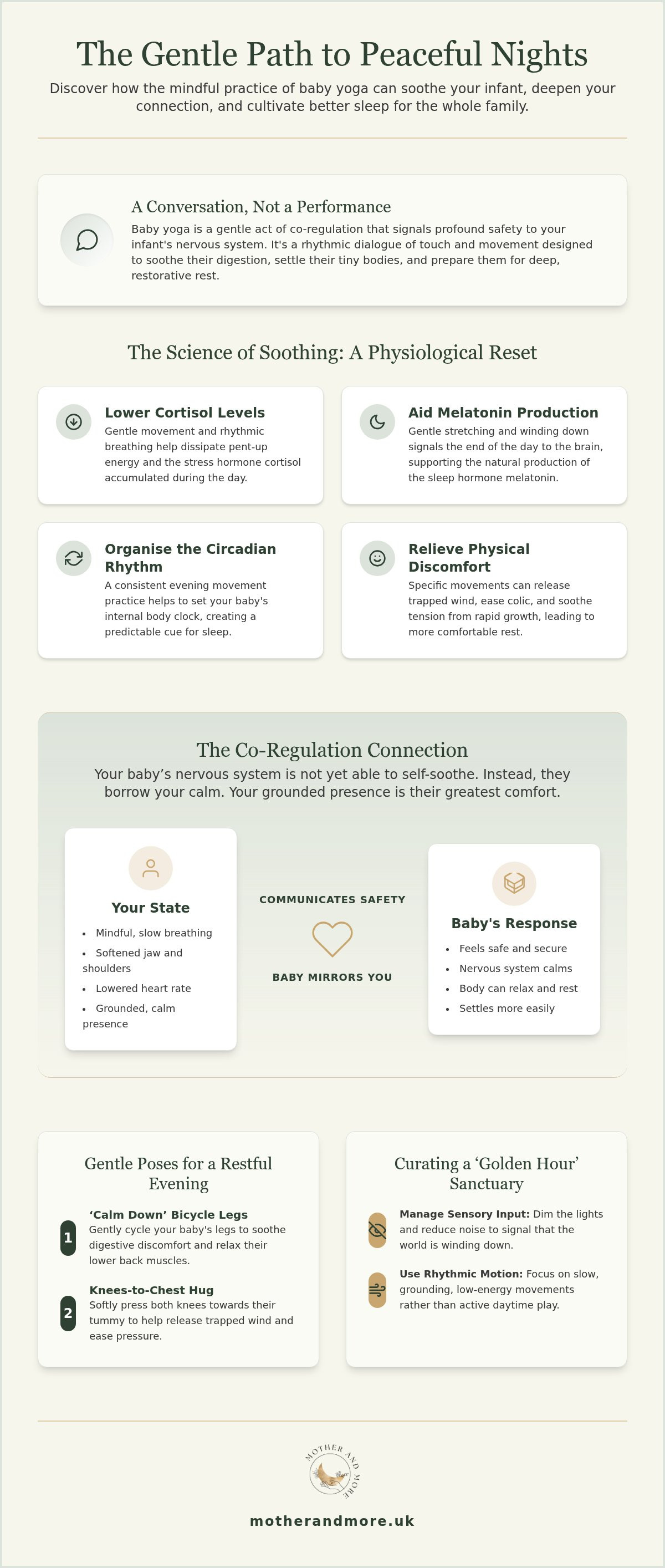
Baby yoga is not a performance; it is a gentle act of co-regulation that signals safety to your infant's nervous system. By embracing this mindful practice, you can soothe their digestion and settle their tiny bodies into a state of deep relaxation. This guide shares how these soft movements help you both find a more peaceful night's rest. You'll discover practical tools to manage postnatal stress and build a bond that transcends the midnight wake-up calls. Let's breathe together and find the quiet rhythm your family deserves. 🌿
Table of Contents
The Science of Soothing: Why Baby Yoga for Better Sleep Works
Understanding why baby yoga for better sleep is so effective starts with looking at the beautiful dance between a baby's body and their developing brain. It isn't just about tiring them out. Instead, it's a mindful combination of gentle movement, intentional touch, and rhythmic breathing that creates a sense of profound safety. The Science of Soothing shows us that when we engage in these physical connections, we're doing more than just playing; we're helping their tiny systems process the day. ✨
Throughout a busy afternoon, infants can accumulate a surprising amount of pent-up energy and cortisol, the body's primary stress hormone. Gentle physical activity helps to dissipate this tension. By engaging the vestibular system, which is the sensory system responsible for balance and spatial orientation, baby yoga helps to quiet the "fight or flight" response. It's a physiological reset. Gentle stretching aids the production of melatonin by signalling the end of the day through a slow, rhythmic release of physical tension.
Regulating the Circadian Rhythm Through Movement
Consistency is a comfort. When you introduce a regular evening movement practice, you're helping to organise your baby's internal body clock. Unlike active daytime play, evening yoga focuses on "low-energy" poses that ground and settle. By dimming the lights and moving slowly, you're using both environment and activity to tell their brain that the world is winding down. It's a soft, sensory cue that sleep is coming. 🌙
Relieving Physical Discomforts That Block Sleep
Often, what keeps a baby awake isn't a lack of tiredness, but physical unrest. Trapped wind and colic can be incredibly distressing for a little one trying to settle. Specific abdominal movements and hip stretches can release the tension gathered from a day of rapid growth. When you explore the physical benefits of baby yoga for better sleep, you'll find that a comfortable baby finds it much easier to bridge the gaps between sleep cycles. This leads to longer, more restorative stretches of rest for the whole family. 🌿
The Co-Regulation Connection: Your Calm is Their Calm
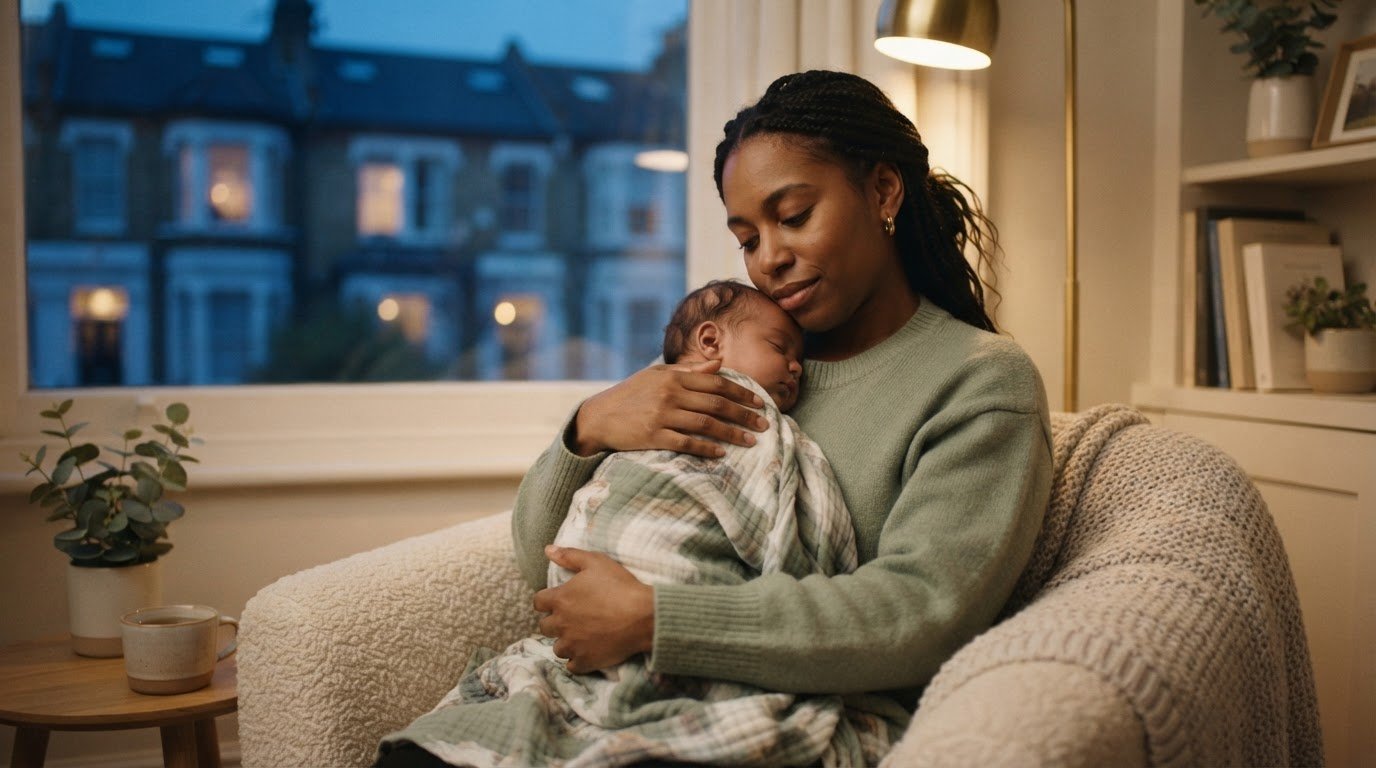
Co-regulation is the quiet, essential magic of early parenthood. Your baby’s nervous system isn't yet capable of self-soothing in the way we often expect. Instead, they effectively "borrow" your calm. When you're practising baby yoga for better sleep, you're doing so much more than just moving your infant's limbs; you're offering them a steady, grounded presence to mirror. It’s a beautiful, invisible tether that links your emotional state to theirs. ✨
This connection explains why a stressed parent often has a harder time settling a baby, regardless of the technique they use. It isn't your fault. It's simply biology. If your own heart is racing or your shoulders are held high with tension, your baby receives a subtle signal that the environment isn't quite safe enough for sleep. They mirror your physiological state, creating a feedback loop that can feel impossible to break when you're exhausted. Recognising this is the first step toward change. We often focus so much on the infant that we forget our own foundations. Investing in wellbeing coaching for new mums uk can provide the emotional scaffolding you need to navigate this profound transition with more grace and less anxiety. 🌿
Mindful Breathing for the Modern Mother
Amidst the evening "witching hour" chaos, your breath becomes your most powerful tool. Simple breathwork techniques, like a slow, audible exhale, can be done whilst holding or moving your baby. Your infant is incredibly sensitive to the rhythm of your heart rate and the tone of your muscles. They can feel the subtle shift when you move from a state of "alert" to a state of "rest". By consciously softening your jaw and lengthening your breath, you communicate safety through your very skin. It’s a moment of peace found amongst the noise, a way to anchor yourself when things feel overwhelming. This quiet practice helps lower your own cortisol, which in turn helps your baby settle.
Reclaiming Your Identity Through Shared Movement
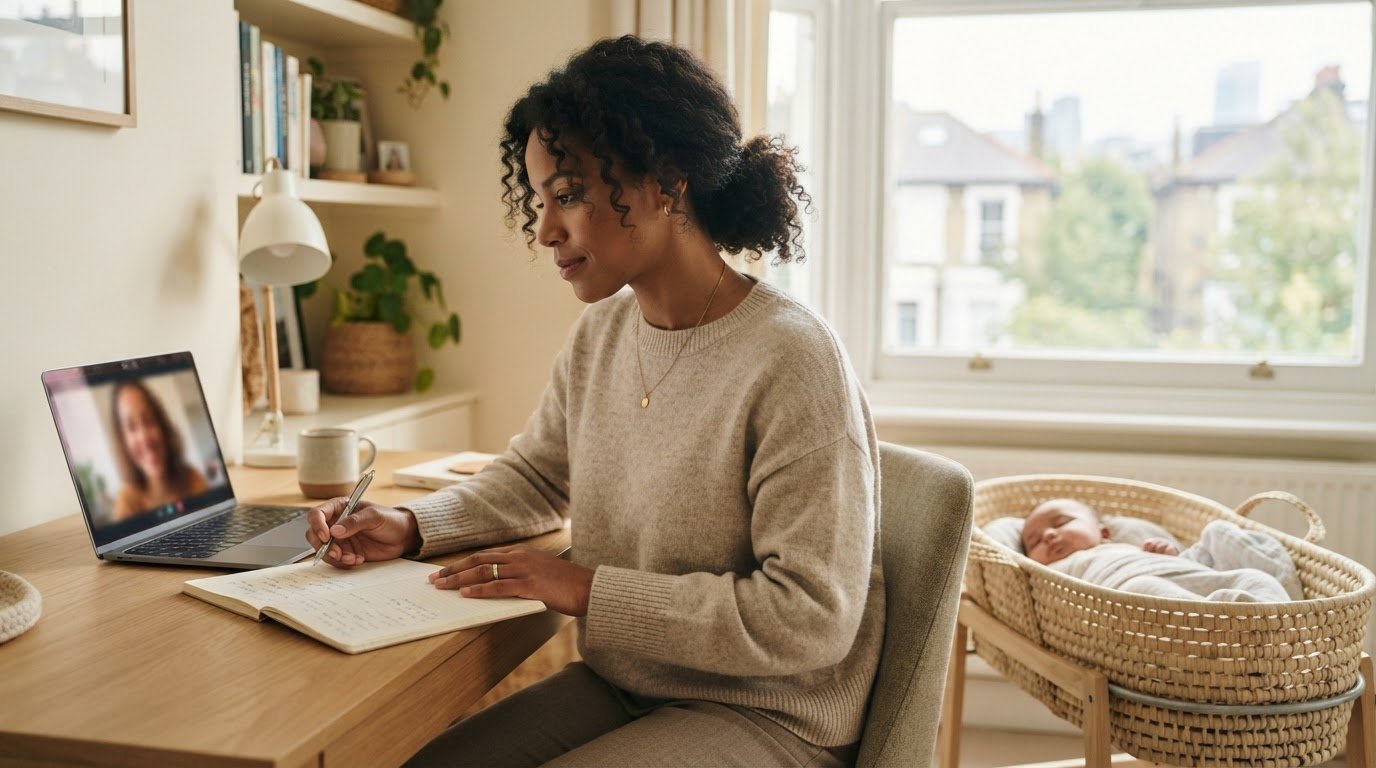
Becoming a mother involves a massive shift in identity that can feel both beautiful and disorienting. It's easy to feel disconnected from your own body after the monumental changes of pregnancy and birth. Using baby yoga for better sleep allows you to shift the focus from "doing" chores for the baby to simply "being" with them. This shared movement helps you reconnect with your physical self in a gentle, non-judgmental way. It’s about finding your centre again. For many, this journey back to physical strength is enhanced by expert-led sessions like Pilates Active in Bristol, which help rebuild core stability and posture. By acknowledging the complexities of your new role, you can use movement to ground yourself in the present moment, honouring the woman you are becoming alongside the baby you are raising. It is a chance to breathe back into your own skin whilst nurturing your little one’s rest. ✨
Gentle Baby Yoga Poses for a Restful Evening Routine
Creating a sanctuary for sleep begins with a few simple, mindful preparations. Before you begin your practice of baby yoga for better sleep, ensure your little one has had at least 45 minutes to digest their last feed. The room should feel like a warm embrace, cosy and free from drafts, allowing your baby to relax without feeling the chill. These moments are about soft transitions and quiet connection. ✨
Step 1: The "Calm Down" Bicycle Legs. Gently hold your baby’s ankles or calves. Move their legs in a slow, rhythmic cycling motion toward the tummy. This isn't just playful; it's a purposeful way to release digestive tension and relax the lower back. It helps move any trapped wind that might otherwise cause discomfort during the night. You'll often feel the physical release of tension as their tummy softens.
Step 2: Gentle Chest Openers. With your baby lying on their back, slowly bring their arms out to the sides in a "T" shape and then gently cross them over the chest. This encourages deep, restful breathing by opening the ribcage and relaxing the muscles around the heart. It’s a physical invitation to let go of the day's excitement. 🌿
Step 3: The "Happy Baby" (Ananda Balasana). An adaptation of the classic yoga pose, this involves gently bringing your baby's knees toward their armpits whilst holding their feet or shins. It’s deeply soothing for the nervous system and helps to ground their energy. You might notice a soft sigh of relief as their hips release the day's tension.
Step 4: The Soothing Stroke. As you finish the movements, transition into a baby massage for sleep routine. Use long, grounding strokes from the shoulders down to the toes. This signals that the active part of the evening is over and it's time for deep rest.
Modified Poses for Different Stages
Newborns require a very delicate touch. Between 0-3 months, movements should be tiny and incredibly slow, focusing more on touch than stretch. As your baby reaches 6 months and beyond, they may enjoy a slightly more rhythmic pace. Always watch for their cues; if they turn away or become fussy, it's their way of asking for a break. Baby yoga should always be baby-led, never forced. ✨
Incorporating Rhythmic Song and Sound
Sound can be a powerful anchor for relaxation. Try using low-frequency humming or a favourite gentle song to accompany each pose. The rhythmic "shhh" sound is particularly effective as it mimics the white noise of the womb, acting as a steady pulse for your stretches. These auditory cues help your baby associate the practice of baby yoga for better sleep with the safety of their bedtime routine, making the transition to the cot much smoother. 🌙
Creating the Sleep Sanctuary: Environment and Timing
The environment you curate for your evening routine acts as a silent partner in your baby's journey toward rest. Within the "Golden Hour" before sleep, the atmosphere of your home should begin to shift, moving away from the brightness of the day and into a softer, more rhythmic space. This is where baby yoga for better sleep fits perfectly. It serves as a bridge between the activity of the afternoon and the stillness of the night. ✨
Sensory input plays a vital role in how your baby’s brain processes the transition to sleep. By dimming the lights and reducing background noise, you lower the overall stimulation that can often keep a tiny nervous system on high alert. When choosing clothing for your practice, opt for soft, breathable layers that allow for a full range of movement without leaving your little one feeling chilled. A room temperature between 16 and 20 degrees Celsius is generally ideal for sleep, but during the yoga session, ensure the immediate area feels warm and inviting. 🌿
If you choose to transition from movement into a soothing massage, a safe, natural oil can introduce the power of scent. A gentle, familiar aroma becomes a powerful sensory anchor. It tells your baby that the world is safe and it's time to let go. To explore these techniques in a supportive environment, you might find our Baby Yoga Classes a wonderful way to refine your evening rhythm alongside other parents.
Timing Your Practice for Maximum Benefit
Consistency often outweighs duration. A focused 10 to 15 minute session of baby yoga for better sleep is frequently more effective than a long, tiring practice that might lead to over-stimulation. The goal is to find the sweet spot in your bath-book-bed routine where your baby is calm but not yet overtired. If they are already rubbing their eyes or becoming fussy, keep the movements exceptionally slow and grounded. You want to avoid the "active" play that triggers a second wind, focusing instead on movements that encourage the body to settle and the heart rate to steady. 🌙
The Sensory Cues of Sleep
Using a specific "yoga blanket" or a dedicated corner of the room creates a physical association with calm. Over time, your baby’s brain begins to predict the upcoming sleep simply by being placed on that familiar texture. These repetitive sensory cues are incredibly grounding. They provide a sense of predictability that reduces anxiety for both the infant and the parent. As you move through the poses, remember that this space is for your relaxation too. By balancing the environment to support your own peace, you reinforce the co-regulation that makes the entire wind-down process so much more effective. ✨
Finding Your Village: Why In-Person Classes Make a Difference
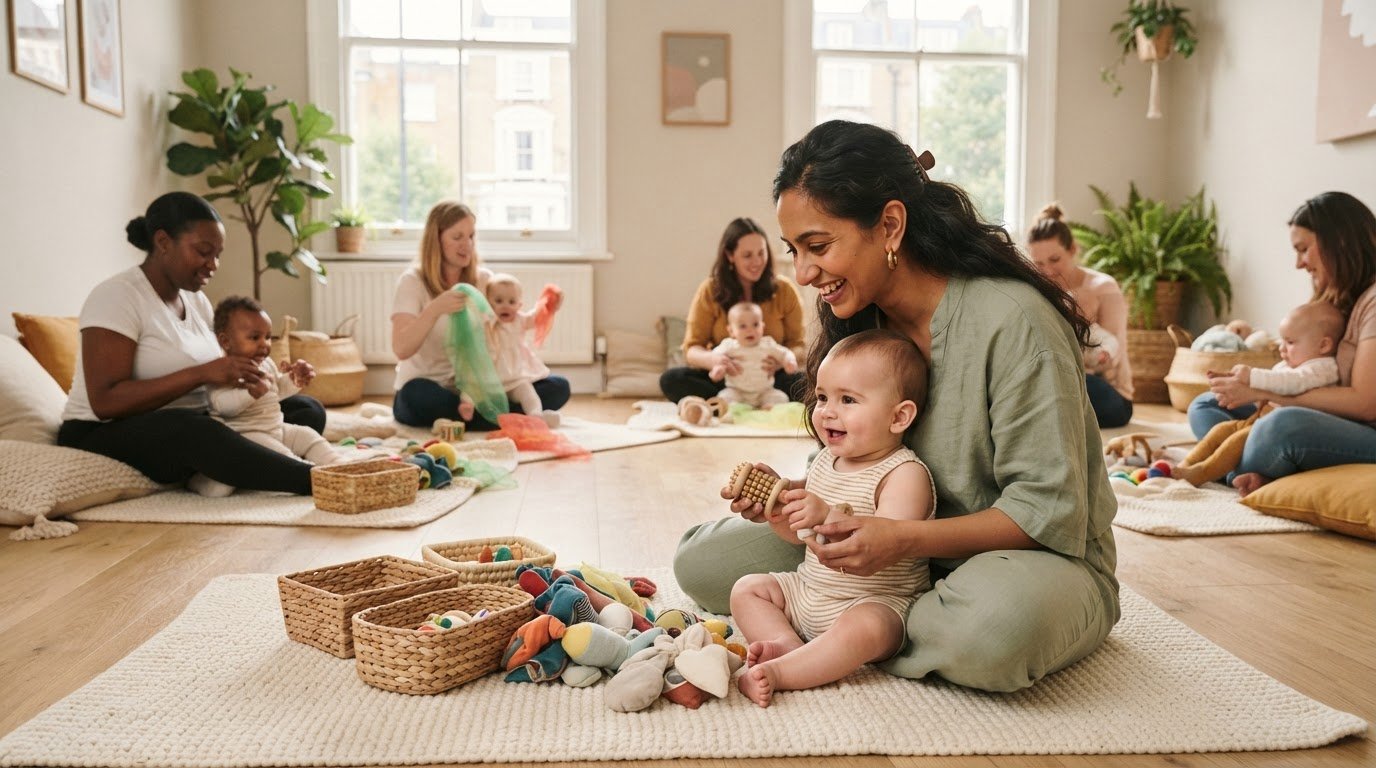
Learning through a screen has its place, but when you're navigating the fog of early parenthood, digital connection can often feel thin. It lacks the warmth and nuance required to truly master baby yoga for better sleep. In a physical space, you aren't just watching a video; you're participating in a shared experience. Our baby yoga east london classes provide a sanctuary where you can step out of your isolation and into a community that understands exactly how you feel. ✨
Expert guidance ensures that every pose is safe and effective for your baby's specific developmental stage. An instructor can see the subtle cues you might miss, helping you adjust your touch or pace in real time. This hands-on support builds your confidence, transforming a technique into a natural, intuitive conversation between you and your child. Beyond the movements, these classes are a vital way to build a local support network. They help to combat the deep loneliness that often accompanies those first few months. You find your village amongst others who are walking the same path. 🌿
Expert Hands and Empathetic Hearts
A Mother And More class is designed as a holistic experience, blending the physical benefits of yoga and massage with the emotional depth of coaching. It’s a space where your identity as a woman is honoured alongside your role as a mother. Having an instructor who understands the profound postnatal identity shift makes all the difference. They don't just teach poses; they hold space for your fatigue and your triumphs. Through professional observation, we help you identify your baby’s unique soothing preferences. This gives you a bespoke toolkit for those challenging nights when nothing seems to work. ✨
Taking the First Step Toward Better Rest
It is completely understandable to feel too tired to even think about leaving the house. The effort of packing a bag and travelling can feel monumental when you haven't slept. However, the long-term benefits of a multi-week course are transformative for habit building. By committing to a regular session, you create a rhythm that eventually makes your evenings at home feel much lighter. Investing in baby yoga for better sleep is as much about your wellbeing as it is about your infant's rest. Remember, better sleep is a journey rather than a destination. You don’t have to walk it alone. We are here to guide you, one breath and one gentle movement at a time. 🌙
Embracing a New Rhythm for Your Family
Embracing the quiet power of movement is a beautiful way to reclaim your evening rhythm. By understanding co-regulation, you've seen how your own grounded presence becomes the foundation for your baby's rest. These gentle physical tools, from bicycle legs to rhythmic breathing, do more than just settle a tummy; they signal safety to a tiny nervous system. Integrating baby yoga for better sleep into your routine isn't about achieving a perfect performance. It's about finding a moment of connection amongst the challenges of early motherhood. ✨
You don't have to navigate this transition in isolation. Mother And More was founded by Rebecca Beazley, an accredited life coach and baby class expert, to provide a holistic space that nurtures both you and your little one. We've supported over 2,000 local families in East London, combining professional expertise with a deeply empathetic heart. Book a Baby Yoga Course in East London with Mother And More to discover a community that walks alongside you. You're doing an incredible job, and more peaceful nights are waiting just around the corner. 🌿
Frequently Asked Questions
How soon after a feed can I start baby yoga for sleep?
You should wait at least 45 minutes after your baby has finished a feed before beginning any yoga movements. This allows their tummy to settle and reduces the risk of posseting or digestive discomfort during the session. Using baby yoga for better sleep works best when your little one feels physically comfortable. If you're practising right before bed, try to time the final feed so there's a gentle gap before you begin.
Can baby yoga help with trapped wind and colic that keep my baby awake?
Yes, specific baby yoga movements are incredibly effective at relieving the physical discomfort caused by trapped wind and colic. Poses that gently compress the abdomen, such as bringing the knees toward the chest, help move gas through the digestive system. By releasing this physical tension, your baby can settle more deeply into sleep without being woken by tummy pains. It’s a gentle, natural way to support their digestive health.
What should I do if my baby starts crying during the yoga session?
If your baby starts to cry, you should stop the movements immediately and offer them comfort and reassurance. Crying is their way of communicating that they might be over-stimulated, tired, or simply not in the mood for movement. Baby yoga should always be a baby-led practice. Respecting their boundaries helps build trust and ensures that the session remains a positive, soothing experience for both of you.
Can I do baby yoga if I have never practised yoga myself before?
You definitely don't need any prior yoga experience to enjoy the benefits of these sessions with your baby. The movements are simple, intuitive, and designed to be performed by parents of all fitness levels. The focus is on your baby's body and the bond you share, rather than complex poses for yourself. You'll likely find that the slow pace and rhythmic breathing help you feel more relaxed too.
Comments