

Feeling Like Yourself Again After a Baby: Gentle Steps
What if feeling like yourself again doesn’t mean becoming the person you were before your baby? If you’re wondering how to feel like myself again after having a baby, you may miss familiar routines, friendships or interests whilst also loving your child deeply. Both can be true. Feeling unsettled doesn’t make you ungrateful, and it doesn’t mean something is wrong with you.
It’s understandable if caring for a baby has taken up so much space that your own needs feel hard to hear. The shift into parenthood can change your identity, but it doesn’t erase the parts of you that matter. You don’t have to rush back to an old version of yourself or make big changes all at once.
This article offers practical ways to reconnect with what nourishes you, from small moments in your day to making room for relationships and interests again. We’ll look at how to ask for support without guilt, how different kinds of support may help, and when it may be useful to speak with a health professional. Little by little, you can make space for both the parent you are and the person you’re still becoming.
Table of Contents
Why can it feel hard to recognise yourself after having a baby?
Becoming a parent can reshape ordinary life from the ground up. Your day may now revolve around feeding, changing, soothing and anticipating someone else’s needs, leaving little uninterrupted space to notice your own. Add broken sleep and the physical recovery of birth, and even familiar decisions, such as what to eat or how to spend an hour, can feel unfamiliar.
This shift in how you see yourself is an identity transition: your roles, priorities and sense of what matters are changing as you adjust to parenthood. It isn’t a diagnosis, and it doesn’t follow one set pattern. You might feel devoted to your baby and frustrated by the lack of time for yourself; you might feel settled in some ways and uncertain in others.
You are changing, not disappearing. There’s no fixed timeline for feeling more grounded, and no single correct way to feel after birth. Your experience can be shaped by your birth, your support, your circumstances and your own temperament. If you’re asking how to feel like myself again after having a baby, there’s no need to measure your feelings against another parent’s pace.
What does it mean to feel unlike yourself after motherhood?
For some mothers, it means feeling so absorbed by caregiving that their own preferences are hard to hear. You may be unsure what you enjoy now, or miss having a conversation that isn’t about the baby. Others don’t experience a strong sense of identity loss at all. There’s no required emotional script, and your feelings can shift from day to day.
Why can familiar parts of life feel different now?
Time and energy may be in shorter supply, while friendships, work, intimacy or routines take on new shapes. An activity you once loved might be difficult to fit in, or simply less appealing at this stage. That can bring grief for what’s changed, even as new moments with your baby feel precious. One feeling doesn’t cancel out the other.
It can help to look beneath the thought “I don’t feel like myself”. Is it missing choice, conversation, movement, rest or a sense of competence? You don’t have to solve it immediately. Naming the change can help you understand what you need, without turning self-reflection into another task to get right.
If feeling unlike yourself includes a lasting loss of interest or a sense of disconnection, these experiences can have different causes and deserve care, not judgement. This overview of postpartum depression describes symptoms that may include loss of interest and feeling disconnected; recognising a symptom doesn’t mean you can diagnose yourself. If you’re concerned about how you’re feeling, speak with your GP, midwife or health visitor.
How to reconnect with yourself after having a baby, gently
You don’t need a full routine, a free afternoon or a burst of motivation to begin. Reconnection can start with noticing what you need, then choosing one small thing that feels possible in the life you have now. Leave the rest for another time.
Start by noticing what you miss and what you need
Pause for a moment and ask yourself: what would I like a little more room for? It might be a friendship, a favourite interest, quiet, movement or simply eating without rushing. You could make a brief note on your phone or hold the thought privately. There’s no need to keep a detailed journal or turn this into a daily task.
It may also help to check in with basic needs. Have you had something to eat? Could you use a rest, a stretch or a few quiet minutes? These needs can be easy to overlook when your attention is often on your baby. Noticing them isn’t selfish, and you don’t have to meet them perfectly.
Make room for one small piece of yourself
Choose one familiar interest and make it flexible enough for today. If you used to love music, put on a favourite song whilst you feed or settle your baby. If walking helped you clear your head, try a short stroll when it feels manageable. You might message a friend, read a few pages or enjoy a cup of tea without multitasking. Small counts.
If practical help would make that moment easier, ask someone you trust for something specific: “Could you hold the baby whilst I have a shower?” or “Would you come for a walk with me?” The answer may depend on what support is available, but a clear request gives the other person a helpful place to start.
Small, repeatable choices can create space for reconnection, without promising that every day will feel different. What works this week may not suit next week. You’re allowed to adapt, pause or choose something else; this isn’t a test of how well you’re coping.
If you’re wondering how to feel like myself again after having a baby, begin with the smallest step that feels kind rather than demanding. If you’re concerned about persistent changes in your mood or wellbeing, speak with your GP, midwife or health visitor. If you’d value space to explore identity and changing priorities, you can learn about one-to-one life coaching for mothers as one possible form of support.
Do you need your old self back to feel like yourself?
It’s easy to imagine that feeling better means returning to your pre-baby routines, appearance or priorities, as though parenthood were a brief detour. But your life has changed, and you’re allowed to change with it. You don’t have to recreate an earlier version of yourself to feel connected to who you are now.
What if the old version of you does not quite fit anymore?
Some parts of you may feel unchanged: a love of music, a value you hold close, or the comfort of a particular friendship. Other things might need to shift around your current energy, responsibilities or interests. Both continuity and change can belong in your story. Your identity doesn’t have to centre on motherhood alone.
Try being curious rather than demanding an immediate answer. Which values still feel important? Which relationships help you feel seen? Is there an interest you’d like to adapt, even if you can’t enjoy it in the same way or for as long right now? These questions aren’t a test. They’re invitations to notice what feels meaningful as your life evolves.
How can you soften the pressure to have it all figured out?
You may feel expected to be grateful, productive, confident and settled, all at once. Other parents’ stories or carefully chosen social media moments can add to that pressure, but they aren’t the whole picture. Comparison can affect how you see yourself; it doesn’t mean other parents are to blame, or that it explains every difficult feeling.
Instead of asking, “Why am I not back to normal?”, try, “What matters to me now, and what might need to look different?” You can keep a valued routine in a smaller form, change a plan that no longer suits, or leave a decision open until you have more space to consider it. You’re allowed to take time. For a wider perspective on mental health after having a baby, the World Health Organization discusses the importance of perinatal mental health and support.
If you’d like a guided space to reflect on these changes, Mother And More’s article on reclaiming your identity after motherhood explores this theme. Life coaching for mums in the UK may be one optional way to explore confidence and changing priorities; it isn’t clinical therapy, and you can decide whether that kind of reflection feels right for you.
How can you build support around the person you are becoming?
Support can mean different things at different moments. You might need someone to bring you a meal, a chance to talk without being judged, or help making sense of how your priorities are changing. You don’t need to find one person or service that meets every need. Start with what would feel most useful now.
What kind of support might feel right for you?
A partner, friend or family member may be able to offer practical help as well as a listening ear. If it feels safe, try making one clear request: “Could you take the baby for a short walk whilst I rest?” or “Can we talk for a little while without trying to fix anything?” Specific words can make it easier for someone to understand what you need.
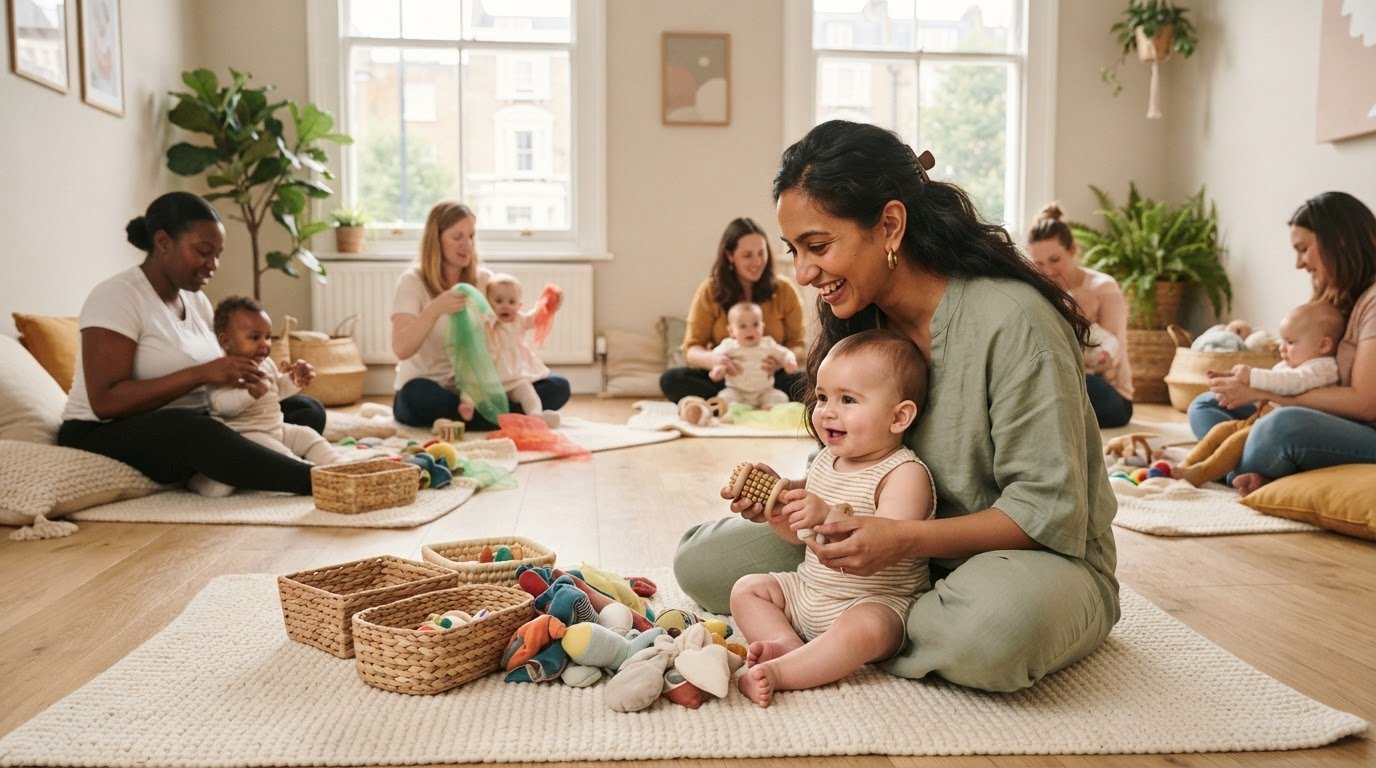
Peer groups and mother-and-baby classes can offer a gentle chance to meet others going through a similar stage. You don’t have to attend, share personal details or expect to make close friends. They’re simply one possible route to connection. In East London, Mother And More offers baby massage courses and baby yoga classes for parents and infants. You can explore mother and baby wellness classes as a community-based option.
Coaching has a different purpose: it can offer a non-clinical space to reflect on identity, confidence and changing priorities. Coaching can support reflection, but it isn’t clinical therapy. If you’re considering it, look for an approach that feels appropriate to what you want to explore. For some mothers asking how to feel like myself again after having a baby, having dedicated space to think can be one part of a wider support network.
When should you speak to a health professional?
If distress feels persistent, is getting harder to manage or is concerning you, contact your GP, health visitor or an appropriate NHS service. You don’t need to be certain what’s happening before asking for help. Postnatal depression and anxiety are health concerns that a professional can help assess; this article can’t diagnose what you may be experiencing.
If you feel at immediate risk or fear you may harm yourself or someone else, call 999 or go to your nearest A&E department. If you’re unsure what level of help you need, contact your GP or NHS 111 and explain that you’ve recently had a baby and are struggling. If you’d like to explore coaching as a non-clinical option, find out about life coaching for mothers.
How to take your next gentle step towards feeling more like yourself
You don’t need to map out a complete new routine to move forwards. A small plan can help you respond to what you need now, then adjust as life changes. Think of it as a gentle check-in, not another standard to meet.
Choose one small action for this week
Try this simple sequence: notice, choose, ask and review. Notice what you’re missing or needing. Choose one personally meaningful action that fits your current capacity, whether that’s listening to a favourite song, messaging someone you trust or stepping outside for a little while. Then ask yourself what might make it easier. Perhaps you need someone to help with a practical task, or company for a walk.
Afterwards, notice how it felt. You don’t need to judge the moment by how productive you were, how long it lasted or whether it changed your mood. Maybe it felt comforting; maybe it didn’t suit that day. Either way, you’ve learnt something about what works for you right now.
Next week, you can repeat the action, choose something different or let it go. Progress may be uneven, particularly when sleep, time and support vary. Changing the plan isn’t failure. It’s a way of making it fit your real life.
Explore support at your own pace
Self-guided reflection or a conversation with someone close to you may be enough to help you find your next step. A mother-and-baby group or class can offer an optional opportunity for connection, without any promise that it will lead to friendship or resolve distress. In East London, a baby massage course or baby yoga class can provide a local parent-and-baby activity to consider. Coaching may suit you if you’d like a dedicated, non-clinical space to explore identity, confidence and changing priorities. If you’re worried about your mental health or distress feels persistent, speak with your GP, health visitor or an appropriate NHS service. Coaching isn’t a substitute for clinical care.
Mother And More offers life coaching for mothers. Founder Rebecca Beazley is a former social worker and accredited life coach. If this kind of reflective support feels right for you, you can Explore support from Mother And More. There’s no pressure to decide today.
If you’re still asking how to feel like myself again after having a baby, begin with what feels kind and possible, not with a demand to become someone else. You’re allowed to keep discovering who you are, one gentle step at a time.
Keep making room for the person you’re becoming
Feeling more like yourself doesn’t have to mean returning to who you were before your baby. Your identity can keep evolving, and small choices that honour your needs, interests and relationships can help you stay connected to yourself along the way.
If you’re still wondering how to feel like myself again after having a baby, start gently: notice what you miss, choose one manageable step and ask for support if it would help. Some weeks may feel easier than others. You’re allowed to change your plans, and you don’t have to work everything out at once.
Mother And More, founded by Rebecca Beazley, a former social worker and accredited life coach, offers coaching for mothers as a non-clinical space to explore identity, confidence and changing priorities. If you’d like to learn more, explore gentle support for mothers with Mother And More. Explore Mother And More’s one-to-one or group coaching options and take the next step if that support feels right for you.
Frequently Asked Questions
Is it normal not to feel like yourself after having a baby?
Yes, feeling changed, uncertain or absorbed by caring for your baby can be part of adjusting to parenthood. Your routines, relationships and responsibilities may all feel different. Experiences vary, though, and not every mother feels a loss of identity. If your feelings are persistent, distressing or affecting daily life, speak with your GP, midwife or health visitor. You deserve support, and asking for it doesn’t mean you’re failing.
How long does it take to feel like yourself again after having a baby?
There’s no set timeline for feeling more like yourself after birth. It can depend on your recovery, sleep, support, circumstances and how your priorities are shifting. Rather than waiting for a particular date or expecting to return to exactly who you were, notice what feels important now and what might help. If you’re wondering how to feel like myself again after having a baby, small steps can be a starting point, not a deadline.
Can you miss your old life and still love being a mum?
Yes. Loving your baby and missing parts of your life before parenthood can both be true. You might treasure time with your child whilst longing for more independence, unhurried time with friends or space for an old interest. Those feelings don’t make you ungrateful. Try naming what you miss without judging yourself, then consider whether there’s a small, realistic way to bring a piece of it into your life now.
What can I do when motherhood feels like it has taken over my identity?
Start by noticing what you’d like more room for: perhaps a friendship, a creative interest, quiet or a sense of choice. Choose one small action that feels possible, and ask someone you trust for specific practical help if you need it. Your identity doesn’t have to centre only on motherhood, and you don’t need to recreate your old routines exactly. If the feeling is troubling or persistent, talk to a health professional.
How can I make time for myself with a new baby?
Look for a small, flexible moment rather than waiting for a long stretch of free time. You might listen to a favourite song, step outside for a short walk or message a friend whilst your baby is settled. If possible, ask someone you trust for practical help, such as holding the baby whilst you shower or rest. In London, a parent-and-baby class can also be an optional way to get out and meet others.
When should I speak to a GP or health visitor about how I am feeling after birth?
Contact your GP or health visitor if your feelings persist, concern you or make everyday life harder to manage. You don’t need to know whether it’s postnatal depression, anxiety or something else before asking for help. If you feel at immediate risk or fear you may harm yourself or someone else, call 999 or go to A&E. If you’re unsure what to do, contact NHS 111 and explain how you’re feeling.
Can life coaching help me feel more like myself after having a baby?
Life coaching may offer a non-clinical space to explore identity, confidence and changing priorities. It isn’t therapy and can’t replace care from a GP or mental health professional if you’re experiencing distress. Mother And More, based in East London, offers one-to-one and group coaching for mothers. Founder Rebecca Beazley is an accredited life coach and former social worker. You can consider whether coaching fits what you’re looking for and seek clinical support when needed.

Comments