

Gentle Baby Yoga for Beginners: A Nurturing Guide to Connection and Calm
What if the most profound way to reclaim your sense of self after birth wasn't found in a high-intensity workout, but in the quiet, rhythmic movements shared with your little one? You might feel a little disconnected from your own body right now, or perhaps you're worried about doing a movement "wrong" and hurting your baby. It is completely natural to feel this way. Learning gentle baby yoga for beginners is less about perfect poses and more about a sensory conversation between you and your child. ✨
Discover how to safely introduce your little one to this nurturing practice, fostering a deep bond whilst supporting their physical development and your own postnatal wellbeing. We will explore how these mindful moments can improve infant sleep and digestion, helping you feel more grounded amongst the beautiful chaos of early parenthood. Whether you join us for a class in East London or practice at home, this guide provides the gentle directions you need to find your village and your voice again. You've got this, and we're here to walk alongside you. 🌿
Table of Contents
What is Gentle Baby Yoga for Beginners?
Gentle baby yoga for beginners is far more than a physical activity; it's a rhythmic, sensory conversation between you and your little one. Instead of focusing on achieving a specific pose or a strenuous workout, this practice blends soft movements, infant massage, and sensory play to create a shared space of peace. At Mother And More, we believe that movement is a powerful tool for deep bonding. It isn't about ticking off a developmental milestone or "getting it right". It's about the quiet magic of "being" together in the present moment, allowing you to reclaim your sense of calm whilst supporting your baby's natural evolution. ✨
For those just starting, the focus is entirely on connection. We move away from the clinical or the detached, opting instead for a practice that feels like a reassuring embrace. You aren't just moving your baby's limbs; you're communicating safety, love, and presence through every touch. This approach acknowledges the complexities of your new identity as a mother, providing a non-judgmental space where you can breathe and move alongside your child without pressure.
The Difference Between Baby Yoga and Adult Practice
In a traditional adult class, you focus on your own alignment and breath. In baby yoga, your baby is the leader of the session. You aren't teaching them to do a downward dog; you are guiding their tiny limbs through passive stretching and guided movements. This style of yoga for children relies heavily on cues and responsiveness. You watch their facial expressions, listen to their babbles, and maintain constant eye contact to ensure they feel secure. Vocal encouragement, favourite songs, and gentle rhymes are just as important as the physical movement itself. It's a collaborative dance where your baby's comfort and behaviour dictate every step, making it a truly baby-led experience. 🌿
When is the Best Time to Start?
Most experts, including our founder Rebecca Beazley, recommend waiting until after your six to eight week postnatal check before beginning any formal practice. This applies to both you and your baby. The "fourth trimester" is a sacred time for healing and adjustment. Your body has undergone a massive transition, and your baby is still acclimatising to life outside the womb. Once you've had the all-clear from your doctor, look for a "window of opportunity" during the day. This is that sweet spot when your baby is alert, fed, and calm, but not yet overstimulated or tired. It's the perfect time to unroll a soft blanket and begin your journey together in your own home or amongst a supportive community in East London.
The Holistic Benefits: Why Gentle Movement Matters
Gentle baby yoga for beginners offers a profound shift in how we perceive the early months of parenthood. It isn't just about movement; it's about the holistic harmony between your physical recovery and your baby's burgeoning world. Whilst many guides focus solely on the infant, we believe the benefits are deeply shared. This practice serves as a bridge, helping you navigate the delicate transition from your old life to your new identity as a mother. It is a sensory dialogue that speaks of safety and love. ✨
Beyond the physical, there is the "village". Shared movement fosters a deeper connection that words cannot reach. When you practice alongside others, you realise you aren't alone in your worries or your joys. This community aspect is at the heart of our work in East London, where we've supported over 2,000 families in finding their feet. Building this village starts with a single stretch, a shared breath, and the simple act of being present with your child.
Supporting Infant Physical Development
Physically, these movements are incredibly supportive for a growing body. They help your baby find their centre. By stimulating the vestibular system, yoga encourages better balance and spatial awareness, helping your baby understand their place in the world through touch. It also plays a vital role in soothing common discomforts that can lead to long nights. Many parents find that the many benefits of infant massage are mirrored in yoga, particularly when it comes to aiding digestion and relieving trapped wind. These gentle stretches follow natural developmental patterns, strengthening muscle tone and flexibility without ever forcing a pose. 🌿
Maternal Wellbeing and Identity
For you, the practice is a mindful sanctuary. It's a chance to breathe. Postnatal life can often feel like a blur of tasks and lost sleep, leaving you feeling disconnected from your own skin. Taking a few moments for gentle stretching aids your recovery and helps you reclaim a sense of body confidence. This awareness is a crucial step in life coaching for mums uk, where the focus is on reclaiming your identity and confidence. Yoga provides that vital pause, allowing you to move from a place of stress to a place of presence. It is a non-judgmental space where you can explore your new self. If you're looking for a supportive space to start your journey, our baby yoga classes offer a warm, expert-led welcome to everyone. 🧘♀️
Creating a Safe Space: Preparing for Your First Session
Preparing for your first experience with gentle baby yoga for beginners isn't about buying the most expensive gear or having a perfect home. It's about crafting a sanctuary. This is a space where the outside world fades away, leaving just you and your little one in a quiet, nurturing embrace. To begin, ensure the room is warm; babies lose heat quickly when they aren't moving vigorously. Dim the lights, put your phone on silent, and choose a time when distractions are minimal. ✨
Your "mat" can be as simple as a firm rug or your baby’s favourite blanket. Using a familiar textile provides a scent and texture that helps your baby feel grounded and secure. Before any movement begins, we practice the "Permission Sequence". This involves looking into your baby's eyes and asking if they're ready to move. Even if they can't answer in words, this ritual establishes a foundation of respect and consent. Safety is our priority. Never force a movement or stretch; if you feel resistance, simply stop and breathe. It's also wise to wait at least 45 to 60 minutes after a feed to prevent any tummy discomfort or posseting. 🌿
Essential Kit for Beginners
You don't need a mountain of equipment. A simple yoga mat or a firm rug provides enough cushioning for both of you. Choose comfortable, breathable clothing; soft cotton is ideal as it allows for a full range of motion without overheating. Avoid "baby gym" setups that are overly busy or loud. A few favourite toys can be helpful to encourage eye-tracking or to provide comfort during transitions, but the most important "kit" is your own calm presence and a willing heart.
Reading Your Baby’s Cues
The success of a session depends on your ability to read your baby's subtle language. Engagement cues, such as wide eyes, smiling, or reaching towards you, tell you they're enjoying the dialogue. Conversely, disengagement cues like looking away, arching their back, or becoming fussy are signals that they need a break. We always recommend stopping whilst your baby is still happy. It's far better to have a joyous three-minute session than a stressful ten-minute one. If your baby isn't "in the mood," don't worry. Stay centred and try again another time. Your calm energy is the most soothing thing they can feel. 🧘♀️
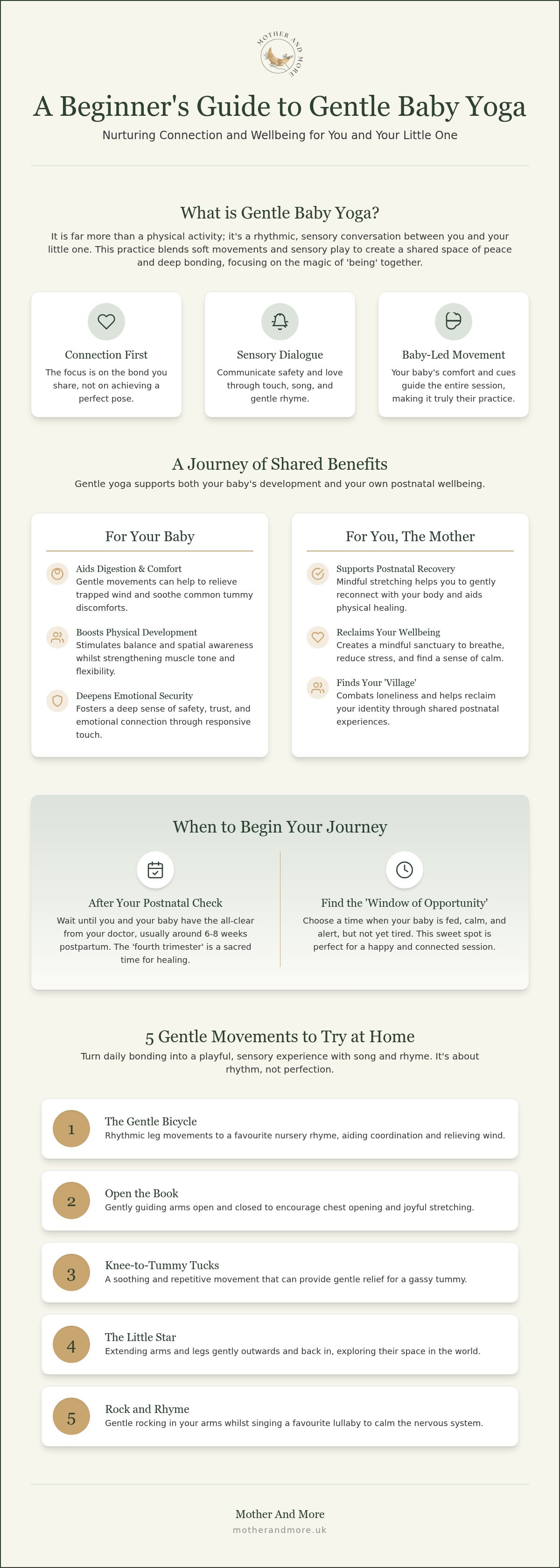
A Step-by-Step Guide: 5 Gentle Poses to Try at Home
Embarking on your journey with gentle baby yoga for beginners is an invitation to slow down and truly see your baby. These movements are designed to be rhythmic and soft, echoing the natural pulses of your baby's own body. As you begin, remember to breathe deeply. Your baby is incredibly sensitive to your state of being; by mirroring a sense of calm, you provide the emotional anchor they need to feel safe. If your little one isn't yet sitting up, all these poses can be performed whilst they lie comfortably on their back on a soft, familiar surface. ✨
We encourage you to weave in a favourite song or a soft nursery rhyme. This transforms the physical movement into a playful, sensory experience that stimulates their hearing and language development. It isn't about the quantity of poses you achieve, but the quality of the connection you build during each one. Take your time. Listen to their babbles. Enjoy the view. 🌿
The Chest Opening "Hug"
To begin, gently hold your baby’s hands or wrists. Slowly and rhythmically cross their arms over their chest in a soft "hug" before opening them out wide again, as if they are spreading tiny wings. This pose is a beautiful way to encourage deep breathing and relaxation by gently opening the chest and lungs. You might like to add a soft "shhh" sound or a low hum as you move their arms. This vibration, combined with the movement, creates a soothing sensory loop that helps settle a fussy baby and encourages a sense of expansive peace.
Bicycle Legs for Digestion
This is perhaps the most well-loved movement in our community. Holding your baby’s ankles or lower legs gently, move them in a slow, rhythmic cycling motion towards their tummy. This movement is particularly effective for relieving trapped wind and constipation, mirroring many of the techniques we share in our baby massage classes east london. Ensure the movement is slow and follows your baby’s natural range of motion. Never force the legs upwards; instead, let the rhythm of the "bicycle" do the work. It is a wonderful tool for those difficult evenings when your little one feels particularly unsettled. 🧘♀️
The Gentle Hip Opener
For this pose, gently bring the soles of your baby’s feet together, allowing their knees to fall naturally out to the sides in a "butterfly" stretch. This supports flexibility in the hip joints and prepares the baby for future milestones like crawling. Whilst you focus on their lower limbs, try to keep your own upper body relaxed and your shoulders down. This pose is a quiet moment of stillness. It allows you to observe the incredible flexibility of your child whilst maintaining that vital eye contact that builds trust. If you're ready to move from home practice to a supportive community, you can book your first baby yoga class and find your village today.
Finding Your Village: Transitioning to In-Person Classes
While home practice is a wonderful way to introduce gentle baby yoga for beginners, there comes a point where the four walls of your living room can feel a little small. Motherhood, for all its beauty, can sometimes be a lonely path to walk. You might find yourself worrying if your baby’s neck is supported enough or if you’re stretching your own tired back correctly. This is where the "village" becomes essential. Moving your practice into a group setting isn't just about the yoga; it's about finding people who speak your language. ✨
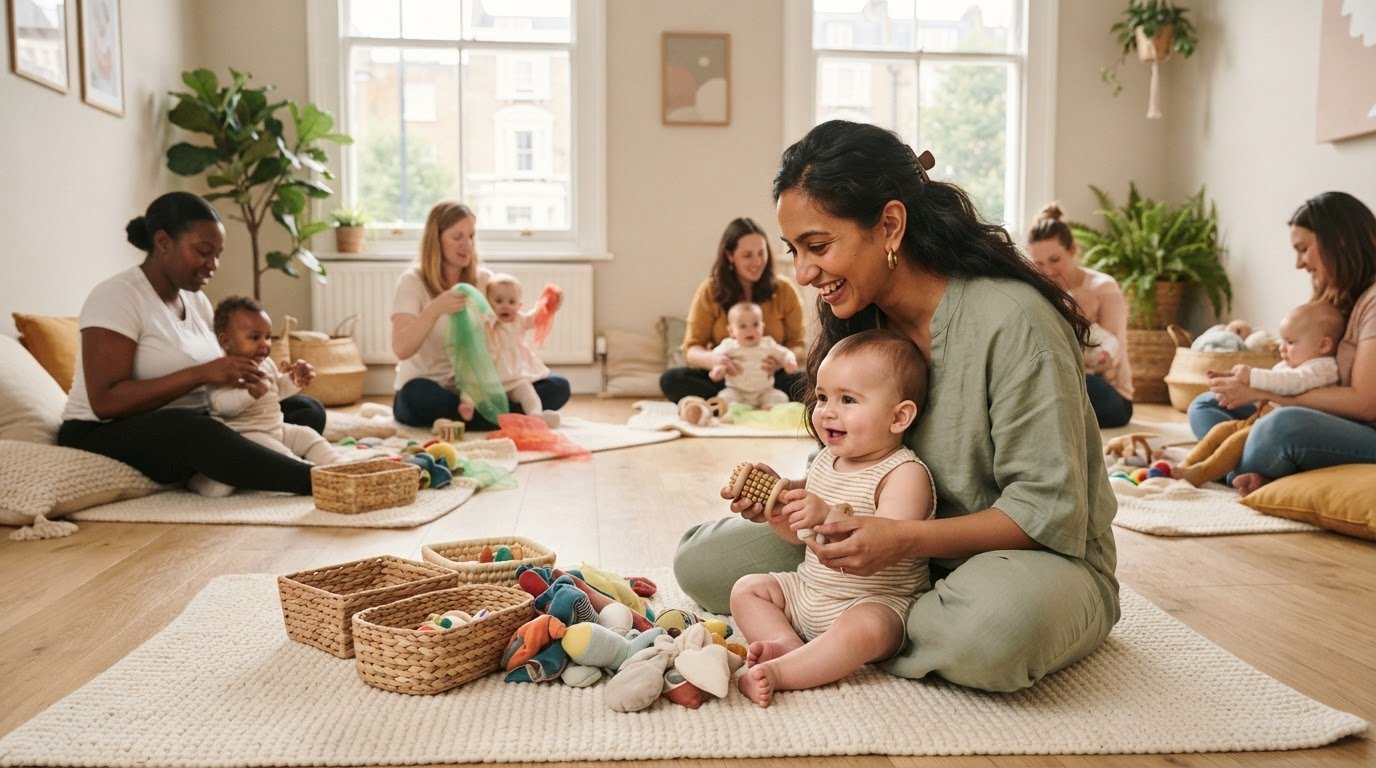
A high-quality class should feel like a warm, non-judgmental embrace. In our baby yoga east london sanctuary, we focus on creating small, intentional groups. This allows for the expert guidance you need to feel confident in every movement. It’s a place where a crying baby or a mid-session nappy change is met with a smile, not a scowl. Finding this supportive environment is a key part of your postnatal recovery, helping you move from the isolation of the early weeks into a space of shared growth and connection. 🌿
The Power of In-Person Connection
There is an undeniable magic in sharing the highs and lows of motherhood with those who truly get it. In a class, you aren't just a "mum"; you're a woman connecting with other women. A teacher can offer real-time adjustments, helping you tailor poses to your baby’s unique developmental stage. This expert feedback removes the guesswork and builds your confidence. Simply leaving the house to try something new can be a powerful act of self-care that reminds you of your own strength and capability.
What to Expect in a Mother And More Class
At Mother And More, we place a heavy emphasis on the "More". This means your wellbeing is just as important as your baby’s yoga. Our sessions blend professional coaching expertise with gentle infant movement, providing a holistic experience that supports your mental and physical health. We encourage booking a block of classes to foster consistency. This regular rhythm helps you build lasting friendships and gives you a reliable anchor in your weekly schedule. It is about building a community that walks alongside you, providing the stability and support you need to thrive. 🧘♀️
Begin Your Journey of Connection Today
Embracing gentle baby yoga for beginners is an invitation to slow down and rediscover yourself alongside your little one. By focusing on rhythmic movements and sensory play, you've seen that this practice is less about physical perfection and more about the quiet, nurturing language of love. Creating a safe sanctuary at home is a beautiful first step, but remember that you don't have to navigate this transition in isolation. Reclaiming your identity as a mother is often easier when you are surrounded by a supportive community that truly understands the beautiful complexity of this time. ✨
As an accredited life coach and baby class expert, I have had the privilege of supporting over 2,000 families in East London. Our small, friendly, and non-judgmental groups are designed to be a reassuring embrace for you both. Whether you are seeking to improve your baby's digestion or simply need a mindful pause in your day, we are here to guide you with compassion. Explore our nurturing Baby Yoga classes in East London and find the village you deserve. You are doing an incredible job, and we can't wait to walk this path with you. 🌿
Frequently Asked Questions
Is baby yoga safe for newborns?
Baby yoga is generally recommended after your six to eight week postnatal check. While very gentle touch is fine from birth, formal classes or sequences are best started once both you and your baby have had the all-clear from a healthcare professional. This ensures your baby's neck muscles are slightly stronger and your own body has begun its initial healing process. It is about honouring the fourth trimester's need for rest.
Can I do baby yoga if I have never done yoga before?
Absolutely, you don't need any prior experience to enjoy gentle baby yoga for beginners. The practice is entirely baby-led and focuses on soft, guided movements rather than complex poses for the adult. Our sessions are designed to be accessible and non-judgmental, acting as a reassuring embrace for everyone. We focus on the connection and the being rather than the doing, so you can feel confident even if you've never stepped onto a mat.
What should my baby wear for a yoga session?
Your baby should wear soft, breathable clothing that allows for a full range of movement. Ideal options for your session include:
Simple cotton sleepsuits
Leggings and a vest
Bare feet for better grip
Avoid anything with heavy zips, hoods, or restrictive waistbands that might dig in during stretches. Comfort is always the absolute priority for a happy, relaxed and safe session for you both.
What if my baby cries or falls asleep during the class?
We embrace the beautiful chaos of parenthood, so there is no need to worry if your baby cries or falls asleep. Our classes are a safe, non-judgmental space where you can feed, change, or cuddle your little one whenever they need it. If they sleep, you can simply observe the movements or focus on your own gentle stretches. We follow the baby's lead entirely, ensuring the experience remains a calm sanctuary for you both.
Can dads or partners join in with gentle baby yoga?
Yes, dads and partners are always welcome and encouraged to join in. It is a wonderful way for them to build a unique bond and enjoy some dedicated, mindful time with their little one. Engaging in shared movement helps partners feel more confident in handling their baby and understanding their subtle cues. We even offer specific workshops for dads in East London to support them in finding their own village and connection.
How often should we practise gentle baby yoga at home?
You can practise as often as you and your baby feel like it, but short bursts of five to ten minutes are often most effective. Consistency is more important than duration. Integrating a few favourite poses into your daily routine, perhaps after a nappy change or before a nap, helps create a sense of rhythm and familiarity. Always ensure your baby is alert and happy before starting, and stop if they show any signs of tiredness.
Do I need a special mat for baby yoga?
You don't need to buy a specific mat to enjoy yoga together. A standard adult yoga mat provides good grip and cushioning, but a firm rug or a favourite blanket spread on the floor works just as well. The most important thing is that the surface is clean, flat, and comfortable for you both. Using a familiar blanket can also provide a comforting scent that helps your baby feel secure during your practice together.
Comments