

How to build a support network for new mums and share practical help
Updated: 2 days ago
To understand how to build a support network for new mums, bring together people and services you can turn to for practical help, emotional reassurance and trusted guidance. Your network might include your partner, family and friends, other parents, healthcare professionals and local community groups. It should meet your needs, not fit someone else’s idea of what support looks like.
You may know support matters, yet asking for it can feel difficult, especially as you adjust to life with a new baby. Start by identifying the help you need, then invite others to play a practical part and build connections with fellow parents. Professional support can be part of your network, too: it offers guidance when questions or concerns arise, alongside the people who listen and share the load.
Table of Contents
1. What is a support network?
A support network is the people and services you can turn to after your baby arrives. It may include your partner, friends, family, other parents, healthcare professionals and community groups. Each can offer something different, from a listening ear to help with everyday tasks.
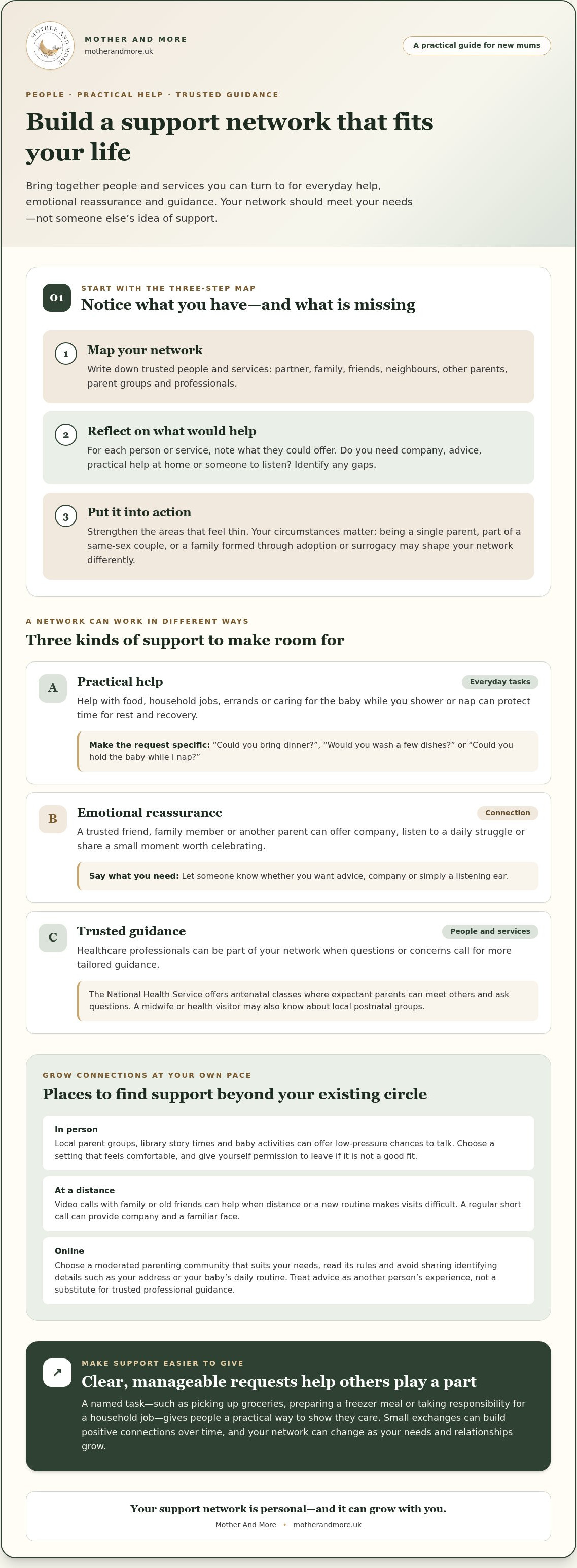
List the people you trust and note what kind of help each could offer. Do you need company, advice, practical help at home or someone to listen? Then consider what’s missing and where you might find it. These are useful first steps to building support as a new mum in the UK.
Try a simple three-step activity: map your network, reflect on it and put it into action. Write down relatives, old friends, neighbours, parent groups and professionals, then note the support each could offer. Consider whether the network feels useful and where it needs strengthening. Your circumstances matter: being a single parent, part of a same-sex couple, or a family formed through adoption or surrogacy can shape your map differently.
Make requests specific and manageable. Instead of saying, “I need help”, ask a friend to bring dinner, wash a few dishes or hold the baby while you nap. A relative might pick up groceries or prepare a freezer meal. Clear requests give people a practical way to show they care, while helping you protect time for rest and recovery.
Stay connected with family and old friends through video calls, especially when distance or a new routine makes visits difficult. A short call can give you space to share a daily struggle, celebrate a small moment or see a familiar face. Arrange a regular call with a trusted friend, or invite family to join while you feed the baby. Let them know whether you want advice, company or simply a listening ear.
Support can grow beyond your existing circle. In the UK, the National Health Service offers antenatal classes where expectant parents can meet others and ask questions. After birth, local parent groups, library story times and baby activities offer low-pressure opportunities to talk. Online parenting communities can help when meeting in person feels difficult. Choose a welcoming group and check advice against trusted sources.
Offering help can encourage others to reach out in return. Bring a meal to a friend with a newborn, or suggest a walk together. These small exchanges can build positive connections over time. Your support network can keep changing as your needs and relationships grow.
2. Making time to communicate with your partner
A baby can reshape how partners share time, energy and responsibility. Set aside a regular moment to talk, even if it’s brief and at home after the baby settles. Share how you’re feeling, what’s working and what feels difficult. A conversation is easier to act on when you finish with one clear request, such as taking a turn with the evening routine or making time for you to rest.
Keep conversations specific rather than waiting for frustration to build. Each of you might name one task that felt manageable and one that felt difficult today. Then agree who will take on a practical job, such as preparing a meal or organising the next appointment. If talking face to face feels difficult, use a message to collect your thoughts before discussing the issue together. Listening matters, even when neither person has an immediate solution.
Community activities can give you room to meet other parents and feel less alone in this transition. Choose something that suits what you need: a relaxed coffee group may feel better than a structured class, while a discussion group might appeal if you want to exchange experiences. You’re more likely to return when the setting, pace and conversation feel comfortable. Try a group, and give yourself permission to leave if it isn’t a good fit.
What do local baby groups and parent-and-baby classes cost in the UK? Fees vary by organiser, location, session format and what’s included, so there’s no single price for the whole country. Some community options, such as library story times, are free in many communities. Ask the organiser about fees before booking a paid activity.
For local options, look at community noticeboards, social media groups and listings from nearby libraries. You can also ask your midwife or health visitor about postnatal groups. Make your search easier by noting what matters most: distance from home, a feeding-friendly setting, a particular activity or the chance to meet parents at a similar stage. Try one option first, then decide whether it suits your routine and energy.
Online groups can connect you with parents when leaving home feels difficult, but choose carefully. How can new mums connect with other parents online safely? Join a moderated group that suits your needs, read its rules and avoid sharing identifying details, such as your address or your baby’s daily routine. Treat advice as another person’s experience, not a substitute for guidance from a trusted professional. If a group leaves you feeling judged or unsettled, step away and look for a kinder fit.
Shared activities can also create gentle opportunities to talk without putting pressure on conversation. If you’re looking for a calm way to spend time alongside your baby and other parents, explore a parent-and-baby class as one possible community setting.
3. Sharing recommendations, opportunities and practical help
After a baby arrives, practical help can protect time for rest, recovery and adjusting to family life. Partners, relatives and friends can share household tasks, prepare food, run errands or care for the baby while you shower or nap. The most useful offers are specific, so you don’t have to organise every detail of the help yourself.
Name the task and the kind of support that would make it useful. A friend might bring a meal you can reheat, while a relative could pick up groceries or wash dishes. Your partner might take responsibility for a household task from start to finish. An important part of building a support network for new mums is matching requests to what each person can comfortably do.
COPE suggests simplifying household tasks, for example by shopping for groceries online, batch cooking or automating bill payments. If it suits your household, a cleaner, laundromat or meal delivery service may also reduce chores. These shortcuts can conserve limited time and energy after birth. Start with the task that takes the most effort, then decide whether simplifying it would help.
Partners, family and friends can agree to specific jobs, such as preparing freezer meals, bathing the baby or helping with childcare. According to COPE, relatives can also be asked to babysit, whilst visiting family from out of town can contribute practical help instead of only meeting the baby.
Make a simple note of who can offer what kind of support. One person may be best placed to share useful information, while another can help with errands or offer a listening ear. Note if someone needs guidance before helping. For example, a family member caring for the baby may need to learn how to give prescribed medicines.
Emotional support matters as much as practical help. Before offering advice, ask whether a parent wants suggestions, company or simply someone to listen. A walk together, a meal left at the door or watching their children can show care without judgement. These thoughtful exchanges can strengthen relationships throughout the parenting journey.
As you consider how to build a support network for new mums, remember that formal and informal help can work together. A community group may share local resources while family handles an errand. Parents of children with additional needs or medical diagnoses may also find connection with others in similar circumstances, sharing relevant experience and easing the feeling of being alone.
4. Emotional wellbeing and reducing isolation
You can feel isolated even when you’re rarely alone with your baby. The postpartum period can bring major changes to your identity, routines and relationships, so notice what you’re missing. Perhaps you want an adult conversation, reassurance after a difficult day or time outside the house. Naming the need makes it easier to take one manageable step towards connection.
Try a small, repeatable plan instead of waiting until you feel ready for a big social commitment. Message one parent from a local group, suggest a short walk in the park or arrange a coffee near home. If meeting face to face feels daunting, start with an online conversation and build towards a local meet-up when you’re comfortable. Friendships can grow gradually.
Choose groups that feel kind and relevant to your experience. A new parent might prefer a group focused on early parenthood, while another may value a community built around shared interests or circumstances. Notice how you feel afterwards: do members listen without judgement, and can you speak honestly? If social media leaves you comparing yourself with others, unfollow accounts that unsettle you and keep those that feel encouraging.
Connection needs care after the first meeting. Make a simple plan to stay in touch with people in your inner circle, such as checking in with a friend or arranging a regular chat. Open, honest conversations can strengthen a relationship. You might say, “I don’t need advice just now, could you listen?” That clear invitation helps others understand the support you need and makes room for empathy.
Remember that your support needs may change over time. The first year after birth is commonly considered part of the postpartum period, and support for mothers can drop off significantly after that first year. If a group stops feeling helpful, look for another source of connection, such as a parent community, a trusted friend or a new local activity. You’re allowed to adjust your circle as your needs shift.
When persistent sadness, anxiety or overwhelm affects daily life, speak with your GP or healthcare provider. According to the National Health Service, mental health services are available for new parents experiencing postnatal depression or other concerns. Reaching out is a practical step, not a personal failing. A professional conversation can complement support from friends and family, giving you another place to talk openly.
Build a brief check-in with yourself into your routine: ask what kind of connection would help today, then choose one action. You could reply to a message, ask someone to meet at a café or tell a trusted person you’re finding things difficult. Small steps can help you feel more connected without turning friendship into another task to complete.
5. Including professional support
Family and friends can offer closeness, while professional support brings informed guidance to your network. During pregnancy and after birth, your midwife or health visitor can discuss physical and mental wellbeing, feeding questions and local parent groups. Think of one concern you’d like to raise and write it down before your next appointment. A clear example, such as feeling overwhelmed during feeds, can help you explain what’s happening.
Emotional support deserves as much attention as practical advice. If persistent sadness, anxiety or overwhelm affects daily life, contact your GP or healthcare provider. According to the National Health Service, mental health services are available for new parents experiencing postnatal depression or other concerns. Describe changes in your mood, sleep or ability to manage everyday routines, and explain how long these feelings have been present.
That conversation doesn’t mean you’ve failed at motherhood. It’s a step towards support that responds to your mental health needs. Ask someone you trust to help you prepare what to say or accompany you to an appointment. Professional support can complement care from friends and family, giving you informed guidance as you work through questions and next steps.
Make reaching out manageable by choosing one small action. Write a question for your health visitor, raise a concern at your next appointment or ask your GP for support with persistent distress. You can also tell someone you trust what you’re planning, so they can help with the baby or daily tasks.
Professional guidance and peer connection play different roles. A parent group can offer shared experience, while a healthcare professional can help with health concerns and point you towards relevant services. You don’t need one person to meet every need. A useful network makes room for the warmth of familiar relationships and the expertise that helps you make informed choices.
Seeking help early can make it easier to find the right kind of support before concerns feel harder to manage. If you’re unsure how to begin, write down what has changed, what feels difficult and what would help today. Then use that note to start a conversation with a healthcare professional. Take a next step towards support as you build a network for your motherhood journey.
Mother And More: Baby Massage Courses
Mother And More offers Baby Massage Courses and Baby Yoga Classes for parents and their infants. If you’re looking for a welcoming activity to share with your baby in London, these classes can add a gentle, practical element to your support network and create space to connect with other parents.
Support for you matters, too. One to One Life Coaching and Group Coaching focus on mothers’ identity, confidence and wellbeing. They may suit you if you’d value time to reflect on the changes of motherhood and consider what support feels right for you.
Every family’s needs are different, and you can choose the kind of support that feels useful at this stage. Visit motherandmore.uk to explore Mother And More’s offerings or get in touch.
Let support grow with you
Your needs may shift as your baby grows and your sense of self evolves. You don’t have to create a perfect circle of support all at once. Choose one next step that feels possible today, whether that’s inviting someone into a more honest conversation or making space for a connection that helps you feel more like yourself.
Learning how to build a support network for new mums can start with recognising that accepting care is part of caring for your family, too. Let your network change as your routines, relationships and confidence develop. Small, thoughtful connections can become a steady source of encouragement through each new stage.
If you’d like support that makes space for your experience of motherhood, contact Mother And More to explore what may suit you. You deserve to feel supported as you find your way forward, one step at a time.
Frequently Asked Questions
What is a support network?
A support network is the people and services you can draw on for different kinds of help as you care for your baby. One person might offer companionship, another practical assistance, and a health professional guidance about a concern. Your circle doesn’t need to be large. Consider whether you have someone to talk to, someone to ask for help and a professional contact for health questions.
Where can new mums find local postnatal groups, baby classes and parent meet-ups in the UK?
Look for local options through community noticeboards, libraries, social media groups and NHS antenatal classes, where expectant parents can meet others. In London, searching for a parent group alongside your borough or neighbourhood can make results more relevant to your journey home. Before choosing, consider practical details such as travel, session times and whether the setting feels comfortable for you and your baby.
How can a new mum find NHS health visitor, midwife and postnatal support services?
Start with the midwife or health visitor already involved in your care, and explain what kind of support you’re looking for. For example, ask about local postnatal groups, feeding guidance or who to speak to about a health concern. If you’re unsure where to begin, contact your GP or healthcare provider and describe your situation. A clear question can help you have a focused conversation about suitable NHS support.
What UK charities and organisations offer support for new mothers?
In the UK, the National Health Service offers antenatal classes, mental health services for new parents and breastfeeding support groups. Local community programmes can also help you connect with other parents. The right organisation depends on whether you’re seeking health guidance, feeding support, emotional help or peer connection. When contacting a service, describe the specific support you need to understand what it offers and where it can help.
What support is available for new mums experiencing loneliness, anxiety or postnatal depression?
If persistent sadness, anxiety or overwhelm affects daily life, contact your GP or healthcare provider. You can also tell someone you trust what you’re experiencing and ask them to help arrange a conversation. If explaining feels difficult, write down what has changed and what support you’d like.
How can single parents or mums without nearby family build a support network?
Start with people and services within reach rather than relying only on family who live far away. A local parent group, online community, trusted neighbour or healthcare professional can each meet a different need. For instance, arrange a regular video call with a relative while building local connections through a community activity. Your network can include chosen family and professionals, shaped around your circumstances.
What should new mums consider when choosing a parent group or support service?
Consider whether a group’s purpose matches what you need: shared experiences, practical information or relaxed company. Check that the meeting place and timing suit your routine, and notice whether the tone feels welcoming rather than judgemental. For online communities, read the rules and think carefully before sharing personal details. Try a group, reflect on how it feels afterwards and choose another if it isn’t a good fit.



Comments