

How to cope with maternity leave anxiety while sleep-deprived
Updated: 19 hours ago
Around 15 in 100 women and birthing people experience postnatal anxiety. If you’re wondering how to cope with maternity leave anxiety, start by noticing what you’re feeling and how it’s affecting you, rather than judging yourself for it. Worry, guilt or a racing mind can feel especially heavy when you’re running on little sleep.
You may have expected maternity leave to feel like a pause, but becoming a parent can profoundly change your identity, routines and sense of control. Feeling anxious doesn’t mean you’re failing or love your baby any less.
This guide explains how maternity leave anxiety can affect you emotionally and physically, what may contribute to it, and which signs deserve attention. You’ll find practical ways to support yourself through the transition and guidance on when to seek further help.
Table of Contents
1. What Does Anxiety After Maternity Leave Feel Like?
Anxiety about returning to work can centre on practical changes: who cares for your baby, how you’ll manage tired mornings, and whether you’ll feel confident in your role. You might replay the first day in your mind, worry about being away, or feel unsettled by a routine that has changed since birth. These feelings can sit alongside excitement, sadness or relief.
Make the transition more predictable by sketching out a typical workday, from the first feed to the journey home. Include childcare drop-off and collection, travel time and time to settle your baby. Try the routine before you return, then adjust it to fit what works in practice. Agree with your partner or another trusted adult who will handle tasks such as packing the changing bag or preparing breakfast.
Returning to work can raise questions about your purpose and confidence. Revisit one familiar task before your first day, such as reviewing a project or writing questions for your manager. A friend who knows your working life can help you practise explaining what support would make the return easier. You don’t need every answer before you go back.
A gradual return can make a major change feel more manageable. If your workplace can accommodate it, discuss starting mid-week or working shorter days at first. Agree the pattern with your manager and set a time to review it after you’ve tried the new routine. That gives you a chance to identify specific pressure points, such as a difficult commute or childcare handover.
If you’re expressing milk, plan the practical details before your first day back. Consider when you may need breaks, where you can express comfortably, and how you’ll store and transport milk. Discuss these needs with your manager in advance so you understand the arrangements and can prepare what to bring. A written plan can reduce last-minute uncertainty.
What are my maternity leave and pay rights in the UK? Maternity leave and maternity pay are separate, and pay eligibility depends on your circumstances and employment terms. Ask your employer for a written explanation of your leave dates, pay arrangements and any applicable contractual terms.
How should I discuss anxiety about maternity leave with my employer or manager? Arrange a conversation and explain the specific difficulty, such as childcare handovers or a gradual return. Bring a practical request, such as shorter days at first, so you can discuss workable options together.
How can I stay connected with work during maternity leave without feeling pressured? Decide what level of contact feels manageable, then agree boundaries with your manager. For example, ask for essential updates only and choose when you’re ready to discuss your return.
When should I seek professional help for anxiety during pregnancy or after birth? Speak to your GP if anxiety feels overwhelming, persists or makes daily tasks difficult. Repeated panic attacks, extreme worry and difficulty functioning are reasons to seek professional support.
Where can I get free NHS or UK support for maternity-related anxiety? Contact your GP, midwife or health visitor and describe what you’re experiencing. They can help you access NHS support and discuss what to do next.
2. Adjusting expectations while sleep-deprived
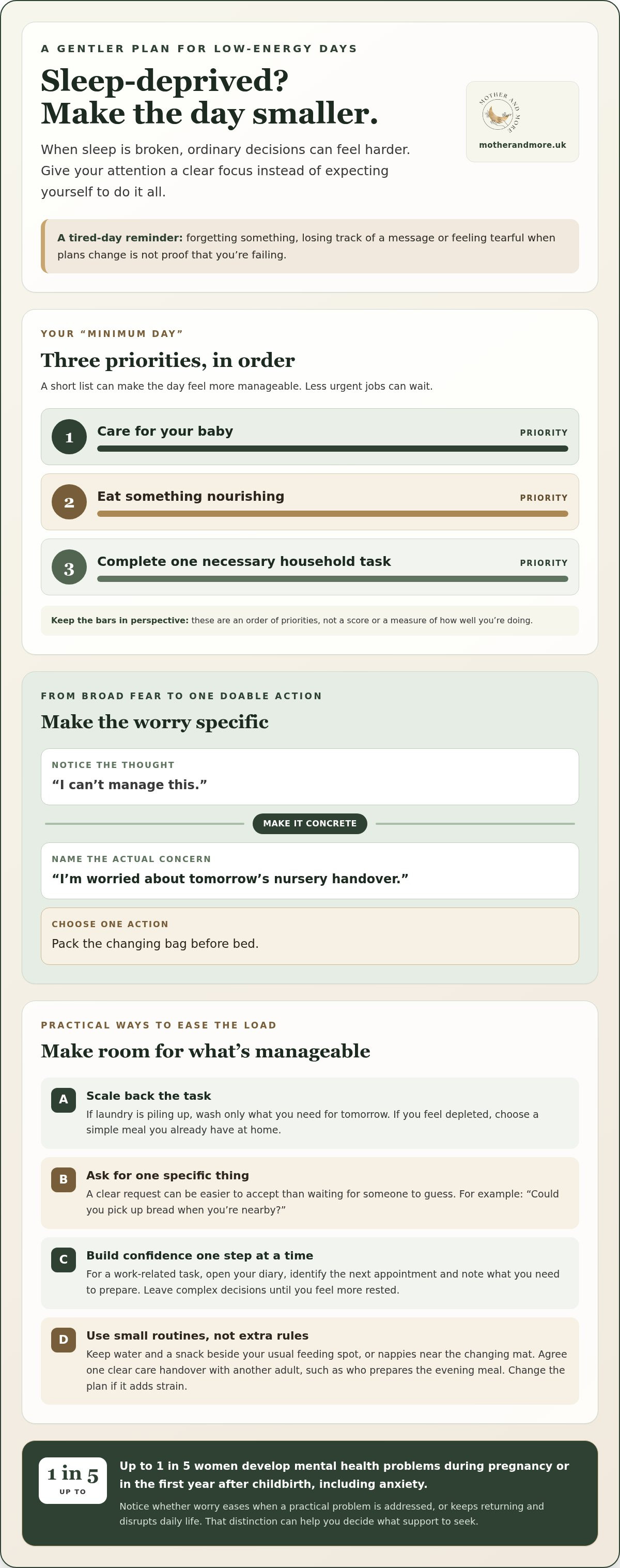
A broken night can make ordinary decisions feel unusually difficult. You might forget why you opened the fridge, lose track of a message or feel tearful when plans change. Rather than treating a low-energy day as proof you’re failing, choose one essential task, such as feeding yourself, and let less urgent jobs wait.
Try making a “minimum day” plan with three priorities: care for your baby, eat something nourishing and complete one necessary household task. If laundry is piling up, wash only what you need for tomorrow. A shorter list gives your attention a clear focus, rather than expecting you to meet the standards you had before pregnancy.
Thoughts can feel louder when you’re tired. If “I can’t manage this” comes up after a difficult night, write it down and make it more specific: “I’m worried about tomorrow’s nursery handover.” Then choose one action, such as packing the changing bag before bed. This turns a broad fear into a practical concern you can address.
Keep plans flexible. If you hoped to cook a full meal but feel depleted, choose a simple option you already have at home and ask someone you trust to help with one task. You might text a friend, “Could you pick up bread when you’re nearby?” A specific request can make support easier to accept than waiting for someone to guess what would help.
Let confidence build gently. You don’t have to feel capable every moment to take one manageable step. For example, open your work diary, identify the next appointment and note what you need to prepare. If concentration is limited, do it in a quiet moment and leave complex decisions until you feel more rested.
Small routines can add structure without becoming another test. Put water and a snack beside your usual feeding spot, or keep nappies in a basket near the changing mat. If another adult shares the care, agree one clear handover, such as who prepares the evening meal. Change the plan if it adds strain.
Feeling anxious doesn’t automatically mean something is wrong with you. Up to 1 in 5 women develop mental health problems during pregnancy or in the first year after childbirth, including anxiety. Notice whether worry eases when a practical problem is addressed or keeps returning and disrupts daily life. That distinction can help you decide what support to seek.
Attachment, identity changes and loss of control
Becoming a parent can reshape how you see yourself, your time and your relationships. One participant described the first six months of maternity leave as difficult and said she felt she had lost her identity. You may miss parts of your life before the baby while feeling deeply connected to your child. Both feelings can be true; they don’t cancel each other out.
Attachment can make even a short separation feel emotional. Babies between six and twelve months old may cry when a parent leaves the room. If a handover brings tears, agree on a calm, familiar goodbye with the other caregiver. You might use the same brief phrase, pass over a favourite comfort item and leave without repeatedly returning to the doorway.
Worry about someone else caring for your baby can bring up the idea that you should manage everything yourself. Try separating what you know from what you fear. Write down the practical concern, such as whether a family member knows your baby’s feeding routine, then share the relevant instructions. A clear handover gives you something specific to rely on.
Feeling out of control can come from having less say over the shape of your day. Reclaim one small decision, such as when to shower or which meal to prepare. If plans change, decide what can be postponed rather than treating the whole day as lost. A simple note on your phone can help you identify which commitments are essential.
Your identity doesn’t need to return to its previous shape all at once. Make room for one activity connected to a part of you beyond caring, such as listening to a familiar podcast on a walk or messaging a friend about something unrelated to the baby. Small choices can help you notice what still feels like you and what is changing.
If you’re anxious about leaving your baby, name the feeling without turning it into a judgement about your parenting. You might say, “I feel unsettled about this handover,” then consider what would make it more manageable. That could mean agreeing on a check-in time with the caregiver or practising the routine together before a longer separation.
When mental strain starts affecting everyday life, tell someone you trust what has changed. A family member might take one practical task off your plate, while a GP can help you discuss persistent anxiety. Asking for support is a step towards care, not proof that you’re failing.
4. Common emotional and physical signs of maternity leave anxiety
Anxiety can affect your thoughts and your body. You might repeatedly imagine something going wrong, such as your baby becoming unsettled during a handover. Or you may feel tense, restless or unable to switch off, even when your baby is asleep. Noticing a pattern can help you describe what’s happening instead of blaming yourself.
Emotional signs can include persistent worry, irritability, tearfulness or difficulty concentrating on everyday tasks. For example, you might reread a message because your thoughts keep returning to an upcoming appointment. Some mothers also feel on edge or repeatedly seek reassurance from a family member. These experiences matter, especially if they affect your ability to manage daily life.
Physical sensations may accompany worry. You could notice a racing heartbeat, shallow breathing, trembling, sweating or tightness in your chest. These sensations can feel frightening, especially while you’re caring for your baby. If they occur, pause somewhere safe, place both feet on the floor and breathe out slowly. Then note what you felt and what was happening beforehand.
Panic can rise sharply and then ease. Most panic attacks last between 5 and 20 minutes, though they can continue for up to an hour. During an episode, try naming what you can see around you, such as the cot, a window or a cup. This simple grounding step gives your attention something concrete to focus on as the intense feelings pass.
Keep a brief record if symptoms recur. Note the time, situation, physical sensations and how long they lasted. For instance, record whether worry tends to build before a feed, a visit or a work-related message. You’re not diagnosing yourself; you’re gathering details that may help you explain your experience to a health professional.
It can help to understand that anxiety and low mood aren’t the same experience, although they can overlap. Postnatal depression involves feeling sad or low all the time for more than 2 weeks. If low mood lasts, or anxiety is making everyday activities difficult, speak to your GP. Describe what has changed, when it began and how it affects caring for yourself or your baby.
Postpartum psychosis affects around 1 in 1000 people after giving birth, according to the NHS. It is different from anxiety and requires urgent medical attention. If you feel overwhelmed, or experience persistent panic, extreme worry or difficulty functioning, contact your GP promptly. Knowing when to ask for help is a practical act of care, not a test you have to pass alone.
5. What causes anxiety before and during maternity leave?
Anxiety can begin during pregnancy, before maternity leave starts. You may be thinking about birth, recovery, feeding, childcare or how work will manage your absence. Each concern can add another decision to keep in mind. Writing down a worry, such as “Who can help with the first nursery handover?”, makes it easier to see what needs attention.
There isn’t one cause or one pattern. Up to 1 in 5 women develop mental health problems during pregnancy or in the first year after childbirth, including anxiety. A change in routine, worries about the baby’s wellbeing or feeling responsible for every detail may all add pressure. Your circumstances and what you’re carrying emotionally will shape how these changes feel.
Work can bring its own uncertainties. You might worry about losing confidence, missing important projects or being treated differently after leave. A specific concern, such as not knowing your return date or expected duties, can feel more manageable once you write down your questions. Then arrange a conversation with your manager and ask for clear information about the transition.
Practical pressures can add to the emotional load. Coordinating childcare around a partner’s shifts, for example, can leave little room for unexpected changes. Map out the week, including appointments, handovers and essential tasks, and mark where you need someone’s help. This can reveal whether your anxiety is tied to a solvable logistical problem or a wider feeling of being overwhelmed.
Expectations can contribute too. You may feel you should be joyful, confident and organised, even as you adjust to major changes. Comparing your experience with a friend’s can intensify that pressure. Instead, notice the exact thought, such as “I should already know what I’m doing,” and replace it with a practical question: “What would help me today?” For those wanting to work through persistent self-doubt, mindset and subconscious reprogramming resources like salarahstarre.com can offer practical ways to reshape internal expectations.
Past experiences and your current support matter too. A difficult pregnancy, birth or previous period of anxiety may leave you more alert to possible problems. Relationship changes, money worries or limited help at home can add strain. Name what’s weighing on you, then choose someone to tell, such as your partner, a family member or your midwife.
Consider professional help if worry persists, panic attacks keep returning or anxiety makes daily tasks difficult. Tell your GP or midwife what you’re experiencing and give a recent example, such as being unable to rest because of repeated fears. You don’t have to explain everything perfectly. A simple first sentence, “I’m struggling with anxiety since becoming a parent,” is enough to begin.
Mother And More: Baby Massage Courses
Mother And More offers Baby Massage Courses and Baby Yoga Classes for parents seeking gentle ways to connect with their baby. These calm, low-stimulation classes can give you a shared focus, though they aren’t a treatment for anxiety. If maternity leave is raising questions about confidence, identity or what comes next, One to One Life Coaching or Group Coaching can give you space to reflect and explore practical next steps.
Consider these options if you’d value supported time with your baby or a dedicated space to reflect on your wellbeing. If anxiety persists or affects daily life, speak with your GP as well. Visit motherandmore.uk to explore Mother And More’s support in East London and Essex.
Take your next step at a pace that feels right
You don’t have to solve everything before asking for support. Choose one small next step, perhaps taking a quiet moment to name what feels hardest or talking it through with someone who listens without judgement. If you’re considering how to cope with maternity leave anxiety, let your needs guide what comes next rather than pressuring yourself to feel better immediately.
Mother And More offers Baby Massage Courses, Baby Yoga Classes and One to One Life Coaching. These provide different ways to connect with your baby or reflect on your own wellbeing. They aren’t a substitute for medical care when anxiety persists or affects daily life, so keep your GP involved when you need clinical support.
If you’d like to explore what feels like a good fit, contact Mother And More for support. You can take this one step at a time, with care for yourself as well as your baby.
Frequently Asked Questions
What Does Anxiety After Maternity Leave Feel Like?
It may feel as though your mind stays on alert, even in a quiet moment. You might notice tension rising before a particular situation, such as opening work emails or anticipating an appointment. Track when the feeling appears and what happened just before. If anxiety persists, escalates or makes everyday responsibilities hard to manage, speak with your GP or midwife rather than trying to assess it alone.
How can I manage maternity leave anxiety day to day?
Choose one small anchor for the day, such as getting dressed before lunch or stepping outside with your baby. On a difficult morning, decide what can wait and tell someone close to you what would make the next few hours easier. If you’re wondering how to cope with maternity leave anxiety, treat each day as its own plan, not a measure of how well you’re managing parenthood.
What are practical ways to prepare for maternity leave and hand over work?
Prepare a handover document listing each active task, its current status, key contacts and next action. For example, note where a project file is saved and who can approve its next stage. Meet with your manager to discuss unresolved questions, then agree how essential updates will be handled during leave. Keep personal contact boundaries clear so preparation doesn’t turn into an expectation to keep working.
How can I cope with loneliness or loss of identity during maternity leave?
Build connection into your week in a way that feels manageable: invite someone you trust for a short walk, or arrange a regular call with someone who knows you beyond your role as a parent. Keep one interest alive in a small way, such as reading a few pages or listening to music you enjoyed before. If isolation deepens or affects daily life, tell someone you trust or speak with your GP.



Comments