

Infant Massage Techniques: A Guide to Connection and Calm
Updated: Aug 18
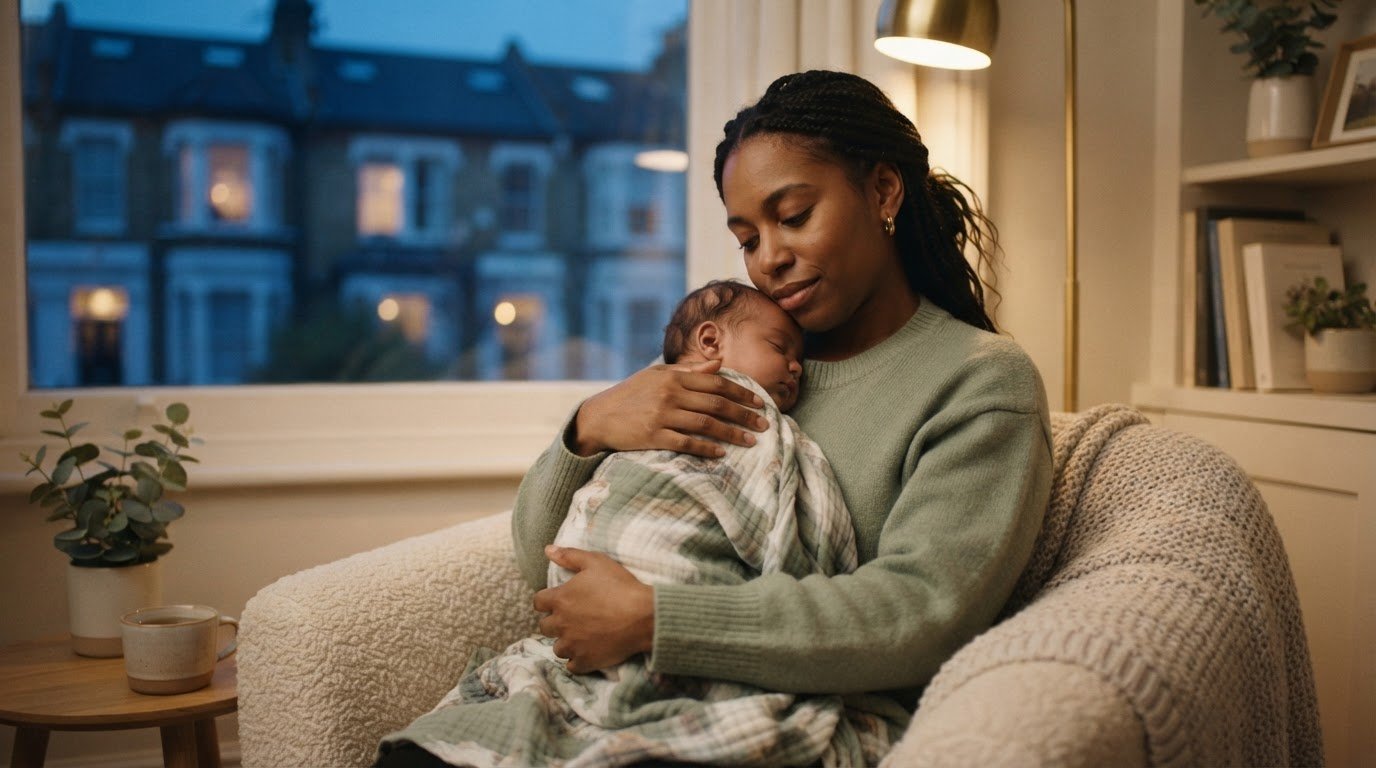
It's 2 am, and the house is silent except for the rhythmic, pained cries of your little one. You've tried the rocking, the feeding, and the gentle shushing, yet that feeling of helplessness still lingers in the heavy air. 🌙 It's a moment many of us know well; a time where the physical exhaustion of early parenthood meets a deep, aching desire to simply make things better. Learning specific infant massage techniques for parents can transform these challenging hours into a space of profound healing and quietude.
We understand that this journey is as much about your own evolution as it is about your baby's growth. You might feel anxious about doing it "wrong" or simply too tired to think, but your touch is the most powerful language you possess. This guide shares gentle, expert-led strokes designed to ease digestive discomfort, encourage longer sleep, and settle a fractious nervous system. ✨ We'll explore how these mindful movements help you read your baby's cues with ease, moving from a place of uncertainty to one of calm, intuitive connection.
Table of Contents
Understanding the Language of Touch: What is Infant Massage?
Before your baby understands a single word, they understand the language of your hands. Infant massage is a beautiful, rhythmic dialogue; a structured yet flexible way to communicate love, safety, and belonging. It isn't about being a therapist or reaching a clinical goal. Instead, it's about learning infant massage techniques for parents that prioritise connection over perfection. It's a way of saying "I am here" through the simple, profound power of touch.
When you massage your baby, both of your bodies release oxytocin, often called the "love hormone". A 2024 umbrella review of 22 systematic reviews confirmed that paediatric massage significantly enhances mother-child attachment. This isn't just a "nice to have" feeling; it's a biological anchor. This hormone lowers stress for both of you, creating a shared sense of euphoria and security that lingers long after the session ends.
We often spend our days handling babies clinically. We wipe, we dress, we buckle them into car seats. Nurturing touch is different. It is intentional, slow, and completely present. It's a moment where nothing else matters but the skin-to-skin bond. To honour this, we always start with a ritual: asking permission. By holding your oiled hands in front of your baby's face and asking, "May I give you a massage?", you establish a foundation of respect and boundaries from day one. Even before they can speak, they'll show you through their body language if they're ready to engage.
The Physical and Emotional Benefits for Your Baby
Massage does wonders for a developing body. It supports the circulatory and respiratory systems, helping oxygen and blood flow freely to every limb. It also builds proprioception, which is your baby's internal sense of where their body is in space. Research published in 2024 showed that massage can even lead to increased weight gain, with an average of 455.07g noted in meta-analysis. Every stroke helps their growing brain map out their physical self, fostering healthy neurodevelopment and brain growth whilst they rest in your care.
Why Massage is a Gift for Parents Too
While the emotional bond is the heart of massage, the physical relief it provides is often what brings parents to the mat. Knowing specific infant massage techniques for parents can feel like having a secret toolkit for those long, fussy afternoons. It's about moving from a place of helplessness to one of gentle action. By applying these focused strokes, you can directly address the discomforts that often disrupt your baby's peace.
Soothing Colic and Digestive Discomfort
Digestive issues often cause the most distress in the early weeks. The 'I Love U' stroke is a classic sequence. You trace the letter 'I' on the baby's left side, an inverted 'L' across the top and down, and an inverted 'U' from the bottom right, up and over. This follows the natural path of the large intestine, helping to guide gas along its way. A 2022 systematic review published in MDPI found that in five of seven studies, infant massage was found to alleviate pain effectively.
Combine this with the 'Sun and Moon' technique. Your right hand moves in a full clockwise circle (the sun), while your left hand follows in a semi-circle (the moon). These movements, along with gentle 'knee-to-tummy' presses, help move trapped wind through the system. Timing is everything. Always wait at least 45 minutes after a feed before working on the tummy to avoid reflux. If you're looking for hands-on guidance to perfect these strokes, our Baby Massage Courses offer a safe, expert-led space to learn.
Routines to Encourage Deeper Sleep
Sleep is often the greatest challenge for new families. To signal that it's time to rest, use slow, rhythmic, downwards strokes. This direction is naturally grounding. It helps quieten the nervous system. The 'Waterwheel' stroke involves using the sides of your hands to gently scoop down the tummy, one after the other, like a paddle wheel. It's a soothing, repetitive motion that lulls the body into a state of relaxation.
Focusing on the legs and feet is particularly effective for bedtime. It draws energy away from a busy, over-stimulated mind and down into the body. By creating this consistent 'sleep cue' each evening, you help your baby transition from the activity of the day into a state of deep, restorative rest. Even the most restless nights can be softened by a few minutes of mindful touch. Teething pain can also be eased through the face. Use your fingertips to trace tiny, soft circles along the jawline and across the upper lip. This releases tension held in the facial muscles, offering a moment of calm amongst the discomfort of new teeth.
Creating a Soothing Sanctuary: Preparation and Safe Oils
Before you begin practicing infant massage techniques for parents, the environment needs to feel like a warm, protective embrace. Your baby will be undressed for the session, so ensure the room is cosy; ideally between 24 and 26 degrees Celsius to prevent them from catching a chill. Soft, dimmed lighting helps prevent overstimulation, allowing your little one to focus entirely on the sensation of your touch. Choosing the right moment is just as vital as the setting. Look for the "Quiet Alert" state, which is a window of time where your baby is calm, observant, and physically still. If they are crying, hungry, or deeply asleep, it's best to wait for a more receptive moment where they can truly engage with you.
Selecting Safe and Nourishing Massage Oils
The skin is your baby's largest organ, and it's incredibly absorbent. The Children's Hospital of Philadelphia recommends using edible, food-based oils such as coconut, almond, grapeseed, or olive oil for massage. These are preferred over mineral oils or Vaseline, which can block pores and lack the nourishing nutrients found in cold-pressed vegetable oils. Recent 2026 guidelines from the Indian Academy of Pediatrics also suggest coconut and almond oils as excellent first-line choices for infant skin. Avoid using essential oils if your baby is under 12 months old, as their potent scents and chemical compositions can be too intense for developing respiratory and nervous systems. Always perform a patch test by applying a small amount of your chosen oil to your baby's ankle or wrist. Wait 24 hours to ensure there is no redness or irritation before you start your first full massage session.
The Parent’s Preparation: Grounding Your Energy
Your baby is a sensitive mirror. They pick up on your heart rate, your muscle tension, and your breath. If you're rushing or feeling anxious, they'll likely feel restless too. Before you even pour the oil, take a moment to ground yourself. Sit comfortably on the floor with your back supported, perhaps using a cushion or leaning against a sofa. Take three deep, slow breaths, focusing on relaxing your shoulders and softening your gaze. Organising your space beforehand helps maintain this peaceful flow. Have your towels, clean nappies, and oil within arm's reach so you don't have to break the physical connection once you've started. This preparation isn't just about logistics; it's about shifting your mindset from the "doing" of parenthood to the "being" of this shared moment. By practicing infant massage techniques for parents with a settled heart, and ensuring your own physical needs are met with postpartum essentials from Ninja Mama, you create a sanctuary where both of you can truly let go and connect.
Now that you've set the scene and asked for permission, it’s time to begin the physical journey of the massage. Moving through a full body sequence helps your baby feel integrated and whole. It’s a rhythmic flow that tells a story of care, from their tiny toes to the crown of their head. These infant massage techniques for parents are designed to be intuitive; don't worry about being perfect. Focus instead on the quality of your touch and the response of your little one as you move together through the session.
Starting with the Legs and Feet
We always begin with the legs and feet. This is usually the most accepting area for a baby, as it’s furthest from their chest and face, making them feel less vulnerable. Start with 'Indian Milking', which involves gentle, firm strokes moving down from the hip to the ankle. This direction is deeply grounding. Alternatively, 'Swedish Milking' moves from the ankle up towards the hip, which is wonderful for supporting circulation and the return of blood to the heart. Don't forget the feet. Stroking the soles stimulates the nervous system, whilst a gentle press on the solar plexus point, located just below the ball of the foot, can induce a state of profound calm. Finish this section with soft toe squeezes, as if you’re saying a tiny hello to each one.
Move up to the tummy, using the gentle circles we discussed earlier to support digestion. From here, we transition to the chest and arms. The 'Open Book' stroke is a favourite; place both hands in the centre of your baby’s chest and smooth them outwards towards the shoulders, as if you’re flattening the pages of a beloved storybook. This opens up the chest for deeper breathing and connection. Follow this by swooping down the arms from shoulders to wrists, finishing with a gentle squeeze of the hands to release any tension held in the palms.
Nurturing the Upper Body and Back
The face is a place where many babies hold tension, especially in the brow and jaw. Use your fingertips to draw soft lines across the forehead and down the cheeks. This helps relax facial muscles and can be particularly soothing during teething. Finally, turn your baby over onto their tummy for the back sequence. Use long, grounding strokes from the neck down to the bottom. You can also use the 'Small Circles' technique, making tiny, rhythmic movements with your fingertips along either side of the spine. Always avoid the bone itself. This is the perfect way to signal that the session is coming to a close, leaving your baby feeling settled and secure. If you'd like to see these movements in person and gain more confidence, you can join our Baby Massage Courses in East London to learn alongside other local families.
Beyond the Strokes: Finding Confidence and Community
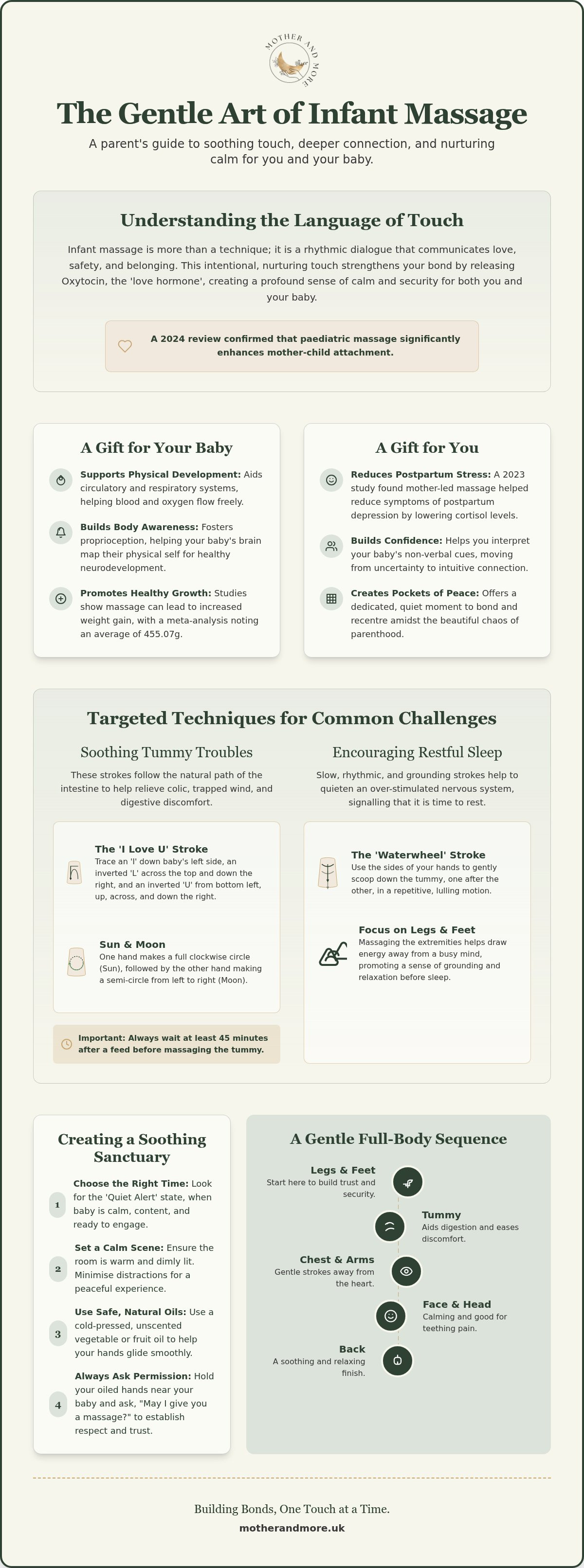
While mastering the physical infant massage techniques for parents is a wonderful first step, the true beauty of this practice often unfolds in the presence of others. Early parenthood can sometimes feel like a solitary island; a place where you are constantly giving but rarely receiving. Moving beyond solo practice at home allows you to step into a space where your experiences are mirrored by those around you. It's here that you realise your questions, your exhaustion, and your joys are shared. This sense of belonging is just as vital for your wellbeing as the massage is for your baby's comfort.
The Power of the Village: Baby Massage Classes in East London
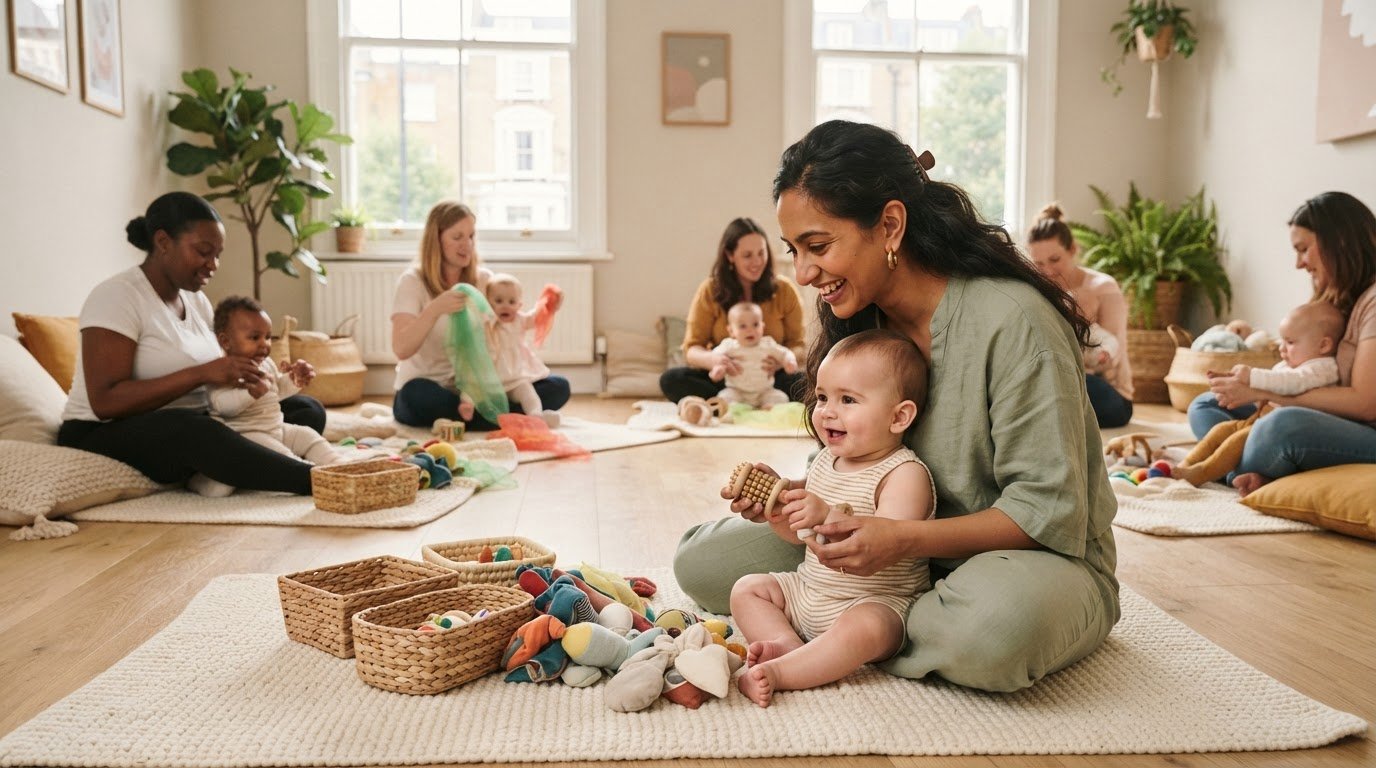
There is something uniquely healing about a group environment. In our baby massage classes in East London, you receive real-time feedback and expert guidance that a screen simply cannot provide. We have supported over 2,000 local families in creating these sanctuaries of bonding. These sessions aren't just about the strokes; they are about building your village. You'll find yourself amongst parents navigating the same sleepless nights and milestones, often forming friendships that last long after the final class. Having a professional guide walk alongside you builds a level of confidence that transforms the way you interact with your baby every single day. 🌿
Integrating Massage into Your Postnatal Wellbeing
Massage is often the first step in a much larger journey of reclaiming your maternal identity. It’s a moment of mindfulness that reminds you that looking after yourself is a vital part of looking after your baby. This focus on holistic wellness is why many find it a natural gateway to life coaching for mums in the UK. It's about rediscovering who you are in this new season of life, acknowledging the shifts in your identity with compassion and strength.
Connection isn't a solo responsibility, either. We encourage partners to find their own rhythm through our workshops for new dads. Infant massage techniques for parents give dads a specific, tangible way to soothe and bond, moving them from the sidelines into a central, confident role. Whether it's a quiet evening routine or a Saturday morning workshop, these moments of touch foster a family-wide culture of calm and emotional safety. By prioritising these moments of connection, you aren't just soothing a baby; you are nurturing the very heart of your family. ✨
Embracing Your New Language of Love
Moving from the uncertainty of early parenthood to a place of intuitive connection is a transformation that begins with a single, gentle stroke. By mastering infant massage techniques for parents, you've gained more than just a way to soothe a fussy tummy or encourage a deeper sleep. You've discovered a rhythmic language of touch that speaks directly to your baby's need for safety and belonging. This practice isn't about perfection; it's about the quiet, mindful moments where you and your little one truly see each other.
You don't have to navigate this path alone. Led by Rebecca Beazley, an accredited Life Coach and baby massage expert, our small, intimate classes are designed to be a sanctuary for your growth. We've been trusted by over 2,000 local families to provide the guidance and community needed during this major life transition. Whether you're seeking physical relief for your baby or a moment of peace for yourself, the journey continues here. Book your place in our nurturing East London baby massage classes and step into your village today. You're doing a wonderful job, and we're here to walk alongside you. ✨
Frequently Asked Questions
Can I massage my baby if they have eczema or sensitive skin?
You can certainly massage a baby with sensitive skin, but choosing the right oil is essential. Avoid mineral oils or scented products. Opt for cold-pressed vegetable oils like sunflower or coconut, which are gentle on delicate barriers. Always perform a patch test on their ankle 24 hours before a full session. If the skin is broken, inflamed, or weeping, skip those specific areas to avoid causing discomfort or further irritation to your little one.
How long should a baby massage session last?
A baby massage session can last anywhere from five to thirty minutes, depending entirely on your baby's mood and engagement. Newborns may only manage a few minutes of leg strokes, while older babies might enjoy a full body sequence. There is no set time you must achieve. The goal is connection rather than completion. If your baby becomes restless or overstimulated, it is perfectly okay to end the session early and try again later.
What should I do if my baby starts crying during the massage?
If your baby starts to cry, you should stop the massage immediately and offer comfort. Massage should always be a positive, consensual experience. Crying is their way of saying "not right now," and respecting that boundary builds deep trust. Pick them up, offer a cuddle or a feed, and try again another time. Never continue through tears, as this can create a negative association with touch for both you and your baby.
Can baby massage really help with severe colic and reflux?
While massage isn't a medical cure, it can significantly alleviate the symptoms of severe colic and reflux. Techniques like the 'I Love U' stroke and 'Sun and Moon' circles help move trapped gas through the digestive system. A 2022 systematic review in MDPI found that massage effectively reduced pain in several studies. By relaxing the abdominal muscles, you help your baby process discomfort more easily and find a sense of much-needed physical relief.
Do I need to take a professional class to learn these techniques?
You don't strictly need a professional class, but many families find the expert guidance and community support invaluable. Learning infant massage techniques for parents in a group setting allows you to receive real-time feedback on your pressure and rhythm. It also provides a safe space to ask questions and connect with other local parents. Having a trained instructor walk alongside you can transform your confidence, especially if you're feeling anxious about doing it "right."

Comments