

Overcoming Fear of Returning to Work After Baby: A Gentle, Practical Guide
What if feeling afraid about returning to work isn’t a sign you’re making the wrong choice, but a sign that this transition matters deeply to you? For many mothers, overcoming fear of returning to work after baby means holding several feelings at once: missing your little one, wanting to use your skills again, and wondering how childcare, feeding, the London commute or a changed routine will come together.
If you’re worried about missing important moments, losing confidence or how colleagues will respond, you’re not alone in having mixed emotions. You don’t need to judge yourself for them or expect every concern to disappear before your first day.
This guide will help you understand what may be behind your worries and make a realistic plan at a manageable pace. You’ll find practical ways to prepare for childcare and daily routines, rebuild confidence and plan conversations with your employer or people who can support you. You can take this one step at a time.
Table of Contents
Why can returning to work after having a baby feel so frightening?
You might feel excited to use your skills again, then sad at the thought of being apart from your baby. Relief, guilt and anxiety can sit alongside both. There’s no single “right” emotional response, and feeling unsettled doesn’t mean you’re ungrateful or making the wrong choice. Overcoming fear of returning to work after baby starts with understanding what the fear is responding to: a major change in your everyday life, relationships and sense of self. It isn’t, by itself, proof that you’re failing or unready.
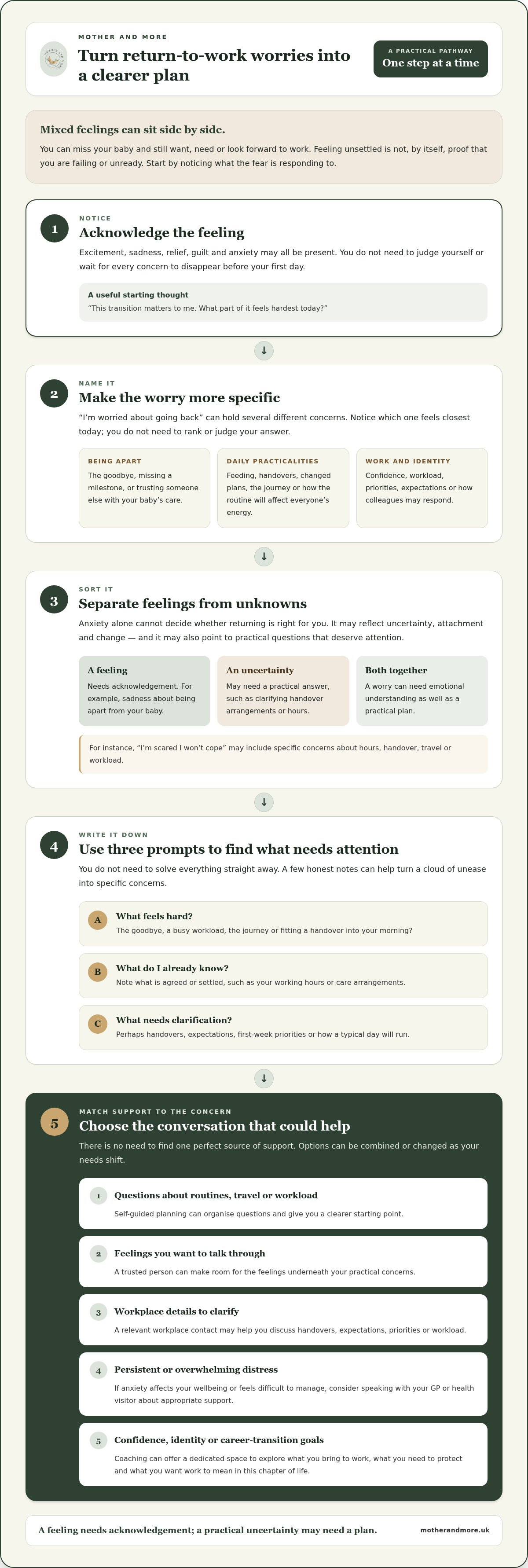
Mixed feelings can be part of a major transition: you can care deeply about your baby and still want, need or look forward to returning to work.
Which worries often sit beneath the fear?
It may help to name a worry before trying to solve it. Perhaps you’re imagining the goodbye, wondering whether you’ll miss a milestone or feeling unsure about trusting someone else with your baby’s care. Practical details can feel just as pressing: who will manage a change in plans, how feeding will work, whether the journey across London will leave enough time for handover, or how the new routine will affect everyone’s energy.
Other concerns may be about work itself. You might wonder whether your confidence has changed, whether your priorities still fit your role or whether you’ll meet the expectations you remember. A colleague’s reaction may be on your mind, too. Your experience will be shaped by your family, job and circumstances, so try asking yourself: Which worry feels closest today? You don’t need to rank or judge your answer.
Does feeling anxious mean you are not ready to return?
Anxiety alone can’t decide whether returning is right for you. It can be a response to uncertainty, attachment and change, while also pointing towards practical questions that deserve attention. For example, “I’m scared I won’t cope” may include specific concerns about your hours, handover, travel or workload. Breaking the thought into those details can make the situation clearer without requiring you to dismiss the feeling.
Take persistent or overwhelming distress seriously, rather than telling yourself to simply push through. If anxiety is affecting your wellbeing or feels difficult to manage, consider speaking with your GP or health visitor. They can help you think through appropriate support. A conversation with someone you trust or a relevant workplace contact may also help you identify what would make the transition more manageable.
Understand what drives your return-to-work anxiety
Once you’ve noticed the fear, try to get curious about its shape. “I’m worried about going back” can hold several different concerns: missing time with your baby, uncertainty about who’ll care for them or doubts about how work will feel now. Naming each worry more precisely can show which ones need understanding, which need practical answers and which need both.
Try a brief written reflection. You don’t need to find a solution straight away. Jot down:
What feels hard? For example, the goodbye, a busy workload, the journey or fitting a handover into your morning.
What do I already know? Note what’s agreed or settled, such as your working hours or care arrangements.
What needs clarification? Perhaps you need to discuss handovers, expectations, first-week priorities or how a typical day will run.
A feeling needs acknowledgement; a practical uncertainty may need a plan, and sometimes the same worry calls for both.
How can you tell separation worries from workplace worries?
Ask yourself what sits behind a particular anxious thought. Is it time away from your baby, how care will work or whether the daily routine feels manageable? Or are you concerned about job demands, travel, workload or feeling understood by colleagues? These worries can overlap. You don’t have to resolve one before you’re allowed to address another. Writing down specific questions can help you talk them through with someone you trust or raise relevant points with a workplace contact.
What if returning brings up questions about identity or confidence?
Becoming a parent can shift how you see yourself, your work and what matters to you. You may still value your role but want clearer boundaries. You may feel less sure of your abilities after time away, even though your strengths haven’t disappeared. Give yourself space to consider what you bring to work, what you need to protect and what you’d like work to mean in this chapter of life.
There’s no need to arrive at a perfect answer before you return. A few honest notes can help you notice what you want to carry forward and what may need to change. If you’d value a dedicated space to explore confidence, identity and career-transition goals, life coaching for mums and identity support can be one option. This kind of reflection can support overcoming fear of returning to work after baby by turning a cloud of unease into specific concerns you can understand and, where useful, discuss.
Which kinds of support can help you feel steadier about going back?
You don’t have to find one perfect source of support. A written plan may settle practical details, while a trusted person can make room for the feelings underneath them. Workplace conversations and coaching can help with different questions, too. Choose support according to the concern you want to address. You can combine options or change them as your needs shift.
When might a conversation with your employer help?
If uncertainty about work is weighing on you, a conversation with your manager or another relevant workplace contact may help you clarify priorities, communication and what a manageable first period back could look like. You could raise a flexible working conversation as an option, too. Beforehand, note your questions and what would help. For example, ask which tasks should take priority at first, how to keep in touch about changes and who to contact if something is unclear. Afterwards, write down what was discussed and any next steps. This can bring clarity, without guaranteeing a particular outcome.
When could coaching offer a useful space to reflect?
Coaching may suit you if you want space to explore how parenthood has shifted your confidence, identity or career goals. It’s reflective and goal-focused, rather than clinical therapy, diagnosis or a substitute for health support. Mother And More offers one-to-one and group life coaching for mothers. Founder Rebecca Beazley is an accredited life coach and former social worker. If this kind of reflection feels relevant, you can learn about life coaching for mothers. It’s an option, not a requirement. Choose support that fits your goals, pace and preferences as you work towards overcoming fear of returning to work after baby.
How to plan a gradual return to work after your baby
A return-to-work plan doesn’t need to make every day predictable. Its purpose is to give you a few steady points to lean on while leaving room for real life to unfold. Adapt the pace to your circumstances and available leave. One useful step is to identify what you can clarify now and what you’ll review once you’re back. That can be a practical start to overcoming fear of returning to work after baby.
Identify what’s weighing on you. Note the concerns that feel most pressing, such as separation, feeding, workload or travel. This helps you focus your preparation rather than trying to solve everything at once.
Clarify arrangements. Write down what you know about childcare handovers, working hours, travel and feeding needs. List what still needs discussion, including first-week priorities, communication with colleagues and who to contact if plans change.
Rehearse a routine, if helpful. Walk through a likely morning or handover, including what needs to be packed and how you’ll get where you need to be. Treat it as a practice run, not a test. Notice where you need more time or a clearer plan, then adjust as you learn what works.
Check in and adjust. After your first days back, pause to notice what feels manageable and what needs a conversation or change. Check in again as the weeks unfold, at a pace that suits you.
What can you prepare before your first day back?
Gather your key work questions and decide which priorities matter most at the start. If you’ll share childcare or household responsibilities, talk through the handover with your partner or support person: who’s doing what, and what’s the backup plan if someone is delayed? If you’ll travel into work, think through the journey alongside drop-off and handover, rather than planning each part separately. Shared expectations can ease the mental load. If it feels relevant to your family, workshops for new dads offer space to explore connection and confidence in fatherhood.
You might also prepare a simple note of feeding needs or useful information for the person caring for your baby. Focus on what would make the handover feel clear for you, rather than aiming for a perfect routine.
How can you care for yourself during the first weeks back?
Set realistic expectations. You’re adjusting to a new rhythm, so you may not feel at full capacity straight away. Build in small recovery moments where you can, such as a quiet lunch break or a few minutes to reset between tasks. A regular check-in with someone you trust can give you space to share what’s going well and what feels difficult.
Notice patterns without criticising yourself. If a particular part of the day keeps feeling difficult, consider what conversation or practical adjustment might help. If distress feels persistent, intense or hard to manage, speak with your GP or health visitor. If you’d like to explore confidence or career questions alongside your practical plan, learn about life coaching for mothers.
Finding ongoing support for your return to work after baby
Support can change as your needs do. You might begin by reflecting on what feels hardest, speak with someone you trust about the emotional side or raise practical questions with a relevant contact at work. If you’re looking for space to explore confidence, identity or career choices, coaching is another option. There’s no single route through overcoming fear of returning to work after baby, and you don’t have to work everything out before taking a small next step.
What might one-to-one or group coaching help you explore?
Coaching can offer a reflective, goal-focused space to consider what you want from your next career chapter. You might explore how your identity has shifted, what strengths you want to draw on, where you need firmer boundaries or which choices feel aligned with your priorities now. One-to-one coaching gives you room to focus on your own questions; group coaching offers a shared setting to reflect and connect with other mothers. Neither format is a requirement, and coaching isn’t clinical therapy, childcare or employment-law advice.
At Mother And More, founder Rebecca Beazley is an accredited life coach and former social worker. Mother And More supports mothers with questions about confidence, identity and career transitions. Coaching can help you explore your own goals and possible next steps, without promising a particular emotional or career outcome.
What is a gentle next step if you are not ready to decide?
You don’t need to commit to a whole plan today. Write down one question you’d like space to explore, such as, “What would help me feel more confident in my role?” or, “Which boundaries matter most to me now?” Let that question guide one small action: talk it through with someone you trust, note what you’d like to raise at work or explore whether coaching feels right for you.
There’s no need to rush. A thoughtful next step can be enough for now. If you’d like to learn more about the support available, explore Mother And More’s support for mothers.
Take your next step at a pace that feels right
Returning to work after a baby can bring more than one feeling, and anxiety doesn’t decide whether you’re ready. Naming what’s worrying you can help separate emotions that need kindness from practical questions that need answers. A flexible plan, clear conversations and support from people you trust can make the transition feel more considered, one step at a time.
Overcoming fear of returning to work after baby doesn’t mean having every doubt resolved before you begin. It can mean noticing what you need, reviewing how things feel once you’re back and adjusting where possible. If you’d like a reflective space to explore confidence, identity or career questions, Mother And More offers coaching for mothers. Founder Rebecca Beazley is an accredited life coach and former social worker.
Explore coaching for mothers with Mother And More and take a next step at a pace that feels right for you.
Frequently Asked Questions
Is it normal to feel scared about returning to work after having a baby?
Yes, feeling scared can be part of returning to work after having a baby. You might feel worried, sad, relieved or uncertain, sometimes all at once. Those emotions don’t automatically mean returning is the wrong choice. Try naming the concern beneath the fear: is it time away from your baby, childcare or work itself? Then consider whether it calls for practical planning, a conversation, emotional support or a combination.
How can I cope with leaving my baby when I go back to work?
Make the handover feel as predictable as you can, while remembering that no routine needs to be perfect. You could share helpful information about your baby’s usual routine and agree how you’ll receive updates, if that would reassure you. Give yourself permission to feel the separation without treating those feelings as a verdict on your decision. Each family’s needs are different, so choose preparations that feel useful for you and your baby.
What should I do if I feel anxious about returning to work after maternity leave?
Start by writing down what you’re worried about, then separate practical questions from emotional concerns. You might need to clarify childcare handovers, discuss priorities or working arrangements with your employer, or talk through your feelings with someone you trust. Overcoming fear of returning to work after baby can begin with one manageable question at a time. If anxiety feels intense, persistent or difficult to manage, speak with your GP or health visitor.
Can I ask my employer for a gradual return after maternity leave?
You can raise a conversation about arrangements that might support your return, such as priorities, hours, communication or a phased transition. What’s possible depends on your circumstances and workplace arrangements, so don’t assume a particular request will be agreed. Write down the questions you want to ask and any points you discuss. For information about formal rights, deadlines or procedures, check current guidance from GOV.UK or ACAS before relying on it.
What if I don’t feel like the same person at work after having a baby?
It’s understandable if parenthood has changed how you see your work, priorities or confidence. You don’t have to decide straight away what that means for your career. Take time to reflect on what matters to you now, which strengths you still bring to your role and what boundaries may help. A trusted person, a workplace conversation or coaching may give you space to explore your options without needing an immediate answer.
Can coaching help with fear about returning to work after a baby?
Coaching can offer a reflective space to explore confidence, identity, goals and career-transition questions. It isn’t clinical therapy and can’t guarantee a particular outcome, but it may help you consider what matters and identify manageable next steps. Mother And More offers one-to-one and group life coaching for mothers in London and beyond. Founder Rebecca Beazley is an accredited life coach and former social worker. If health is your main concern, speak with a health professional.
When should I seek extra help for anxiety about going back to work?
Consider seeking extra help if anxiety feels overwhelming, affects everyday life or is difficult to manage with the support you have. A GP or health visitor can help you explore appropriate support. You might also tell someone you trust what feels hardest and ask for help with an immediate practical pressure. Reaching out isn’t a sign that you’ve failed to cope; it’s a reasonable way to look after yourself during a demanding transition.



Comments