

Ways to find support and rest as a new mother
Caring for a baby brings constant demands alongside physical recovery and a profound shift in identity, so motherhood can feel overwhelming. Managing overwhelm as a new mother can start with practical changes: asking for help, easing expectations and making space for rest. Baby blues can arise in the first week after giving birth. If difficult feelings last more than two weeks, speak with your GP or health visitor.
If the days are harder than you expected, you’re not failing. You’re adjusting to a major life change, often while tired and trying to make sense of advice, emotions and your baby’s needs. It’s understandable to need support.
This article explores why new motherhood can feel intense and offers gentle ways to make the load more manageable. Find ideas for talking about how you feel, setting realistic expectations, making room for rest and keeping meals simple. Take what feels useful and leave the rest for another day.
Table of Contents
1. Isn't it just "baby blues"?
Baby blues affect around 30 to 85 percent of new mothers. They often begin 3 to 5 days after delivery, as your body and daily life are changing quickly. You might feel tearful, anxious or irritable, even when you’re glad your baby is here. These feelings are usually temporary, often lasting a few days, though baby blues can last around two weeks after giving birth.
Postnatal depression, also called postpartum depression, is different from baby blues. Rather than easing after a short spell, depression may involve persistent low mood, hopelessness, anxiety or difficulty coping with everyday tasks. It can last up to a year after the baby is born. Feeling overwhelmed most days, experiencing rage or intrusive thoughts, or finding it hard to function are reasons to seek professional support.
If negative feelings continue beyond two weeks after giving birth, speak with your GP or health visitor. Contact a healthcare professional sooner if you suspect postnatal depression or feel unable to manage daily life. You don’t need to wait for a particular symptom or decide whether it’s “serious enough” before explaining what’s happening. Describe when the feelings began, how often they occur and how they affect caring for yourself and your baby.
Depression that goes unaddressed can prolong distress and make ordinary care feel harder. For example, low energy or persistent hopelessness may make feeding routines, rest and responding to your baby more difficult. This doesn’t reflect your love or ability as a parent. Talking with a GP or health visitor gives you an opportunity to discuss your feelings and possible support, including counselling or medication.
Conflicting baby advice can add stress when you’re already tired. One person may recommend a routine while another suggests the opposite, and online posts can add more opinions. If advice leaves you confused or worried, pause before changing what you’re doing and speak with a healthcare professional. Explain the specific concern, such as uncertainty about feeding or sleep, and your baby’s circumstances. A clear, personalised conversation can help you focus on what matters now.
Write down your main concern before an appointment, then note the advice you receive. If your mood is difficult to describe, share a recent example, such as crying often or struggling to complete a familiar task. Ask what changes should prompt you to seek further help. These small steps make it easier to share the full picture, whether you’re experiencing short-lived baby blues or symptoms that need more support.
2. Social support and talking about feelings
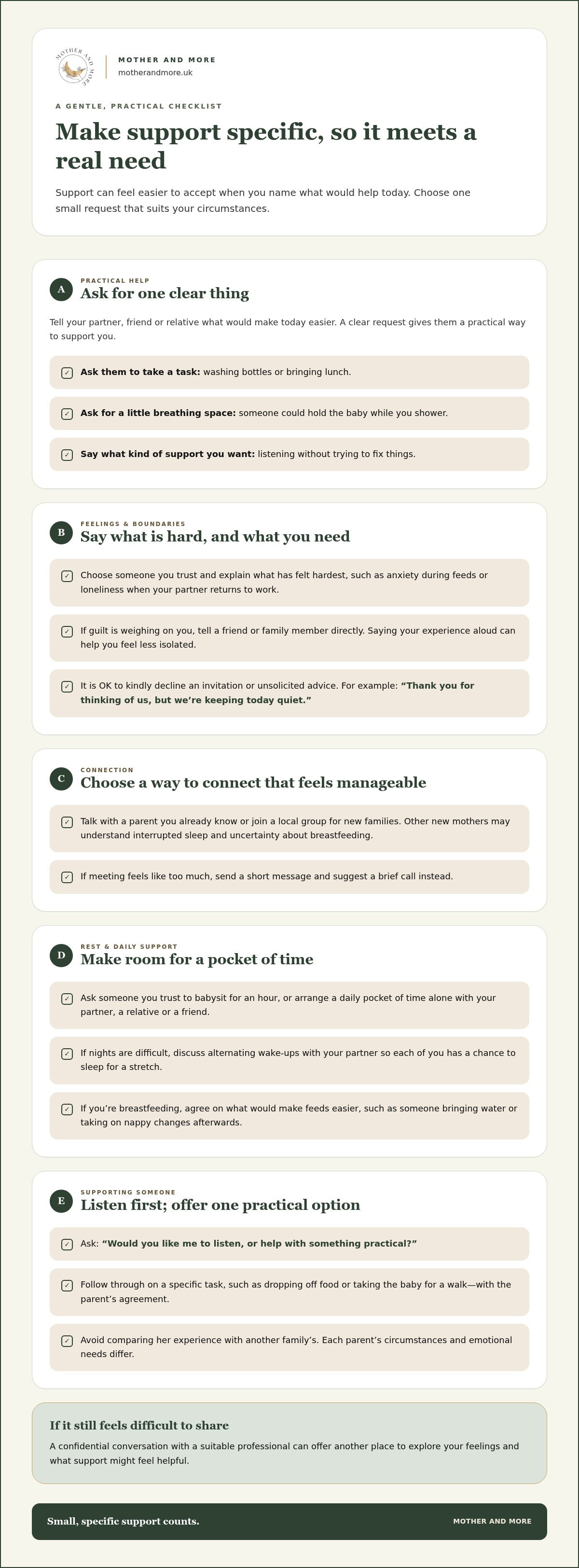
Support is most useful when it meets a real need, rather than adding another decision. Tell your partner, friend or relative what would help today: washing bottles, bringing lunch, holding the baby while you shower, or listening without offering solutions. A clear request gives someone a practical way to support you.
How can new mothers set boundaries and ask for help without feeling guilty? Name what you need, make one specific request, and remember that accepting help is part of caring for yourself and your baby. You can also kindly decline an invitation or unsolicited advice: “Thank you for thinking of us, but we’re keeping today quiet.”
Talking about your feelings can ease the sense that you have to manage everything alone. Choose someone you trust and explain what has felt hardest, such as anxiety during feeds or loneliness when your partner returns to work. Similarly, if forward planning feels daunting, reviewing advice on topics like daycare enrollment St. Albert can offer a practical perspective on navigating upcoming childcare decisions. If guilt is weighing on you, tell a friend or family member directly. Saying your experience aloud can help you feel less isolated.
Other new mothers may understand the particular texture of early parenthood, from interrupted sleep to uncertainty about breastfeeding. Talking with a parent you already know or joining a local group for new families can offer companionship without requiring you to explain every detail. If meeting feels like too much, send a short message and suggest a brief call instead.
If you’re supporting an overwhelmed mother, listen first. Try asking, “Would you like me to listen, or help with something practical?” Then follow through on a specific task, such as dropping off food or taking the baby for a walk with the parent’s agreement. Avoid comparing her experience with another family’s. Each parent’s circumstances and emotional needs differ.
Practical help can make room for rest. Ask someone you trust to babysit for an hour, or arrange a daily pocket of time alone with your partner, a relative or a friend. For ongoing support as routines develop, exploring dedicated childcare services such as Kool Kids Daycare can also help parents plan ahead and relieve daily pressures. If nights are difficult, discuss alternating wake-ups with your partner so each of you has a chance to sleep for a stretch. If you’re breastfeeding, agree on what would make feeds easier, such as bringing water or taking on nappy changes afterwards.
When feelings remain difficult to share with people close to you, a confidential conversation with a suitable professional can offer another place to explore them. You can also find a gentle space to reflect on motherhood and what support might feel helpful.
3. Setting realistic expectations
A new baby changes how much time and energy you have for everyday tasks. A tidy kitchen, homemade dinner and replied-to messages may all feel urgent, but they don’t carry equal weight. Setting realistic expectations is one part of managing overwhelm as a new mother. Choose what supports your wellbeing and your baby’s care today. The rest can wait, be simplified or be shared.
Unrealistic expectations can grow from comparing your family with carefully selected images or confident advice. A friend’s routine may not suit your baby, and an online post can’t show the full day behind its photograph. If comparison increases anxiety, notice what you’re measuring yourself against. Then ask whether that expectation fits your recovery, your baby’s needs and the help available to you.
Identify the essential task, then choose its simplest workable version. For example:
Serve toast, fruit or a prepared meal instead of cooking from scratch.
Clear the surface needed for feeding rather than tidying the entire room.
Reply to an important message with a short update, leaving other messages unread.
Choose comfortable clothes for an outing instead of trying to get ready perfectly.
This isn’t giving up. It’s matching your plans to the capacity you have today. A loose rhythm for feeding, sleep and play can give the day shape, but keep it flexible. Babies change, and a routine that worked recently may stop fitting. If feeding takes longer than expected, let the next task move rather than treating the schedule as a test you’ve failed.
Make commitments easier to manage by asking, “What’s the simplest version that still matters?” A visit could become a short cup of tea rather than an afternoon of hosting. A household task could be limited to the laundry you need. You can also decline invitations, extra responsibilities or advice that doesn’t suit your family. “Thanks for thinking of us, but we’ll pass this time” is enough.
When you’re struggling, notice what your body and mood are telling you before adding another demand. If a packed day leaves you tearful or tense, move one non-essential task and protect a quiet pause instead. If managing overwhelm as a new mother feels difficult, notice what helped today, perhaps fewer plans or accepting support. Use that observation to shape tomorrow, not to judge how well you did.
4. Exhaustion, rest and simple nutritious meals
Giving birth asks a great deal of your body, while newborn care can break sleep into short stretches. Plan for the first week or two after birth with recovery in mind, rather than expecting to return immediately to usual chores. Rest is part of caring for yourself, not a reward for finishing the washing. Even a quiet moment can offer a pause in a demanding day.
How can new mothers get more sleep and rest with a newborn? If you have a partner, agree how to alternate night-time wake-ups so each of you gets a stretch of sleep. When uninterrupted sleep isn’t possible, a short nap can help you rest. Ask someone you trust to take over baby care while you lie down.
Keep housework contained. Set a 10-minute timer for a small tidy during your baby’s nap, then use the remaining nap time to relax. If the baby is awake, a five-minute limit can keep a quick task from taking over the whole day. Choose one useful area, such as clearing space to prepare food, rather than aiming for a spotless home.
A 60-second pause can count as micro-rest. Put both feet on the floor, soften your shoulders and take a few slow breaths before moving on. You might do this after a feed, whilst waiting for the kettle or before picking up a task. A brief pause won’t remove every demand, but it can mark a moment when you stop and notice what you need.
Eating can become irregular when your baby needs you often. Try to eat when you’re hungry and keep food simple and nutritious. Porridge, yoghurt with fruit or beans on toast can be easier to manage than cooking an elaborate meal. If a friend offers practical help, ask them to bring a meal or prepare something you can reheat.
Small preparations can reduce effort later. Keep easy snacks where you usually feed or settle your baby, and refill your water when you get a drink. If cooking feels difficult, put together something simple from what’s available, such as bread, eggs and vegetables, or soup with a sandwich. The aim is to nourish yourself without adding another demanding standard to the day.
Routines naturally shift as your baby grows, so adjust your rest and meal plans when the day changes. If a nap doesn’t happen, let a non-essential chore wait. If dinner needs to be very simple, that’s enough. Recovery, food and rest are meaningful parts of the care you’re giving your baby and yourself.
5. Feeling overwhelmed and adjusting to motherhood
Feeling overwhelmed with a newborn doesn’t mean you’re doing motherhood badly. Your days may have shifted from familiar plans to constant care, interrupted sleep and decisions you’ve never faced before. You might feel nervous about soothing your baby, then guilty for wanting a pause. These reactions can sit alongside love and bonding; they don’t cancel them out.
Practical ways to manage overwhelm include pausing, grounding yourself, simplifying the next task and asking someone for specific help. When the moment feels too intense, put your baby in a safe crib, step away briefly and take slow breaths. Return when you feel steadier, or contact someone you trust for support.
Try a 60-second breathing pause at the start of the day or after a difficult feed. Breathe slowly, noticing your feet against the floor and your shoulders softening. If your thoughts keep racing, use the 5–4–3–2–1 grounding sequence: notice things you see, feel, hear, smell and taste. You can also find five things nearby that share a quality, such as five soft objects.
When your body feels tense, use a simple sensory cue. Hold a cool glass of water, notice a familiar scent or press your feet firmly into the floor. These small actions can bring your attention back to the present, rather than every worry about the day ahead. Choose one cue that feels comfortable and repeat it whenever you notice stress building.
Adjusting also means meeting a new version of yourself. A newborn can reshape your routines, relationships and sense of identity, so your old measure of a “productive day” may no longer fit. Pick one gentle anchor, such as opening the curtains, getting dressed or stepping outside briefly. If that’s all you manage, it still gives the day a beginning.
Notice what tends to intensify the feeling. Perhaps visitors arrive when you need quiet, or a long list feels impossible after a broken night. Write down the trigger and one small change: shorten the visit, postpone a task or ask someone to take over. This turns a broad sense of overwhelm into a need you can name and address.
If distress happens most days, or you experience persistent hopelessness, rage, intrusive thoughts or difficulty functioning, speak with a healthcare professional. These experiences deserve attention, not self-blame. A GP or health visitor can help you talk through your mental health and possible support. If you’re nervous about starting, write down one example and share it in your own words.
For a steadier space to reflect on identity, confidence and wellbeing, explore one-to-one life coaching as a supportive next step.
Mother And More: Baby Massage Courses
Mother And More offers Baby Massage Courses for mothers who want a calm way to slow down and connect with their baby. These classes support bonding, digestion, settling and parent confidence in a calm, low-stimulation environment led by trusted experts. Baby Yoga Classes offer another way to spend focused time together, supporting movement and connection. One to One Life Coaching and Group Coaching can offer space to reflect on identity, confidence and wellbeing after becoming a parent.
These options can be a natural next step if you’d value guided connection with your baby or space to explore how motherhood is changing you. They complement practical support and don’t replace help from a healthcare professional when your mental health needs attention.
If you’d like to explore what feels right for you, contact Mother And More or visit motherandmore.uk.
Choose one gentle next step
You don’t need to reshape your whole life at once. Choose one small change that feels possible today, then notice whether it gives you a little more breathing room. That might mean accepting help, leaving a task unfinished or making time to talk about how you’re adjusting. Progress can be quiet, and it doesn’t need to look impressive to matter.
Managing overwhelm as a new mother can also mean finding support that fits the kind of connection you’re seeking. Mother And More offers Baby Massage Courses and Baby Yoga Classes for shared time with your baby, alongside One to One Life Coaching for reflection on your wellbeing. Different kinds of support can meet different needs as family life shifts.
If you’d like to explore a supportive next step, contact Mother And More. You’re allowed to move gently, ask for support and find your own pace. One small step is enough for now.
Frequently Asked Questions
Why is motherhood so overwhelming?
Motherhood can feel overwhelming because caring for a newborn brings continuous responsibility alongside physical recovery and a major change in identity. Hormonal and chemical changes after childbirth can also contribute to feeling tearful, anxious or irritable. Even familiar decisions, such as when to eat or shower, may need to fit around your baby’s needs. You’re adapting to several changes at once, not simply learning a new routine.
Does my partner understand how overwhelming this actually is?
Your partner may care deeply and still not grasp the full weight of your day unless you describe it plainly. Name what’s happening and ask for one clear change: “I’m finding evenings difficult. Can you take over settling the baby while I eat?” Discussing a practical plan together can make invisible tasks easier to share. If talking feels tense, choose a calmer moment rather than raising every concern mid-argument.
How can I get help?
Start by matching the kind of help to the need. Ask someone close to bring food, listen while you talk or take a household task off your hands. If your feelings are affecting daily life, or you’re worried about your mental health, speak with your GP or health visitor. You can prepare by writing down what you’ve noticed and one question you want answered, so you don’t have to remember everything during the conversation.
How do I reduce the load when everything feels essential?
Separate immediate care from tasks that can wait. If your baby needs feeding and you need food too, meet those needs before sorting laundry or replying to messages. Choose the next task by asking what would become harder if left until later. For example, wash the item you need for the next feed, not every dish in the kitchen. A short list can help you see what truly needs attention today.
Is it normal to feel completely overwhelmed after having a baby?
Feeling overwhelmed after having a baby can be part of adjusting to a life shaped by constant care and change. You might feel capable one moment, then uncertain when your newborn cries and nothing seems to settle them. That contrast doesn’t mean you’re failing. Notice how often distress is present and whether it’s disrupting everyday life. Persistent overwhelm is a good reason to talk with a healthcare professional.
Isn't it just "baby blues"?
Baby blues and postnatal depression aren’t the same. Baby blues may begin during the first week after giving birth and are usually temporary, often easing within a few days or around two weeks. Postnatal depression can persist for longer, with symptoms such as ongoing hopelessness or difficulty functioning. If low feelings last beyond two weeks, or you’re concerned sooner, speak with your GP or health visitor.
Shouldn't I just tough it out?
No, you don’t have to endure difficult feelings in silence. Asking for support is a practical response to a demanding transition, not a judgement on your ability as a parent. Tell someone you trust what’s been hardest, or arrange to speak with your GP or health visitor if distress persists. If words are difficult, write a short note describing your feelings and how they affect your day, then share it.
What newborn care tasks can be simplified or postponed?
Keep the care your baby needs and simplify the surrounding work. A meal can be toast with eggs rather than a cooked dinner; cleaning can focus on the surface you need, while less-used rooms wait. Choose easy clothes and a simple outing plan instead of aiming for a perfectly packed bag. If a task doesn’t support immediate care, food, rest or a necessary appointment, consider postponing it or asking someone else to handle it.



Comments